In its election manifesto, the Jammu and Kashmir National Conference made a big promise to job seekers.
It said it would remove application fees for recruitment exams conducted by the Jammu and Kashmir Services Selection Board, the Jammu and Kashmir Public Service Commission, and other hiring bodies.
The promise mattered to thousands of young people across Jammu and Kashmir. It spoke to the tough financial reality of job seekers in a region with high unemployment, few private sector jobs, and deep economic stress.
But more than a year after the government took office, the promise is still unmet.
The gap between promise and action became clear in October 2025, when Sajad Gani Lone, chairman of the Jammu and Kashmir People’s Conference, asked the government in the legislature about the status of the fee waiver.
The reply was blunt.
The government admitted it had not implemented the waiver and said it had no plans to do so anytime soon.
It also revealed that it had collected about ₹31 crore in application fees since taking office.
This figure is not a routine administrative detail. The ₹31 crore came from young men and women already under heavy financial, social, and emotional strain as they search for stable jobs.
Every rupee reflects an application and a hopeful attempt by a candidate to improve their chances in an increasingly competitive job market.
The government’s reply laid bare the gap between election promises and action in office. It showed a familiar pattern in politics, where pledges fade once power is secured.
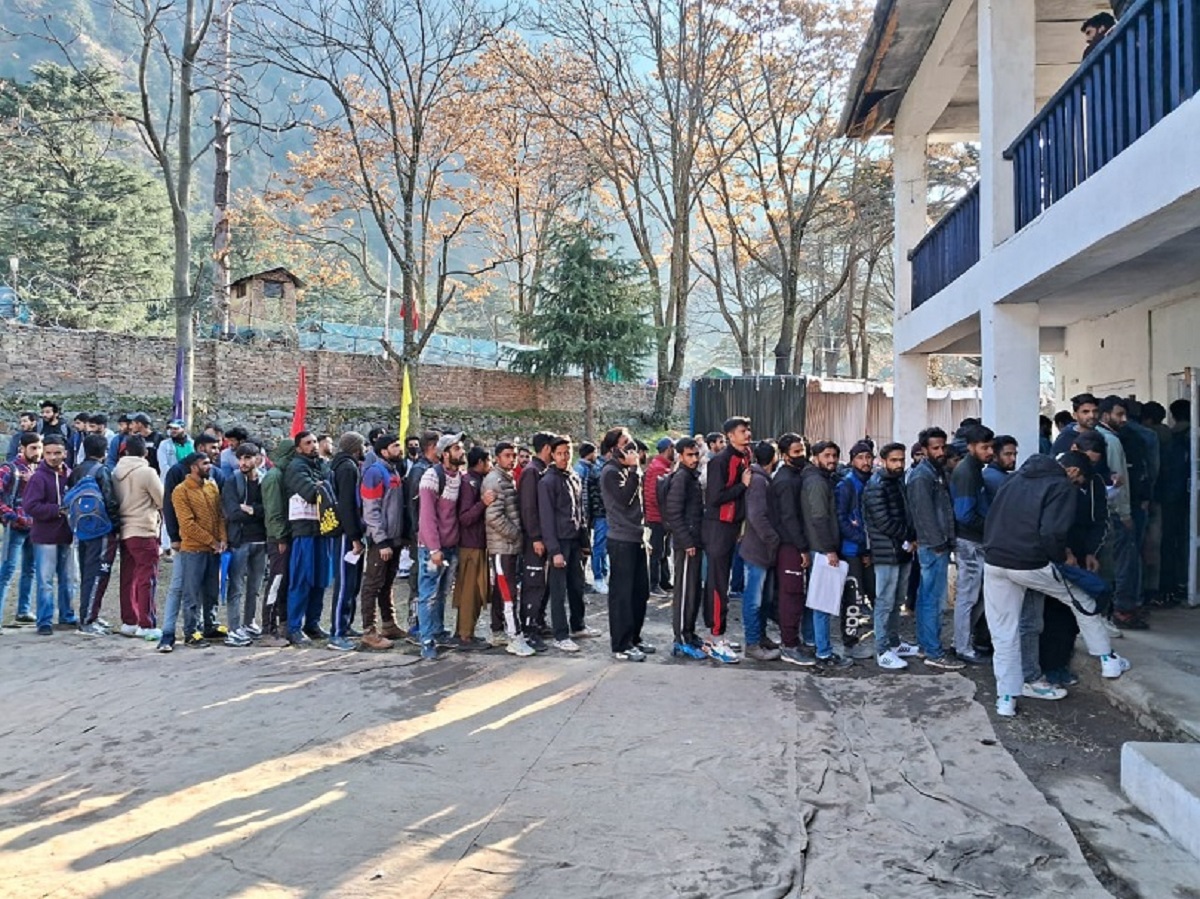
Application fees are not a small inconvenience or a token charge to job seekers. In many households that live on modest or single incomes, a few hundred rupees per form can matter a lot.
Some candidates are forced to choose between applying for another job and meeting basic household needs.
Most aspirants apply for several posts because they cannot depend on a single chance. Each application comes with its own fee, and the costs add up fast.
Families already under strain can end up paying thousands of rupees just to apply. This burden pushes out capable candidates due to lack of money.
In such a situation, government jobs that should offer stability and surety start to feel distant for those who need them the most.
Election promises are not empty words. They shape public expectations and guide voter trust. People support a party believing its manifesto will matter once it takes office.
But when those commitments are ignored, democratic accountability weakens and public cynicism grows.
Young people already face uncertainty, delayed recruitment, and fewer opportunities. Broken promises only deepen their frustration and sense of betrayal.
Some defend application fees as a way to cover administrative costs. But while recruitment involves expenses, placing the full burden on applicants is unfair and unjust.
Filling public posts is a core state responsibility and should be funded through the government budget rather than repeated charges on unemployed youth trying to compete.
Even if a full waiver for all candidates seemed impractical, the government could have considered alternatives such as fee waivers for economically weaker sections, reduced fees, or phased implementation.
The absence of any such approach shows the issue is political will rather than feasibility.
The failure to implement the promised fee waiver also raises serious questions about governance priorities.
A government that truly values youth employment and social equity would have acted decisively to remove barriers to public jobs.
Instead, the ongoing collection of application fees has become a steady source of revenue, with little concern for the hardships it causes.
To those in power, ₹31 crore may seem like a figure in a budget. To thousands of young people across Jammu and Kashmir, it represents sacrifice, exclusion, and lost opportunities.
It is money spent simply for the chance to compete, with no guarantee of success and no relief in sight.
The region’s youth have waited long enough for promises to turn into action.
To preserve trust in democratic governance, the government must move beyond words and honour its commitment.