Washington, August 19(HS): The deadly toll of war in Ukraine escalated anew Monday, as Russian bombardments claimed 10 civilian lives and wounded dozens in a pair of targeted attacks on Kharkiv and Zaporizhzhia. The strikes landed mere hours before Ukrainian President Volodymyr Zelenskyy’s arrival in Washington for high-stakes diplomacy aimed at brokering a path to peace with Moscow—a grim backdrop underscoring the enduring volatility of Europe’s bloodiest conflict in recent memory.
In Kharkiv, a fierce barrage gutted the roof and upper stories of a residential building, sending flames and debris skyward. Firefighters battled the inferno late into the night, with local authorities confirming seven fatalities and approximately 20 injuries. In southern Zaporizhzhia, a separate attack killed three and wounded nearly 20 amid scenes of devastation reminiscent of the war’s darkest episodes. Russian officials have refrained from issuing any public response to the incident, prompting swift condemnation from Ukrainian leadership, who see the strikes as further evidence of Moscow’s intransigence.
“That’s why Putin doesn’t want to cease fire,” declared Andriy Yermak, Zelenskyy’s chief of staff. “He enjoys shelling peaceful cities while talking about his desire to end the war.” His remarks encapsulated the mood in Kyiv, where optimism over peace talks is severely tempered by the tangible threat of continued Russian aggression.
Diplomacy Under Fire
President Zelenskyy’s arrival in Washington comes at a pivotal juncture for collective Western efforts to forge a durable peace. In recent weeks, Russian aerial attacks appeared to have subsided, fueling speculation among analysts that the Kremlin sought to curry favor with the Trump administration in advance of renewed negotiations. However, Monday’s bloodshed shattered any illusion of a sustained lull.
The timing of Zelenskyy’s visit underscores the complexity of the moment. President Trump, once known for a pragmatic—sometimes lenient—approach toward Vladimir Putin, has hardened his tone amid rising civilian casualties. Notably, Trump expressed outrage following Russian drone attacks last month that struck Ukrainian nursing homes and apartment buildings: “A rocket hit a nursing home, or a rocket hit an apartment building and people are laying dead in the street,” he lamented.
Since August, officials in Kyiv have remarked on a marked reduction in nightly drone and missile assaults on major cities, with the capital itself spared from the unrelenting barrages that characterized much of summer. Yet as Zelenskyy enters negotiations, the fresh devastation raises critical questions about Russia’s willingness to engage in meaningful talks.
The Spotlight Turns Personal: Trump Praises Zelenskyy’s Attire
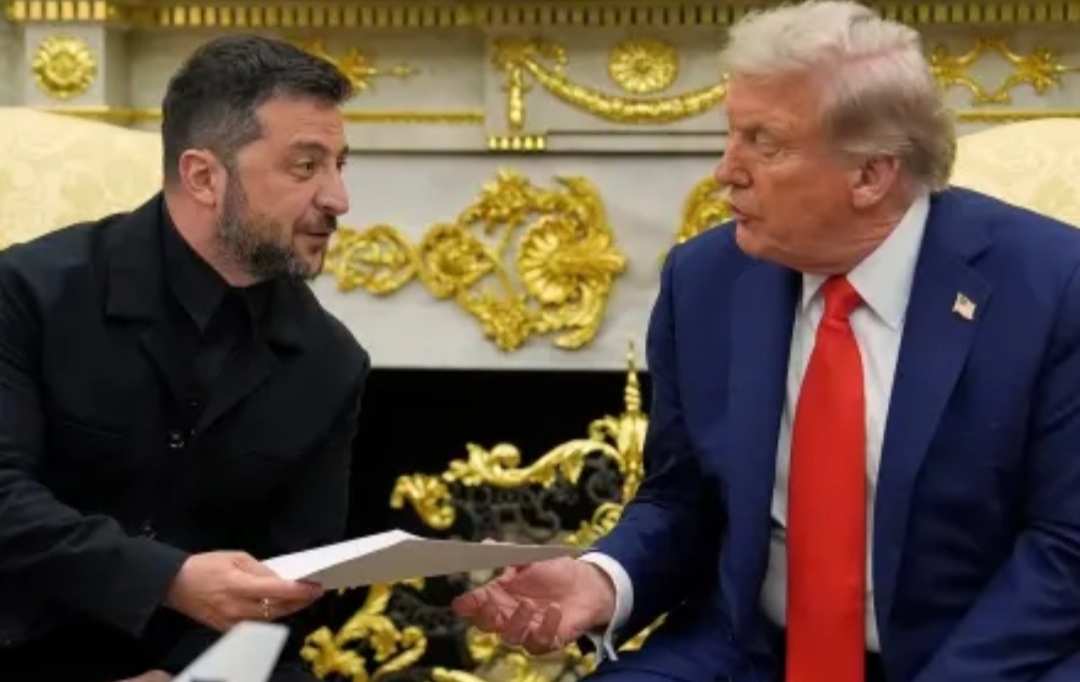
In a lighter moment at the White House, as dignitaries assembled for the trilateral discussions, President Trump drew attention to Zelenskyy’s attire—a black suit, a marked departure from the military fatigues that became his wartime uniform during previous visits.
“I can’t believe it, I love it,” Trump exclaimed, gesturing to Zelenskyy’s black suit upon greeting him in the Oval Office. The exchange came amid ribbing from conservative commentator Brian Glenn, who had criticized Zelenskyy’s choice of dress during a February meeting. “That’s the one that attacked you last time,” quipped Trump, drawing laughter from the room as Zelenskyy acknowledged the sartorial shift. In contrast to earlier criticism, Glenn praised the Ukrainian leader’s appearance as “fabulous.”
The symbolism was not lost on observers: Zelenskyy’s suit signaled both a practical embrace of diplomatic norms and a subtle assertion of Ukraine’s resilience and desire for reintegration with the European order.
Trilateral Peace Talks: High Stakes and Lingering Uncertainty
Monday’s summit at the White House gathered an extraordinary coalition of European leaders, including President Emmanuel Macron, German Chancellor Friedrich Merz, UK Prime Minister Keir Starmer, European Commission President Ursula von der Leyen, Italian Prime Minister Giorgia Meloni, and Finnish President Alexander Stubb. Zelenskyy joined leaders from both sides of the Atlantic in a concerted push for a “reliable and lasting peace” and a “new security architecture” for Ukraine and Europe.
President Trump, reiterating American support, left the door open for sending U.S. troops as part of a potential peacekeeping deal, while emphasizing that Europe must lead as the continent’s “first line of defense.” He also confirmed that Russian President Vladimir Putin was “expecting my call” following the group’s deliberations, further raising the stakes for tangible diplomatic breakthroughs.
“There’ll be a lot of help when it comes to security. There’s going to be a lot of help. It’s going to be good. But we’re going to help them out also. We’ll be involved,” assured Trump, characterizing the summit as “not the end of the road” for American backing, regardless of the outcome.
Unanswered Questions: Ceasefire, Elections, and Sovereignty
The prospect of a ceasefire remains elusive. “I didn’t do any ceasefires … I like the concept of a ceasefire for one reason: because you’d stop killing people immediately,” said Trump, referencing his approach to negotiating deals. Though he insisted a truce could be inked within hours, recent talks with Putin in Alaska ended inconclusively, with Trump reflecting the Kremlin’s stance on key territorial issues and urging Ukraine to consider ceding land in the interest of peace.
President Zelenskyy, meanwhile, signaled openness to holding future elections in Ukraine, but only “once peace is restored” and the nation’s security assured. The Ukrainian leader balanced praise for U.S. diplomatic initiatives with calls for broader, coordinated European action—including stronger sanctions on Moscow should trilateral negotiations with Trump and Putin fail to materialize.
A Pivotal Moment in Europe’s Modern War
As negotiations unfold behind closed doors, the cost of delay—measured in lives lost and communities shattered—remains starkly evident. Monday’s strikes serve as a sobering reminder of the stakes involved, a testament to Ukraine’s continued resolve amid adversity, and a challenge to the international community to translate diplomatic ambition into real progress on the ground. The fashion of the moment—Zelenskyy’s black suit—may have captured headlines, but the shadow of war, and the urgent imperative for peace, lingers overhead.
—————
Hindusthan Samachar / Jun Sarkar