Seoul, September 22(HS):
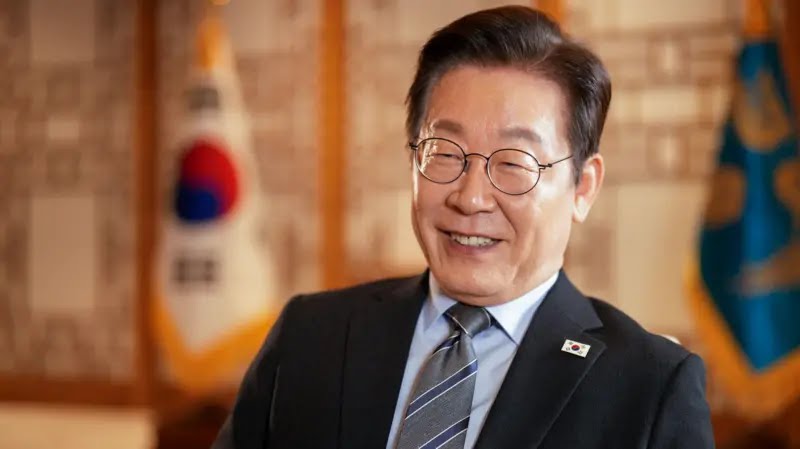
South Korean President Lee Jae Myung, in a sweeping BBC interview ahead of his United Nations General Assembly address, declared his readiness to endorse a US–North Korea agreement that freezes—rather than dismantles—Pyongyang’s nuclear program. Lee described such a measure as “a feasible, realistic alternative to denuclearization” amid North Korea’s ongoing production of 15–20 nuclear warheads annually and its unwavering refusal to relinquish its arsenal.
For years, the international community—and Seoul under previous administrations—held out for the complete, verifiable, irreversible dismantlement of North Korea’s nuclear capabilities. But President Lee, who assumed office earlier this year following a period of domestic political upheaval, signaled a pragmatic pivot. “While we should not give up the long-term goal of denuclearization,” Lee said, “there are clear benefits to having North Korea stop its nuclear and missile development—even as an interim step.” This stance marks a departure from his impeached predecessor, Yoon Suk Yeol, whose hardline policies heightened tensions on the Korean Peninsula.
Lee acknowledged the persistent diplomatic deadlock since the collapse of US–North Korea talks in 2019, when Pyongyang rebuffed American demands for full denuclearization. While reaffirming South Korea’s alliance with Washington, Lee suggested President Donald Trump and North Korean leader Kim Jong Un could reignite negotiations, given their “degree of mutual trust.” He emphasized that restarting high-level dialogue, even if short of eliminating nuclear weapons, would foster stability and potentially “contribute to global peace and security.”
The South Korean leader finds himself navigating a complex geopolitical landscape, with North Korea’s deepening alignment with China and Russia—highlighted at a recent military parade in Beijing—posing fresh challenges. “Seeing China, Russia, and North Korea become so close is clearly not desirable for us,” Lee admitted, describing South Korea’s situation as “truly precarious.” Nevertheless, he stressed the need to avoid antagonizing either Washington or Beijing, seeking to balance security cooperation with the US and economic reliance on China.
At home, Lee faces a polarized society recovering from his predecessor’s impeachment for attempting to impose martial law. He has sought to restore trust with Pyongyang by halting government-sponsored anti-regime broadcasts into North Korea—a decision criticized by human rights groups but defended by Lee as necessary for diplomatic progress. North Korea has dismissed these gestures, labeling them “delusional.”Meanwhile, Lee’s outreach to Trump faces real-world friction: a recent immigration incident involving hundreds of Korean workers detained in the US, partially resolved after diplomatic intervention, has cooled business confidence in American investment. Still, Lee expressed hope the episode could ultimately strengthen bilateral ties.
President Lee’s approach reflects a seasoned pragmatism absent in earlier South Korean governments. He understands that North Korea’s nuclear status, “declared in 2022,” is likely immutable for now. While not abandoning the ideal of eventual denuclearization, he has recalibrated expectations, aiming for achievable progress in a region where geopolitical fault lines are deepening and South Korea’s strategic space is shrinking.
Hindusthan Samachar / Jun Sarkar