By Syed Nissar H. Gilani
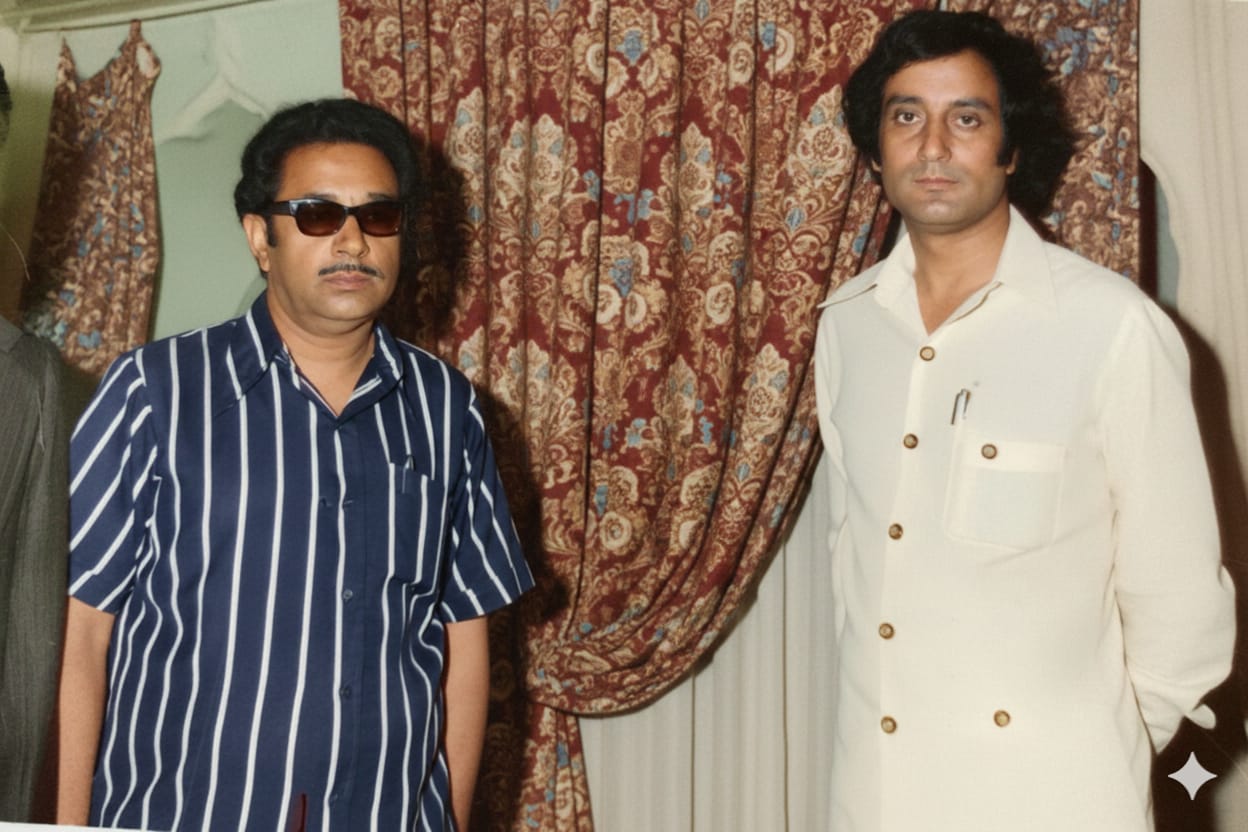
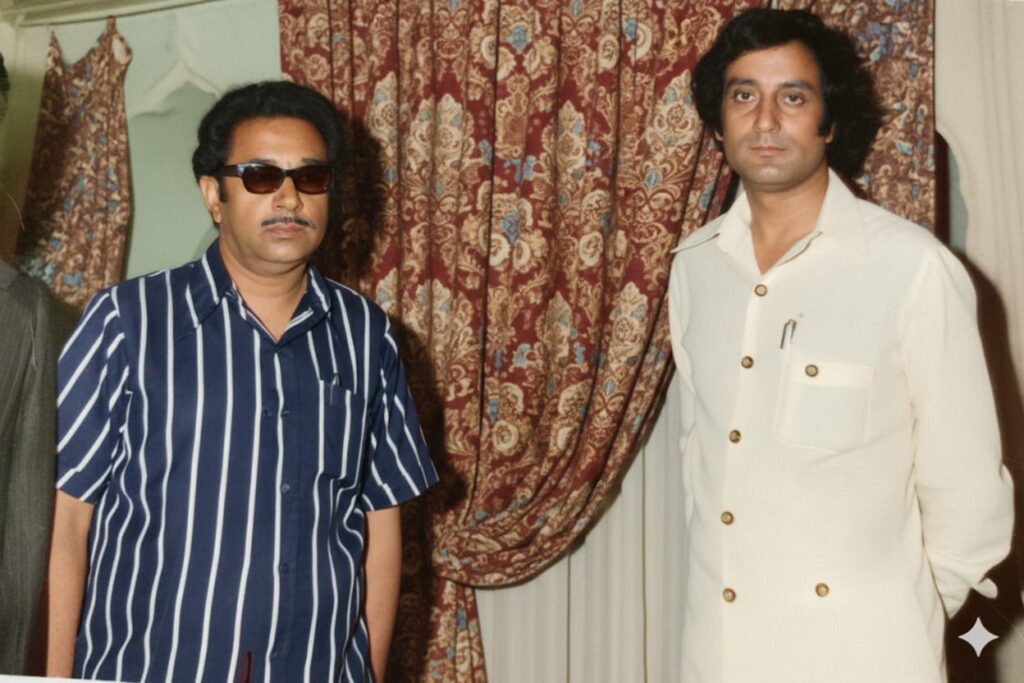
Syed Mehraj U Din Bukhari stepped into the room like he owned every corner. My mom’s brother-in-law, he silently showed me how to keep showing up, without calling attention to it.
He’d fix a wobbly chair while asking about your day, fold his newspaper so neat it looked new, drop a tiny story that would replay in your head for years. He had no lectures to give, just silent moves you catch yourself doing later.
That’s how I clocked that people leave bits of themselves behind. His bits just happen to be the heaviest.
He entered the world in 1928 in Keeri, a village near Pattan that sits in a gentle pocket of north Kashmir. His father moved the family to Srinagar when he was still a child, settling close to the shrine of Makdoom Sahab.
The neighbourhood carried its own soundscape: call to prayer drifting from the hill, footsteps on the steep stairs, and vendors sending out their calls.
The family found both faith and belonging there, and the youngest son grew up in that environment with a sense of purpose.
He completed his education in Srinagar, earned a position at the State Road Transport Corporation, and felt the security that came with a government job in those years.
He married my aunt in 1954 and started to build a steady domestic life. There was comfort in that routine: a salary at the end of the month, a home in a city that held its own charm, and plans settling into place.
Pain interrupted all of it.
In 1957, he developed a sharp ache in his left lower back. At first, the family thought it was a passing infection. Doctors soon discovered a large stone inside his kidney.
Tools for diagnosis were limited in those days, and every fresh detail brought more fear.
The pain deepened, and the stakes rose fast for a man whose life had barely begun.
He was taken to the best medical minds in the valley. Dr. Ali Jan examined him with great care and advised surgery. Dr. Ghulam Rasool prepared to operate. Kidney stone surgery in the late fifties was considered a major ordeal. Every relative knew this.
The summer of 1958 became the season when the family learned how slow time can move inside hospital corridors.
He was wheeled into the operation theatre in SMHS Hospital. Four hours passed. Then a moment of dread when we saw Dr. Ali Jan rush toward the theatre.
After five and a half long hours, the news arrived that he had survived the operation. The family felt a wave of relief wash over them. He regained consciousness the next day.
A whisper of truth soon replaced the relief. The stone had stayed inside him. It was shaped like a staghorn and had taken over the entire kidney. Removal would require taking out the kidney itself at a later stage.
That decision would come with its own fears. Losing a kidney in the late fifties was a calamity few families could imagine.
My uncle chose patience. Surgeons and ISM practitioners gave him a plan: drink large amounts of water, eat carefully, and manage every hour with attention.
He followed the instructions as if they were sacred.
The twelve years that followed turned into a long rehearsal in endurance. He went to office, looked after his responsibilities, and lived with pain that visited him often.
None of us ever heard him complain. He built a life inside the limits that fate had drawn for him.
In January 1970, he decided the time had come for a final resolution. He needed the surgery. He would travel outside the state for the first time for medical care.
I was a university student on winter vacation. I accompanied him to New Delhi.
We found accommodation at a mess near Prithvi Raj Road, where a relative from the J&K Arts Emporium lived. Two days later, we walked into AIIMS.
I remember the surprise of entering a national institution with hardly any crowd. Clean floors, calm halls, and a reception area felt more like a well-run guest house than a hospital. Admission was simple and affordable.
A doctor, likely Dr. Bapna from the nephrology department, examined him and recommended immediate admission. Tests continued for a week.
I spent my days with my uncle and my evenings at the mess near Lodhi Garden. Travel between the two places cost fifty paise. The city felt wide and easy to move through.
Inside the ward, I watched the nurses work. Many were from Kerala. One of them, Alima, became a figure we never forgot.
She was around twenty-five, graceful, confident, and entirely devoted to her patients. She tended to them with a gentleness that softened the harsh lights of the ward. She fed them, cleaned them, spoke to them kindly, and moved with efficiency through long shifts. Patients found comfort in her presence. My uncle admired her. I did too.
After the tests, the doctors delivered their decision. His left kidney needed removal. The right one functioned, though it was smaller than usual. The surgeons assured him he could live a full life with one kidney. He heard them, thanked them, and chose to return to Srinagar for the surgery.
The decision surprised me. AIIMS had everything. He still wanted to come home. Kashmir was where he felt anchored.
Some months later, the nephrectomy was performed in Srinagar. It succeeded. He lived well for the next twelve years. He returned to his office, rose through the ranks, and eventually became General Manager of the passenger fleet at SRTC.
Uncle kept a steady routine. He read often, spent time with family, and lived with the same discipline that had carried him through his worst years.
In January 1982, at the age of fifty-three, he felt chest pain through an entire day and night. Doctors gave him medicines.
By morning, before he could reach the hospital, he had a massive heart attack. He passed away in his home, leaving behind a wife who adored him, a daughter who needed him, and relatives who had always looked up to him.
I return to his memory often. He lived without fanfare, carried his strength sans display, and built a life held together by patience.
His story sits in my family like a steady flame, and his endurance holds its own truth.
Lives like his teach us that strength can be silent and still shape the generations that follow.