
By Dr. Rizwan Rumi
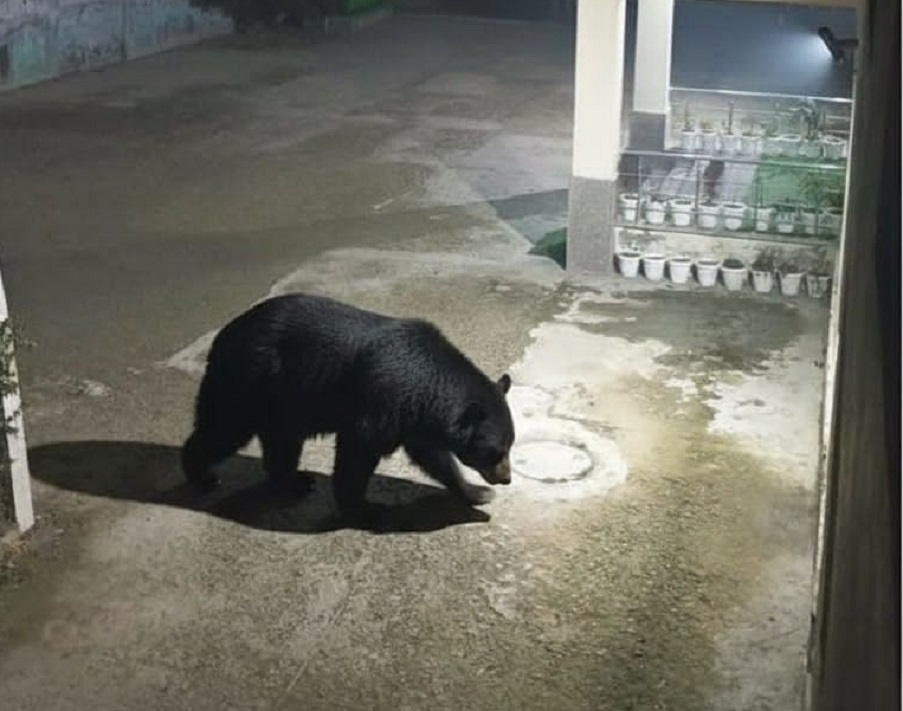
The bear arrived in Srinagar like a restless traveller who refused to read the season.
It should have curled into a den somewhere in the upper forests by now, locked inside the long winter sleep that makes the cold easier to bear.
Instead it roamed the city with a strange energy, slipping through campuses, brushing past boundary walls, leaving half-seen shadows on security cameras, and finishing its nights with a swim in the chilled waters of Nigeen.
People spoke of it with nervous jokes in daytime markets, then lay awake after sundown, listening for the scrape of claws on tin roofs.
Wildlife officers spent night after night tracing it through lanes that usually host students, shopkeepers and caretakers, instead of a hulking animal shaking droplets from its coat.
They said the bear seemed confused, not aggressive, as if pushed downhill by forces larger than instinct.
Word of the bear moved through the city like whispered gossip. Parents kept their children close, and hostel gates clanged shut long before dusk. In Hazratbal and Naseem Bagh, guards who used to watch for stray dogs now tracked a larger, stranger presence, a figure that might vault over walls without warning.
The story of this bear does not stand alone. It folds into a broader tale that has been unfolding across the valley for years: a slow and steady drift of wild animals toward human life.
Official data up to March 2024 records 264 deaths and more than 3,100 injuries from wildlife encounters over nearly two decades. Assembly figures for 2023-24 and 2024-25 each list 16 deaths.
Every district has lived through its share of shock: a maize field raided in Budgam, a leopard spotted under a streetlight in Kulgam, boar tracks found in Sopore and Pulwama.
These incidents trace back to the forests, where the pace of change has quickened.
Jammu & Kashmir has seen a surge in wildfires, with estimates for the 2024-25 fiscal year crossing a thousand. Hillsides that once held thick undergrowth lie scorched, turning safe shelters into exposed slopes.
When fires run through a forest, herbivores rush for escape, and predators follow the trail of movement. The chain ends in orchards, lanes and backyards that cannot absorb this sudden arrival.
There is another layer to the problem.
Forests have been clipped at the edges over the years through new roads, expanding suburbs and sanctioned clearances. Movement corridors that once guided animals seasonally have been broken into small, confused patches.
In these fractured spaces, a leopard can wander into a nursery school, drawn by the scent of dogs or livestock. A bear can stumble into an abandoned storage shed, searching for food where none exists.
These animals are responding to a landscape where every familiar signpost has shifted.
Prey loss adds pressure. Deer numbers have thinned in many pockets. Predators respond in the only way they can: they widen their search.
Villages with open garbage pits, free-ranging dogs and unprotected livestock turn into easy targets. Wild boar, thriving across North, Central and South Kashmir, have become bold raiders of maize and apple fields. Farmers speak of nights spent guarding their land with torches and makeshift alarms, unsure of what they will find at dawn.
A single animal can ruin a season of crops, topple fences, injure livestock and disrupt livelihoods built on narrow margins.
Compensation, when it comes, takes time and paperwork. Families wait through long stretches of worry. Wildlife rescue teams work hard, though their resources seldom match the scale of the challenge. Officers often carry tranquilizers, nets and torches into terrain that needs stronger tools and larger teams.
Governments have taken action through rescues, advisories and relocations. These steps help in the moment, though the rise in encounters shows that the crisis sits deeper.
Forests need corridors restored and protected, not pieced together during emergencies. Springs need revival. Fire lines and early-warning systems must be strengthened. Waste near forest edges demands strict control so that animals do not treat dumps like open invitations.
Communities can shape solutions too. Small shelters for livestock, solar lights for orchard perimeters, neighbourhood alert groups and steady awareness programs can prevent panic.
Compensation must be faster and transparent. Farmers who feel heard are less likely to act in fear, which protects both people and animals.
At the heart of this issue lies an appeal for understanding.
The bear that swam through Nigeen in midwinter carries no plot against the city. It carries hunger, disruption and a forest that no longer gives it the cues it once trusted.
The leopard on a rooftop in Tral or the boar in a Pulwama field responds to altered ground beneath its feet.
There’s still a chance for forests and communities in Kashmir to share space.
Paths for wildlife can be restored, fields can heal, and nights can return to a gentle pulse: animals in the wild, lights in our homes, and stories keeping us awake, rather than anxious.
- The author is a Srinagar-based researcher and writer. He can be reached at [email protected].