By Dr Mushtaq Rather
I teach English at HSS Salia, a school set among the orchards about twenty minutes from Anantnag town. Most of our students walk in from villages you won’t find on many maps, including Hapatnar, Vail Nagbal, Halwan and Pethgoo.
On some winter mornings, it takes them close to two hours. The mud freezes stiff, the wind feels sharp, and they still keep walking.
Six years ago, the school was only holding on. The pass rate hovered around sixty-five. Many benches emptied out after Class 8, especially for the girls. Teachers finished their classes, locked the rooms and went home.
Then Zahida Ma’am arrived.
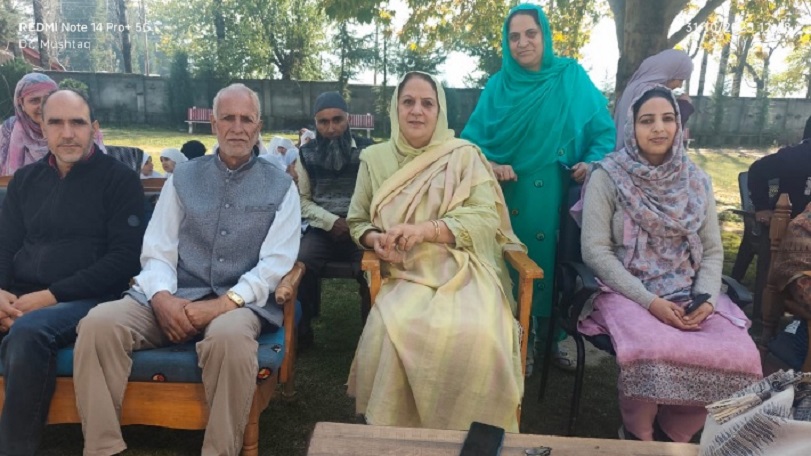
She was soft-spoken, always in a cream shawl, and she looked like someone who should have been resting instead of running a school. She had health issues she rarely mentioned, though it was clear some days were tougher than others.
Even then, she reached by eight, greeted Ghulam Hassan the sweeper first, and then the rest of us.
At her first staff meeting, she placed a blank sheet of paper on the table and asked, “What do we need to make this place feel like home?”
We thought she was joking. Government schools don’t usually talk that way.
Then people slowly began to speak: better lights in the library, a small fund for kids whose books were ruined in the floods, and a morning assembly that actually starts on time.
She wrote down every point. By the time the apple blossoms fell that year, half of it was already done.
I kept waiting for the strict-principal phase: the shouting, the circulars, and the warnings about pending files. It never showed up.
Instead, she kept a blue notebook in her office. Anyone could write in it: a child needing shoes, a peon worried about hospital bills, and me asking for storybooks in Kashmiri.
She read it every night and handled most of it. Whatever she could not manage alone, she brought to us and said, “Let’s carry this together.”
The numbers improved quickly.
The pass percentage crossed ninety. More girls stayed through Class 12. The dropout rate dropped. Inspectors began leaving with almost empty notepads.
The real change showed up in smaller moments: kids laughing in the courtyard, teachers staying late to plan lessons, and parents waiting at the gate just to say thank you.
The principal seemed to know everything. The new education policy, recent court rulings, even which wildflower opens first above Pethgoo. We started calling her Human Google. She would smile and say, “Google doesn’t have to mark your attendance in minus six degrees.”
Assembly speeches were my favourite. She never shouted. She’d talk about a boy from Halwan who got ninety-eight in math, or the cook who bought his son a bicycle with overtime money, and suddenly every kid in the ground felt ten feet tall.
She treated everyone the same. Senior lecturer, Class-IV employee, and child who walked four hours received same respect.
Ghulam Hassan still keeps a note she once gave him: “Thank you for keeping our school beautiful. Your daughter’s fees are taken care of this year.”
This June, the transfer order came. GHSS Anantnag needed a principal, and her name was on it. We read the paper like it was written in a language we didn’t know.
Last week, on her final day, the kids brought flowers they picked on the way: wild irises, a few late roses. Someone started the school song without being asked. She stood on the stage, eyes wet but smiling, and said, “You people made this school. I only held the door open for a while.”
Then she got in the car and left.
The next morning, the bell rang at the usual time, but the corridors felt wider. The same children walked in with the same red mud on their shoes. Everything sounded a little quieter.
She is twenty kilometers away now, probably already asking a new group of teachers what their school needs most. Here in Salia, we will keep the pass percentage high, keep the volleyball team strong and keep the library lights glowing.
Each time, a child from Hapatnar pushes open the gate with cold fingers, I will remember the woman who made sure their long walk mattered.
And I will think about how some people do more than run a school.
They turn it into a place you carry with you, long after they have moved on.
- The author teaches English at HSS Salia in South Kashmir.