
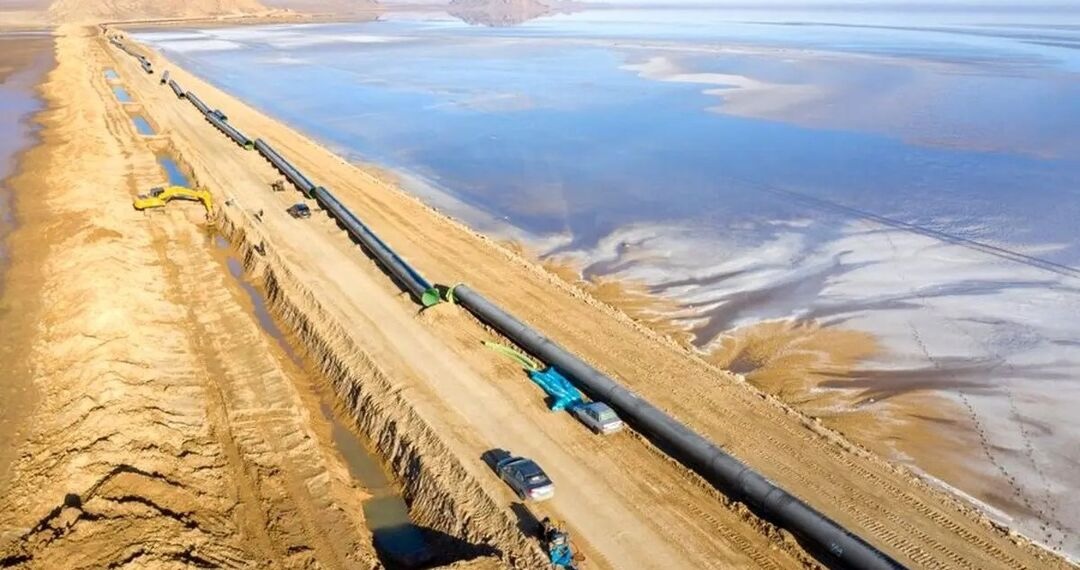
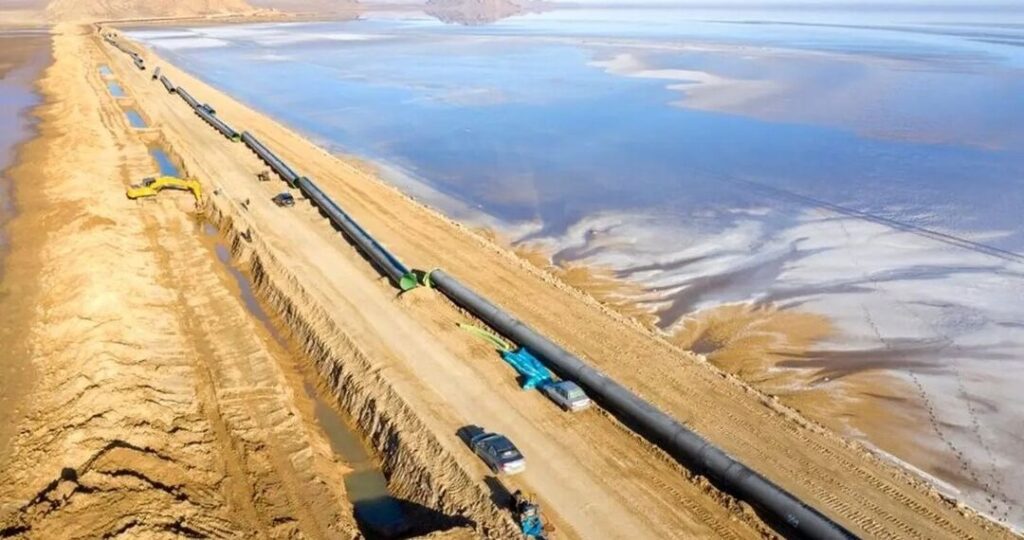
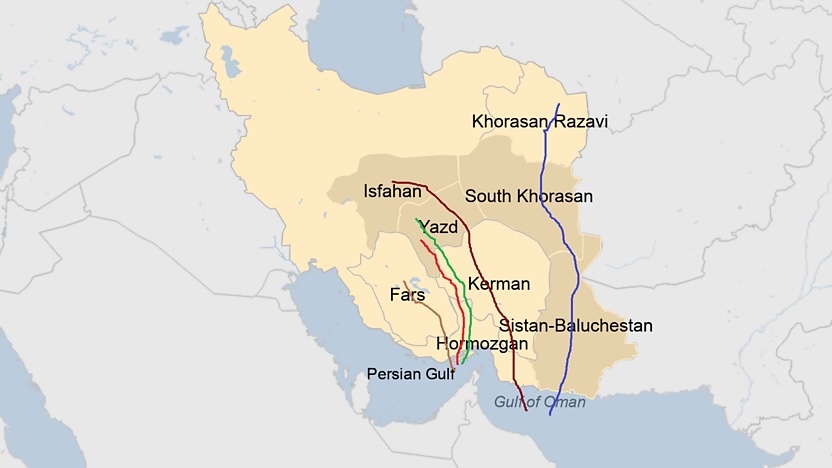
Tehran ~ Iran has launched one of its most ambitious infrastructure projects to date — an 800-kilometre pipeline transporting desalinated seawater from the Gulf of Oman to the central plateau — even as new satellite images and meteorological assessments reveal the country is battling its worst water crisis in half a century.
President Masoud Pezeshkian inaugurated the project on Saturday in Sirjan, calling it a “strategic lifeline” intended to secure water for drought-stricken industrial hubs such as Isfahan.
A $291M Megaproject
Built in just two years at a cost of about $291.6 million, the pipeline will carry desalinated water to Isfahan province, home to Mobarakeh Steel, Iran’s largest industrial enterprise. The steel giant provided significant technical and financial support.
For decades, industries in Isfahan have relied on the Zayandehrud, once one of Iran’s most iconic rivers but now dry for much of the year due to chronic drought, upstream diversions and mismanagement.
Pezeshkian said the new project will: Reduce reliance on depleted inland rivers, Guarantee stable water supplies for industries and Prevent production shutdowns caused by periodic shortages.
He added that Iran must shift industrial expansion toward the southern coasts, where the Oman Sea and Persian Gulf offer more reliable water and energy resources.
A Pivot Toward a Marine Economy
Iran is tying the water-transfer megaproject to a broader national reorientation toward a marine economy, anchored along the Makran coast.
The strategy includes:
- Modernising major ports such as Chabahar, Bandar Abbas, and Bushehr
- Developing coastal industrial zones
- Expanding renewable energy projects including wind, solar, tidal and wave energy
- Growing aquaculture, marine biotechnology and algae-based biofuels
- Attracting private and foreign investment to maritime industries
Officials say this pivot is necessary to reduce pressure on fragile inland ecosystems and to harness the country’s strategic access to open seas.
Cloud-Seeding
While celebrating the megaproject, authorities are simultaneously resorting to desperate short-term measures.
On Saturday, Iran launched emergency cloud-seeding operations to induce rainfall over the Lake Urmia basin, IRNA reported. Aircraft equipped with dispersal chemicals were deployed amid an 89% reduction in seasonal rainfall — the lowest in five decades.
The country is in its fifth consecutive year of severe drought, with major reservoirs at critical lows.
Satellite Images Show Dams Running Dry
New satellite imagery released by Vantor, a satellite-data firm, shows drastic before-and-after comparisons of dams that have nearly disappeared across central and western Iran.
The images corroborate what environmental specialists have warned:
Pezeshkian recently said the crisis may force the government to ration water in Tehran — and even consider evacuation scenarios if conditions worsen.
Experts Warn of Systemic Mismanagement
Research by Adelphi Global and the German Federal Foreign Office notes that Iran’s water shortage is not driven by drought alone. Key contributors include poor water governance, ageing infrastructure, overexploitation of rivers and aquifers and unsustainable agricultural practices consuming nearly 90% of all freshwater.
Balancing Hope and Hard Reality
Environmentalists welcomed the Gulf of Oman pipeline as a step toward easing pressure on inland waterways but caution that large-scale desalination and long-distance transfers come with their own ecological burdens — including brine disposal, high energy demands and long-term economic costs.
Still, the project marks a significant turning point.
Iran is attempting to:
- Secure water for its industrial base
- Build a resilient coastal economy
- Confront a historic water crisis that threatens millions
As Pezeshkian noted at the inauguration, Iran’s future “can no longer depend solely on inland water sources.” The pipeline, he said, is both a safeguard for today’s industries and a bridge to a new maritime-driven economic era.