
Orientalism, a hoary discipline and a corpus of texts that probed into the vitals of non-Western societies, was poignantly and trenchantly critiqued by the late great Edward Said.
The intellectual of intellectuals and scholar of scholars postulated, rightly, that Orientalism sought to denigrate non-Western societies by positing the ‘East’ as the ‘West’s’ ‘exotic other.’
Defined by a certain essentialism that held there was an irreducible essence to both the East and the West, and that the West was superior, this was brilliantly dissected, analyzed, and adumbrated by the great Edward Said.
Some attributes in the Orientalist schema about the peoples of the East were that they were ‘lazy’, ‘indolent’, ‘sensuous’, and ‘childlike’, among other things.
The great Edward Said also stated that Orientalism became entangled with power and thereby morphed into a handmaiden of imperialism and colonialism.
This corpus of study became the predicate that justified colonial intervention in non-Western societies.
So far, so good. Said, the genius, was spot on. But, for a moment and for the sake of hypothesis, let’s subtract Orientalism’s entanglement with power and colonialism/imperialism.
Minus this, were Orientalism’s assessments and assertions correct about non-Western societies?
Granted that some of the scholarly edifice of colonialism was built on stereotypes, but stereotypes are premised on half-truths.
There, then, by inference, must have been something right and some truth to Orientalism. If there is some truth to Orientalism, what is that?
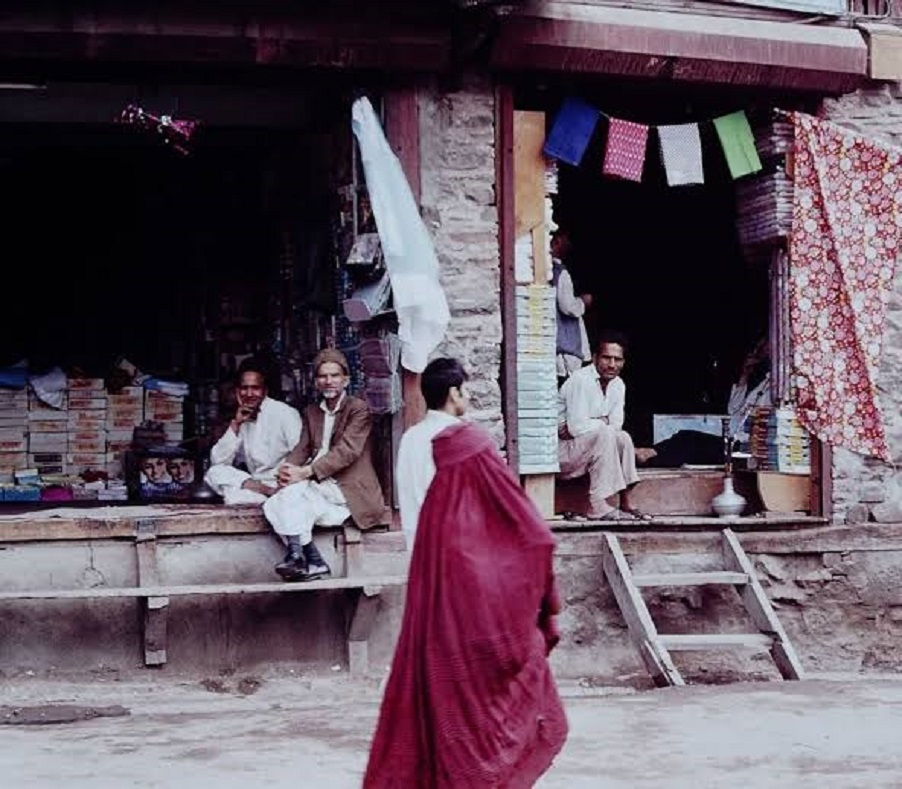
I will use Kashmir as a ‘case study’ for teasing out elements of truth in Orientalist tropes, given that it is my referent.
In the main, Orientalists who wrote about Kashmir mentioned and drew attention to some defining traits of Kashmiris. These are: Kashmiris were a quarrelsome people, quick to temper and argument, Kashmiris lied, and they were lazy.
Can any of us Kashmiris realistically claim or assert that any of these characterizations are incorrect?
Yes, there will be variations and differing intensities, but can any of us claim that there is a robust work ethic in Kashmir? That we are scrupulously honest? That we are not a quarrelsome people?
In all likelihood, the answers to these questions would correspond to Orientalist assertions about us.
The aim of this essay is not to reinforce or validate Orientalist assertions and characterizations of us Kashmiris. The larger idea is a wake-up call.
Just a glimpse around us and our ‘habitus’ is enough to assert that, ‘the more things have changed, the more they have remained the same.’
We might have become a ‘car-owning society’ (alas); we may live in houses (some palatial, others relatively modest); some of us may mimic and ape the West in snazzy coffee shops and wear blue denims, but in some important parameters of life, we are and remain the same.
It is high time, then, that we change and evolve into a dynamic society and culture that can hold its own.
This is not, for one moment, to suggest that we give up on or jettison the traditions and values that give us meaning and an anchor.
No. Not at all.
Tradition and values that make us who we are are the sine qua non of our existence.
All that is being suggested here is that we introspect and jettison aspects that are insalubrious and ungainly: laziness, poor work ethic, indolence, and other negative character traits that we all know about.
This task falls on all of us, but more so on the intelligentsia.
But, in actual and real terms, what is observed is that those who know about Orientalism, for example, use it as a crutch to ‘talk back at the Orientalists’ by ‘returning the proverbial gaze.’ Is this enough?
No. It is not.
If meaningful reform of our society is the ‘name of the game,’ then any critique of it, well-meaning or motivated, has to be taken on board.
The natural follow-up to this has to be, to repeat, introspection and an across-the-board effort at reform. Is this possible?
Definitely.
At the risk of sounding somewhat pompous, Kashmiris are an intelligent people (in relative terms). But this intelligence has to be used in directions that redound to broader and wider reform of our society.
Maybe a good starting point would be to understand Orientalist tropes about us and prove them wrong!