
By Jan Mohammad Mala
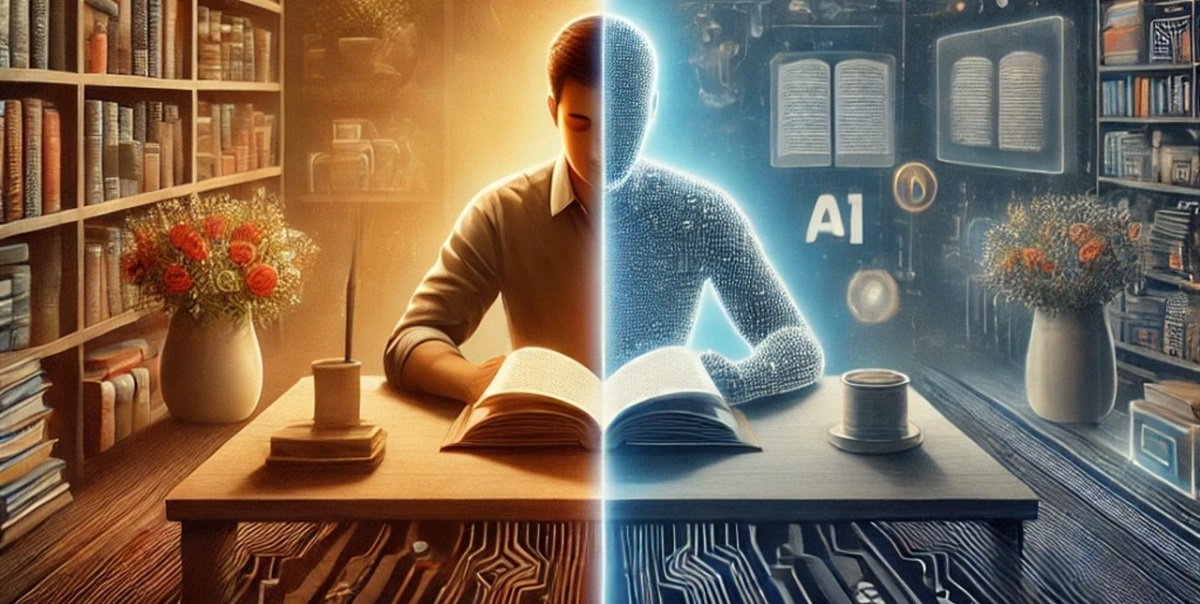
A few days ago, I walked into a library reading hall. The room was calm and most chairs were full. Students were there, but almost all of them stared at their phones, switching from one screen to another without stopping.
Only one student held a book and read.
He stayed with it, focused, while the rest of the world rushed past.
That moment stayed with me. It made me think about how much reading has changed in our lives.
Artificial intelligence makes information easier to get than ever before. We ask a question and get an answer in seconds. We read summaries instead of full books. We rely on ready-made explanations instead of thinking through ideas ourselves.
This is useful, but it also takes something away.
Reading has always been a slow, personal activity. It teaches patience, reflection, and focus.
A machine can give us facts, but it cannot give us the experience of thinking with a book. Only the reader can do that work.
Today, many people read just enough to understand the surface. They jump from one idea to another without taking time to think deeply. This limits understanding.
Reading deeply lets the mind connect ideas and see the bigger picture. Skipping that process makes it harder to follow complex thoughts and form our own opinions.
Artificial intelligence can guide us, but it cannot replace thinking.
The decline in reading is easy to see. Many people struggle to focus on long texts. They scroll through posts without really paying attention. Screens train us to look for fast results, while books ask us to slow down.
This makes reading feel hard for many young people.
Even libraries show this change. More people come for internet access than for books. Shelves are full, but pages remain unread.
Reading is losing its place, and the silence of the library feels different because of it.
Reading shapes how we understand the world. It sharpens judgment, teaches us to question, and helps us express ideas clearly. It improves memory and understanding.
Artificial intelligence can help with learning, but it cannot replace the mental growth that reading builds. Only reading can do that.
Reading also helps people connect. It gives us a shared sense of knowledge.
When reading declines, conversations become shallow. People rely on headlines or short messages, which leads to confusion and misunderstanding.
Families and schools can help bring reading back. Children who see books at home become curious. Parents who read show by example. Teachers who give time for reading help students explore ideas beyond textbooks.
Libraries can host reading circles and discussions. Making reading part of daily life strengthens a community’s mind and spirit.
Artificial intelligence will keep growing and making life faster and easier. But it cannot replace deep thinking.
Reading gives the mind time to pause and ideas time to settle. It slows us down in a world that rushes forward. It gives clarity and calm.
When I think of the student with a book in the library, I see hope. Even surrounded by screens, some people still choose books. That choice matters.
Reading is not lost. Even a few pages a day improve focus and bring peace. Reading does not ask for perfection. It only asks for attention.
In an age shaped by artificial intelligence, reading remains one of the most human things we can do. It strengthens thinking, feeds imagination, and keeps us connected to meaning.
Learning is slow and personal. Reading may seem simple, but it has a deep impact.
It keeps the mind alive when everything else tries to pull it away.
- The author is a Librarian at the Department of Libraries & Research, J&K. He can be reached at [email protected].