By Muntaha Amin
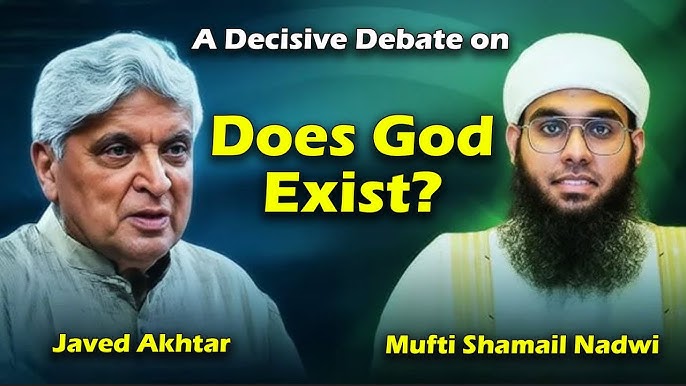
The debate between Javed Akhtar and Mufti Shamail is trending everywhere, sparking conversations across social media and living rooms alike. The buzz drew me in to watch the full discussion, titled Does God Exist?
As an observer, I wasn’t just paying attention to the arguments. What struck me most was the way the exchange unfolded and the reactions it sparked.
What I want to reflect on is the nature of debates themselves, especially this style of presenting arguments and counter-arguments within a fixed time frame.
This way of sharing knowledge often feels self-defeating. It rarely seems like anyone truly gains anything meaningful from the exchange.
If you watch the audience closely, their cheering, laughter, smiles, and overall energy reveal a lot about how people react.
Every answer sparked an emotional response, whether applause or laughter. These reactions tapped into a deep sense of pride tied to identity, boosting the audience’s ego no matter which side they supported.
It reminded me of the Zakir Naik debates that often aired on our television. Even through the screen, the energy of the auditorium was unmistakable.
The audience’s reactions were intense, especially when Naik defended Islam or presented other views as the opposing “other.”
The pattern of emotion and excitement was clear. The debate felt more like a clash of identities and egos than a conversation aimed at personal growth, genuine understanding, or meaningful reflection.
It does not matter who won. Knowledge should never be about victory. It grows slowly, like ideas that seep in over time and take root within us. True understanding is felt deeply, as something that touches every vein and bone.
Knowledge is not meant to be a spectacle of arguments, a show of intellectual power, or a way to boost the ego of any identity.
The debate about God, in many ways, felt like a classic sports match, like a cricket game between two rival teams. Each side carried its own identity and sense of pride.
When people watch a match, they already pick a side, whether a team, a nation, or an idea. Every ball, catch, or boundary sparks excitement, laughter, and adrenaline. Even small win stirs emotions, and just like in sports, both sides feel the rush and passion.
Watching the talk show, especially the aftermath on social media, felt exactly like this.
Every answer from either side riled up the audience, tapping into their identities and beliefs.
Online, the debate quickly turned into a question of winning or losing rather than understanding or reflection.
The words used against Javed Akhtar, like “smashed,” “cooked,” “beaten,” or “lost”, were strikingly violent in meaning.
They showed that for many, this exchange of ideas was less about understanding and more about adrenaline, winning and losing, and making the other person feel small or defeated.
The irony is that this was supposed to be a conversation about God. It should never have turned into a display of nationalistic, patriotic, or religio-cultural egos.
The discussion was about the ultimate reality of the universe, but it ended up feeling almost farcical.
Mufti Shamail’s use of complicated academic language, without explaining it in simple, accessible terms, made it hard for the other side to engage.
It was as if God himself had been made inaccessible in the conversation, which only added to the irony.
It’s also clear that this was a show on a YouTube channel, designed for maximum viewership.
Like sports matches, the audience’s attention often depends on the emotional intensity and adrenaline of the content.
The program’s aim was clearly not true knowledge or understanding. Yet people watched and discussed it on social media as if the purpose was to understand God or convert someone’s lifelong beliefs in a one-and-a-half-hour debate.
That is a mistaken view of the show.
And it makes one wonder: when did God become something to defend with applause? When did belief turn into a scoreboard?
And most importantly, when did faith become about defeating, cooking, or smashing someone else?
— The author is a doctoral candidate at the Media Education Research Centre, University of Kashmir. She is also an independent filmmaker and a freelance media practitioner.