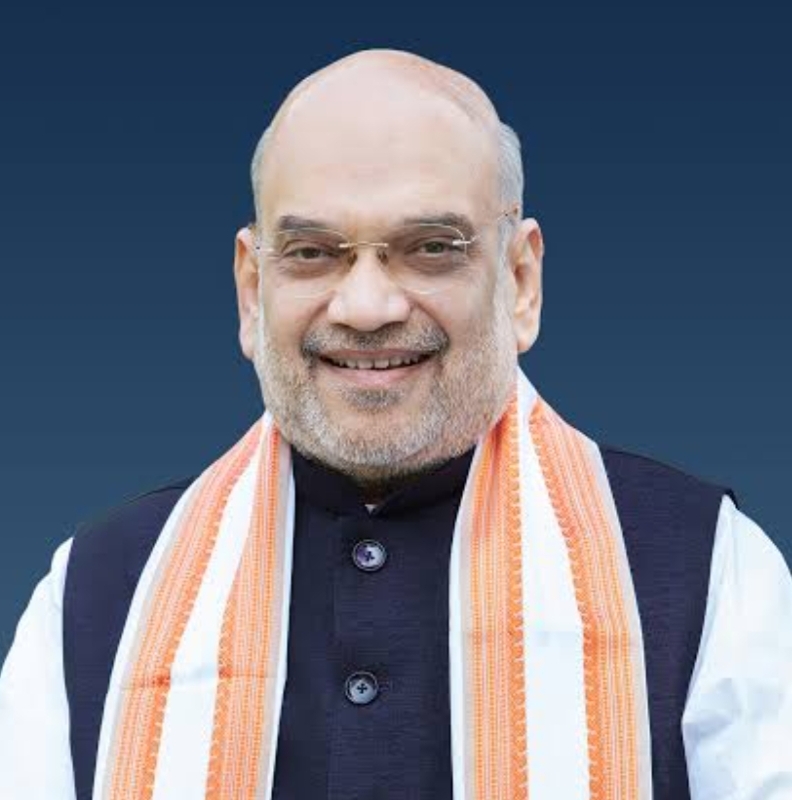
Srinagar, Dec 26 (KINS): Union Home Minister and Minister of Cooperation Amit Shah on Friday inaugurated the two-day Anti-Terrorism Conference–2025 in New Delhi.
The conference is being organised by the National Investigation Agency (NIA) under the Ministry of Home Affairs and is aimed at strengthening India’s fight against terrorism and emerging security challenges.
On the occasion, the Home Minister also unveiled the updated crime manual prepared by the NIA and launched two key digital platforms — the Organised Crime Network Database and the Lost, Looted and Recovered Weapon Database. The event was attended by Union Ministers of State for Home Affairs Nityanand Rai and Bandi Sanjay Kumar, senior officials from central agencies, Director Generals of Police from states and Union Territories, and experts from fields such as law, forensics, and technology.
Addressing the conference, Amit Shah said that under Prime Minister Narendra Modi’s vision of zero tolerance against terrorism, this annual conference has emerged as an important platform to deal with new and evolving threats. He said the conference is not limited to discussions alone, but results in concrete action points that are followed up throughout the year by the NIA and other agencies, helping build a strong anti-terrorism grid across the country.
The Home Minister stressed that all terrorist incidents in India and across the world must be closely analysed to further strengthen counter-terrorism capabilities. He noted that terrorism is changing rapidly due to the increasing use of technology and warned that security agencies must always stay ahead of terrorists. He said the country must prepare itself to face future and unseen challenges by building a strong and impenetrable anti-terror framework for coming generations.
Amit Shah highlighted the importance of coordination and uniformity in operations. He said that only through operational uniformity can accurate threat assessments be made, intelligence be shared effectively, and coordinated action be taken. In this context, he strongly advocated for a common Anti-Terrorism Squad (ATS) structure across all states and urged Directors General of Police to implement it at the earliest.
The Home Minister also spoke about the growing threat of organised crime, noting that criminal networks involved in extortion and ransom often link up with terrorist organisations when their leaders flee abroad. He said the newly launched Organised Crime Network Database will help states, in coordination with the NIA, CBI, and IB, to identify and dismantle such networks. He announced that the government is preparing an action plan to launch a 360-degree strike against organised crime.
Referring to recent terror incidents, Amit Shah said the attack in Baisaran Valley was meant to disturb communal harmony and damage the new wave of development and tourism in Kashmir. He said that based on precise intelligence, Indian security forces neutralised the terrorists and sent a strong message to Pakistan. He noted that for the first time, those who planned a terror attack were punished through Operation Sindoor, while those who carried it out were eliminated under Operation Mahadev.
The Home Minister also praised the Jammu and Kashmir Police for their investigation into the Delhi blast case, saying the recovery of large quantities of explosives and the arrest of the entire network prevented a major tragedy. He said these investigations were examples of exceptional and alert policing that saved the country from serious danger.
Amit Shah emphasised the need for better use of technology and data sharing. He said agencies should follow the principle of “Duty to Share” rather than “Need to Know” and called for a seamless national framework where data and technology used by different agencies can communicate with each other. He also stressed the mandatory use of platforms like NATGRID and NIDAAN in specific investigations to uncover hidden links between cases.
Highlighting India’s growing global and economic stature, the Home Minister said that as the country progresses, security challenges will also increase. He stressed the need for strong internal security mechanisms, including preparedness against cyber warfare, information warfare, and hybrid forms of terrorism.
Concluding his address, Amit Shah called upon all central and state agencies to work together as “Team India” for national security. He said it is the collective responsibility of all stakeholders to build a strong, future-ready anti-terrorism grid that can effectively counter every challenge and ensure a safe and secure India.(KINS)