By Faisal Kawoosa
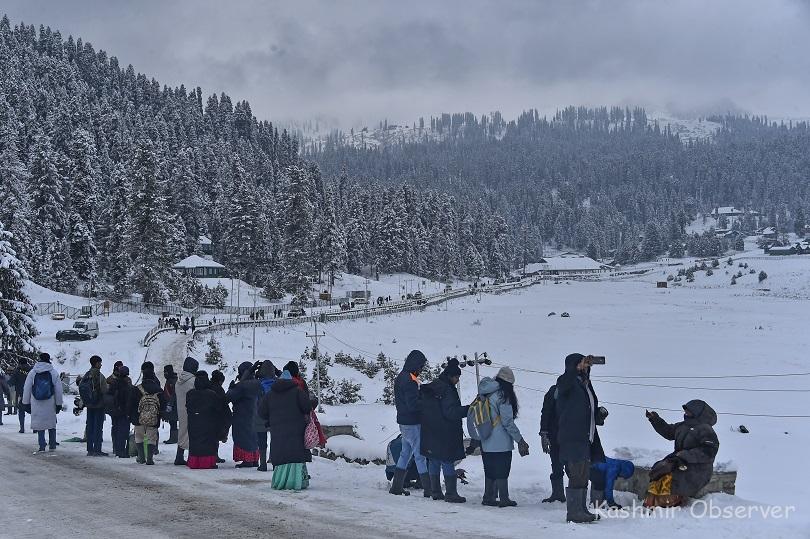
Tourism is our pride. No one in Jammu and Kashmir doubts that. It feeds families, keeps small businesses alive, and gives the region a sense of global connection.
But pride alone cannot carry an economy, especially one as young, educated, and restless as ours.
One year into the Omar Abdullah government, it is fair to ask a simple question: why has the digital sector still not been treated as a serious economic priority?
This is not a verdict on the government’s overall performance. That task belongs to voters and governance experts. This is a citizen’s argument about a missed opportunity.
Even within today’s limited powers and resources, much more could have been done to place Jammu and Kashmir on India’s digital map.
Every economy has legacy sectors and sunrise sectors. In J&K, the legacy sectors are obvious: tourism, agriculture, horticulture, and handicrafts. They matter deeply and must continue to receive support.
But the sunrise sectors require intention. They do not grow on their own.
Digital is the most obvious sunrise sector of our time, but Jammu and Kashmir has still not named it, framed it, or pushed it as such.
This silence is puzzling because the case for digital is unusually strong here.
Start with capital. Most digital businesses do not need massive investments. Unless you are building deep tech or hardware-heavy platforms, modest capital can go a long way.
An investment of eight to ten crore rupees can support a 100-person IT operation in J&K, especially when land and facilities are available under industrial concession rates.
For investors already cautious about the region, this lower entry barrier matters.
Then there is power.
Traditional industries consume enormous energy while employing fewer people due to automation.
A cement plant can burn through power and still employ only a couple hundred workers. A 100-person IT firm consumes far less electricity while creating stable, skilled jobs.
This trade-off should be obvious in a region that struggles with power supply and unemployment at the same time.
Human capital is another overlooked strength.
Jammu and Kashmir produces thousands of graduates, postgraduates, and diploma holders every year. Not all are job-ready on day one, but many can be trained within weeks.
Even in the age of artificial intelligence, human judgment still matters. AI assists, but people check, refine, and decide. Content, coding, analytics, quality control, and customer support still need skilled hands.
Add multilingual ability and cultural familiarity with Middle Eastern markets, and the talent pool becomes even more relevant.
Cost works in our favour too.
Office space, co-working hubs, and wages remain far more affordable than in Delhi NCR, Bengaluru, or Hyderabad.
After the pandemic, costs in major cities shot up. In J&K, they did not. This matters in a digital economy where companies increasingly split teams between high-cost innovation hubs and lower-cost execution centers.
Jammu and Kashmir fits neatly into that second role without being stuck there forever.
Geography offers another advantage.
The Jammu region, better connected to the plains, can support light digital manufacturing and hardware assembly. Kashmir, where manufacturing faces logistical hurdles, can focus on IT services, software, and digital products.
Few regions can offer both within one administrative unit. This balance could have become a signature strength.
There is also a generational reality the government cannot ignore.
Gen Z has entered the workforce. This is the first generation that has never known a world without the internet. Digital work is an expectation for them. If they do not find digitally equipped workplaces at home, they will leave.
Today we talk about unemployment. Tomorrow we may talk about the absence of workers.
And yet, a full year into the government’s tenure, there is still no clear digital policy, no formal recognition of the digital sector as a sunrise industry, and no visible roadmap to show where Jammu and Kashmir is headed or how it plans to get there.
There has been no serious attempt to plug Jammu and Kashmir into India’s rapidly expanding Global Capability Centre ecosystem.
The government has not carried out structured outreach to digital powerhouses like Karnataka, even though political alignments could have made such collaboration easier and faster. Nor has there been a focused effort to connect small IT and IT-enabled firms in J&K with large companies elsewhere that are actively looking for reliable and cost-effective outsourcing partners.
These were practical, achievable steps that required intent and coordination, rather than sweeping announcements or lofty promises.
This argument is essentially about time. The digital sector moves fast. A year lost here is not like a year lost in road building or irrigation planning.
In digital, a year can mean hundreds of startups launched elsewhere, thousands of jobs created, and entire supply chains formed without you.
What is gone is gone. But the opportunity is still alive.
As the government prepares its second budget, it must send a clear signal: digital is a priority.
Jammu and Kashmir cannot live on tourism alone.
If it wants stability, jobs, and hope for its young people, it must finally log in to the future.
- Faisal Kawoosa is the chief analyst and co-founder of Techarc, and a leading voice on India’s technology industry. He advises businesses and policymakers on emerging trends, and serves on the jury of the GLOMO Awards at the Mobile World Congress in Barcelona.