
By Ruqaya Akhter
Srinagar- A routine haemoglobin test has begun to tell a harsher story in clinics and anganwadi centres in Jammu and Kashmir.
Children who arrive with vaccination cards and hospital birth records still show low iron levels, and the latest national survey places the region among the worst affected in the country.
The numbers mark a sharp turn after a decade that had promised improvement.
Data from the National Family Health Survey show anaemia among children aged six to 59 months in India falling from 69.5 per cent in 2005-06 to 58.4 per cent in 2015-16, then climbing again to 67.1 per cent in 2019-21.
The rise reflects a broader shift toward moderate anaemia rather than severe forms, which suggests diets that fill stomachs without meeting micronutrient needs.
Jammu and Kashmir follows this national reversal with greater intensity.
Anaemia among young children dropped from 58.6 per cent in the earlier survey to 54 per cent a decade later, placing the region below the national average and aligning with improvements in antenatal care, immunisation and access to basic health services.
The latest round shows a surge to 72.7 per cent, pushing the Union Territory above the national level and into the same bracket as nutritionally stressed states.
The survey also reveals a layered nutrition picture.
About 26.9 per cent of children are stunted and 19 per cent are wasted, while nearly one in ten is overweight, pointing to diets high in calories and low in micronutrients.
Public health specialists describe this pattern as a shift from food scarcity to poor food quality, where cereals dominate meals and iron-rich foods appear less often.
Regional comparisons highlight the scale of the change.
Kerala, Goa and Sikkim continue to report lower prevalence, while Bihar, Uttar Pradesh, Madhya Pradesh and Rajasthan remain above 65 per cent.
Jammu and Kashmir now sits closer to these high-burden states than to its earlier peer group.
Among Union Territories, Delhi reports 69.2 per cent and Puducherry 64 per cent, while Lakshadweep stands far lower at 43.1 per cent.
Ladakh records an exceptionally high 93.9 per cent, underscoring the added strain of altitude, isolation and limited food diversity.
Doctors in government hospitals link the surge to maternal health and feeding practices.
Anaemia in women remains widespread nationally at 57 per cent, which increases the risk for low-birth-weight babies and depleted iron stores in infancy.
“We see mothers with low haemoglobin and children starting life with the same deficit,” said a paediatrician at a district hospital in the valley who asked not to be named because he was not authorised to speak publicly. He noted that complementary feeding often begins late and relies heavily on rice or wheat preparations.
Seasonal access to food plays a visible role.
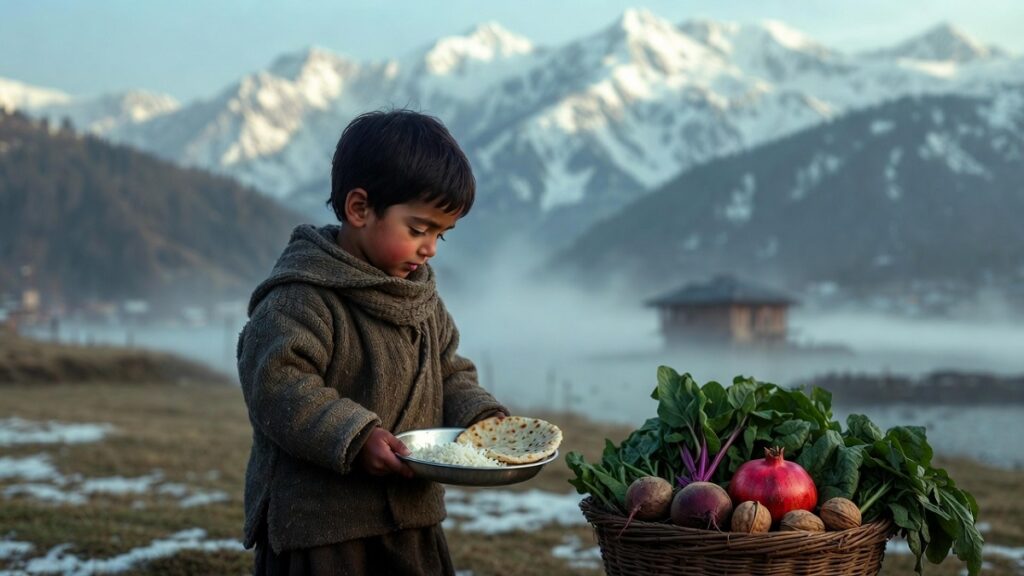
Winter months limit availability of fresh vegetables and animal protein, especially in remote and snowbound blocks. Stored staples sustain calories while reducing dietary diversity.
Surveys in other parts of India show that fewer than one in three children aged six to 23 months receive iron-rich foods regularly, a pattern that mirrors field reports from Kashmir.
Programme delivery shows uneven reach. National initiatives such as POSHAN Abhiyaan and Anaemia Mukt Bharat aim to expand iron supplementation, deworming and nutrition counselling, though implementation varies widely by region.
Studies using NFHS-5 data link higher anaemia rates to gaps in supplementation, maternal nutrition and poverty-related diet limits.
In remote areas of Jammu and Kashmir, anganwadi centres often operate with limited staff and infrastructure, and supply interruptions affect regular distribution of iron syrup and fortified foods, according to field workers and local health officials.
The pandemic years deepened these vulnerabilities. Disruptions to anganwadi services and school feeding programmes reduced access to supplementary nutrition, while income losses narrowed household food choices.
National analyses show anaemia rising during the same period across rural and urban groups, with increases of seven to nine percentage points in many districts.
Nutrition researchers point to a life-cycle pattern that begins before birth.
Adolescent girls in India show anaemia prevalence near 60 to 66 per cent in several studies, feeding into maternal anaemia and then childhood deficiency.
“Child anaemia reflects maternal anaemia, diet diversity and programme quality,” said a nutrition scientist involved in national survey analysis. “Health services alone cannot correct it.”
Some states have shown that strong supplement coverage and community monitoring can reduce the burden.
Recent programme scorecards place states with higher iron-folic acid coverage at the top of anaemia control rankings, suggesting that consistent last-mile delivery and counselling influence outcomes.
The rise in Jammu and Kashmir shows how medical gains can outpace nutrition gains. Hospital births and immunisation have expanded, while diets, maternal health and local programme delivery have lagged.
Anaemia in early childhood affects brain development, immunity and school readiness, with effects that extend into adult productivity.
The latest survey places the region at a point where recovery depends on reliable delivery, diversified local food systems and sustained maternal nutrition.
- The author is a research scholar at the Department of Economics, UOK.