
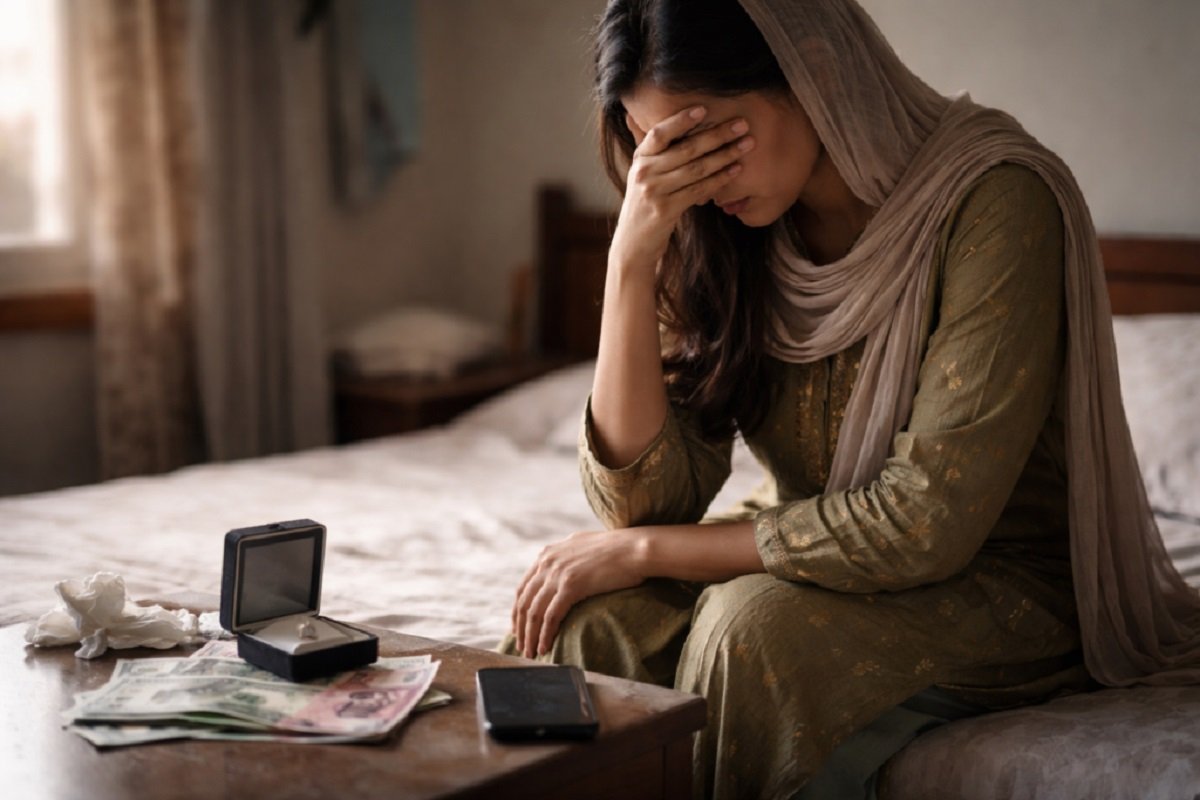

I sat with my friend last month and heard a story that refuses to leave my mind.
A young woman described an engagement that ended as something closer to a calculated extraction scheme than a failed romance.
The man arrived with elaborate promises of shared futures, solemn commitments, and honourable intentions stretching years ahead.
He pursued her actively through proper channels, proposed formal engagement with family blessings, created visible stability through gatherings.
But behind this careful performance moved intentions entirely divorced from love or partnership.
He isolated her systematically through manufactured conflicts involving his own relatives, cutting her off from external perspective. He extracted substantial money through detailed tales of business hardship.
Then he vanished behind claims she was a poor fit according to family standards, leaving her with empty hands, heavy debts, and diminished social standing.
This method follows a disturbing pattern appearing throughout Kashmir with increasing frequency in recent years.
Men position themselves as victims of hostile family members, cutting partners off from siblings, parents, and friends who might offer perspective. They paint themselves as lone warriors requiring emotional rescue and substantial financial support against overwhelming odds.
Simultaneously, they tell their families completely different stories, casting the woman as the source of tension, as difficult or demanding.
This double game builds complete emotional control while creating plausible excuses for eventual abandonment.
It creates perfect conditions for systematic extraction of money, labour, housing, and emotional energy over months or years. The target spends months defending her partner against a supposedly hostile world while he silently prepares his exit strategy and his next target.
The damage extends far beyond the immediate pain of broken engagements.
Women lose entire savings accounts accumulated through years of difficult work. They lose emotional stability, developing profound anxiety about future relationships. They also lose social standing as communities whisper about failed matches.
Families exhaust limited resources investigating alliances that were always hollow performances designed to extract maximum value. Communities absorb the fallout through damaged trust while perpetrators move freely toward new victims in different neighbourhoods.
This constitutes exploitation using marriage institutions as protective cover. It weaponizes trust itself, turning intimate knowledge into a tool for calculated extraction.
Calling these episodes simple relationship collapses misses the deliberate architecture of harm, the premeditated steps, the cold strategy involved.
Society possesses precise vocabulary for women who seek financial security through marriage arrangements. Pop culture provides endless depictions of female gold-diggers.
Men who reverse this dynamic, who engineer emotional dependence to secure money, escape naming in public discourse, operating in blind spots.
This blindness serves existing power structures effectively.
Harsh labels attach to female behaviour immediately and stick permanently. Male manipulation receives softer treatment as “complex situations” or “family interference.”
The friend’s fiancé extracted thousands under false pretenses of business investment and family medical emergencies. He left her bearing psychological scars and financial obligations while he sought his next opportunity in a different district.
Character determines exploitation, gender merely provides the method and the cultural cover.
Kashmir maintains deep respect for male leadership within family and community structures. Societies built themselves around this anchor through countless generations.
Strong leadership deserves genuine honour and willing deference. Manipulation hijacks this respect cynically. It uses cultural cover to enable theft and abandonment.
The issue demands clear distinction between genuine guardianship and predatory behaviour wearing traditional masks.
One builds collective strength through protection, provision, and moral example. The other destroys individual lives while hiding behind social conventions that limit questioning of male authority.
Communities benefit greatly from honourable male leadership. They suffer equally when bad actors exploit that same mantle for private gain.
Legal frameworks exist to address fraud and deception in marriage arrangements. Social mechanisms remain dramatically stunted, leaving gaps that predators exploit.
Victims face immediate questions about their personal judgment instead of receiving support or validation. Families worry about community reputation over individual justice.
This preference for silence allows cycles to repeat with mathematical precision across generations.
Every untold story enables the next perpetrator by keeping warning signals hidden.
Communities must develop new responses that place moral integrity above social appearances. They must create spaces where victims speak without shame or blame. They should demand accountability from those who exploit sacred institutions.
Education serves as partial armour against such schemes, though protection remains partial against skilled deceivers. Awareness of specific manipulation tactics helps potential targets recognize isolation attempts early in courtship. Understanding firm financial boundaries provides additional protection.
Beyond individual defense lies collective responsibility requiring active participation. Elders must examine potential matches with sharper eyes and harder questions. Religious leaders should address exploitation directly during premarital counseling sessions, naming the behaviour as sin.
Community heads ought to expose known predators openly rather than transferring problems to other localities through meek warnings. Neighbours should support victims visibly rather than joining whispers about broken engagements.
Marriage as an institution demands vigilant protection from those who seek to weaponize it for personal gain. Integrity calls for naming exploitation plainly and refusing euphemisms that hide harm.
Kashmir’s future rests on leadership that earns respect through honourable daily conduct rather than entitlement.
The friend’s empty ring box sits on her dresser as evidence of theft performed under sacred guise.
Communities must ensure such stories meet accountability instead of silence.
Through clear-eyed confrontation with manipulation, Kashmir can preserve the genuine human values underlying its cherished traditions.