By Tajamul Islam Salroo
Almost every entrepreneur today is either talking about CA storage or investing in it. But is this surge driven by real opportunity, or a growing herd mentality?
This question is becoming increasingly relevant as Kashmir witnesses a rapid expansion of Controlled Atmosphere (CA) storage facilities across major horticulture belts.
What was once an unfamiliar and niche segment has now turned into a popular investment choice, attracting businessmen, orchardists, and even first-time investors.
The primary reason behind this rush is the strong and well established apple economy of the region. Apples form the backbone of the region’s horticulture sector, and every year, a huge quantity is produced.
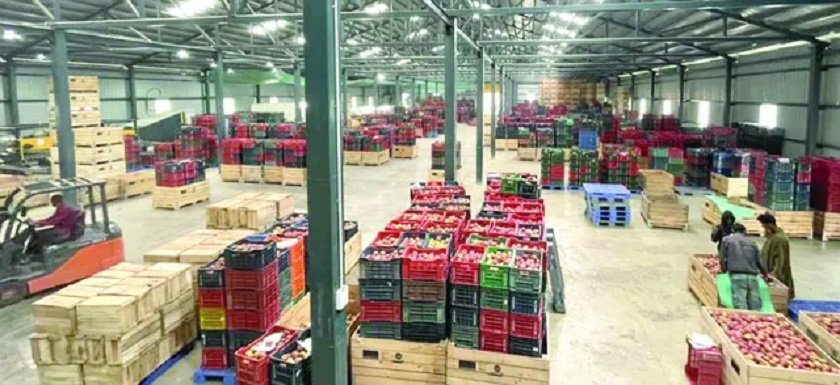
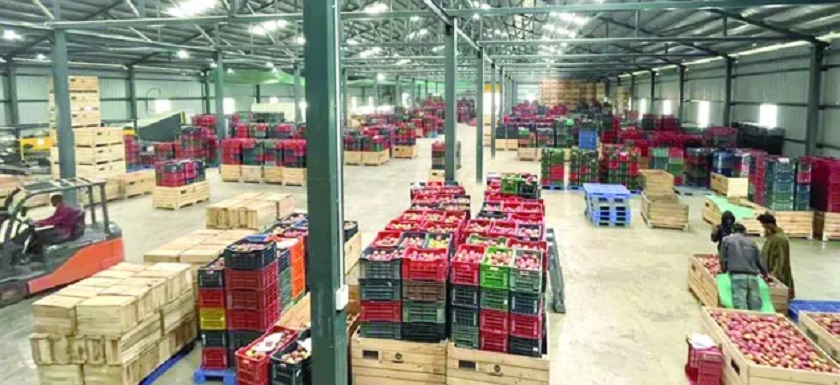
Traditionally, farmers used to sell their produce immediately after harvest due to lack of storage, often at low prices. CA storage has changed this completely.
By allowing apples to be preserved for several months without losing quality, it gives growers and traders the flexibility to sell when the market is favourable. This simple advantage has made CA storage a powerful tool for improving returns. Naturally, where there is value, investment follows.
At a broader level, there is some small gap between apple production and available storage capacity. However, this is only one side of the picture.
On the ground, certain areas, especially industrial zones, are witnessing a high concentration of CA stores. In such locations, competition is increasing, and storage charges are gradually coming down.
This means that while the overall scope exists, unplanned and clustered expansion may reduce profitability.
At the same time, we are witnessing a shift towards high-density apple plantation. These modern orchards produce higher yields and better-quality apples, especially premium grades that are perceived to be ideal for storage.
This creates a link between high-density farming and CA infrastructure.
While it is important to understand that only top-grade (A grade) apples benefit from CA storage, lower-grade produce (B grade) continues to be sold immediately in the market.
So, the success of a CA store depends not just on quantity, but on quality of supply.
CA store is seen as a highly profitable business because it generates income through storage charges and grading plays an important role in enhancing revenue.
However, the business comes with its own challenges of high capital investment, rising electricity costs, maintenance and operational complexity, and increasing competition.
From a broader industry perspective, it is evident that value in today’s market is created not just by producing goods, but by managing them efficiently after harvest.
Profitability, therefore, depends on planning, efficiency, and market understanding rather than just infrastructure.
One cannot ignore the growing trend of people entering the CA storage business simply because others are doing so. When a few units succeed, many more follow, often in the same area and with similar models.
This reflects a degree of herd mentality.
While growth and investment are positive signs, blind replication without proper study can lead to overcapacity and reduced returns. Not every project will succeed if planning is ignored.
CA storage is undoubtedly a vital part of Kashmir’s evolving horticulture ecosystem. Its importance will only increase with rising production and better farming practices.
However, sustainable success requires proper location planning, understanding of supply and demand, strong linkages with growers and traders, and efficient operations.
The focus should be on smart investment rather than fast investment.
The growing interest in CA storage reflects both opportunity and optimism. It is a sign that Kashmir’s business community is willing to invest and grow. At the same time, it is important to move with caution.
CA storage is not just about building infrastructure, it is about understanding the market, managing risk, and thinking long term.
Those who approach it with knowledge and planning will benefit. But those who follow the crowd without preparation may find it difficult in an increasingly competitive environment.
- The author is the Managing Director of Zum Zum Food Products, based at the Industrial Growth Centre, Lassipora. He can be reached at [email protected].