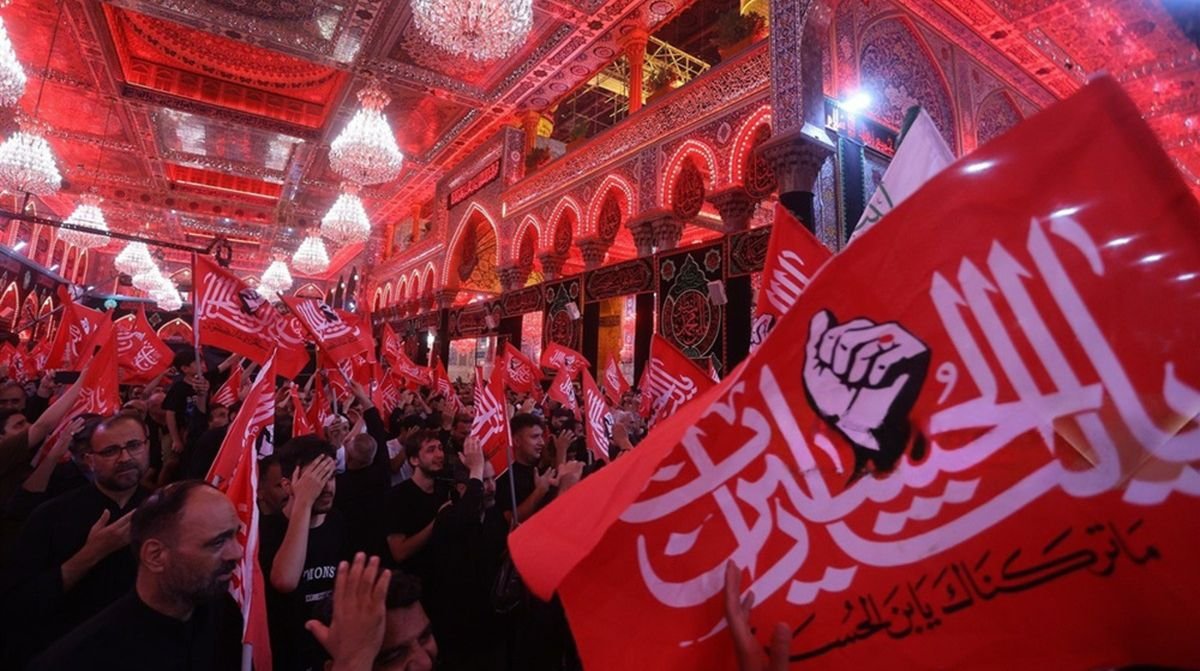

Karbala- Undeterred by war, economic hardship and simmering regional tensions, millions of Muslims on Tuesday converged on the Iraqi holy city of Karbala for Arba’een, the world’s largest annual peaceful gathering, commemorating the 40th day after the martyrdom of Imam Hussain (AS), the beloved grandson of Prophet Muhammad (PBUH).
The sea of black-clad mourners, many carrying flags and chanting elegies, stretched for miles along the historic 80-kilometre route between Najaf and Karbala, retracing the path taken by pilgrims for generations in remembrance of Imam Hussain’s stand against tyranny in the Battle of Karbala in 680 AD.
Imam Hussain (AS), along with 72 loyal companions, that inluded his close family members, was martyred while resisting the vastly superior forces of Umayyad ruler Yazid, a sacrifice that has come to symbolize resistance against oppression, injustice and despotism for millions across the world.
Nearly 5 Million Foreign Pilgrims Enter Iraq
Despite concerns over security following months of US-Israeli war against Iran, Iraqi authorities said more than 4.88 million foreign pilgrims had entered Iraq since the beginning of Muharram, with arrivals continuing until Arba’een. Millions more travelled from across Iraq, making the pilgrimage one of the largest human gatherings on the planet.
Iran accounted for the largest contingent of foreign pilgrims.
Iran’s Traffic Police Chief, Brigadier General Ahmad Karami-Asad, said nearly three million Iranians had crossed into Iraq through various border crossings in the run-up to Arba’een, highlighting the extraordinary scale of participation.
Volunteer groups lined the highways to Karbala, distributing free meals, drinking water, medical aid, and accommodation to pilgrims walking under scorching summer temperatures.
War Casts Shadow Over Sacred Journey
This year’s pilgrimage unfolded against the backdrop of continued tensions following the recent US-Iran conflict.
The visit of Iranian Foreign Minister Abbas Araqchi to Najaf and Karbala underscored the delicate political climate, with Iraq continuing to balance its close relations with both Tehran and Washington while trying to avoid being drawn deeper into regional confrontation.
Some pilgrims observed that while Iranian participation remained overwhelming, the number of visitors from Europe, Arab countries, and other parts of the Islamic world appeared lower than in previous years.
Several attributed the decline to ongoing regional instability and travel concerns.
The pilgrimage also comes as Iraq grapples with severe economic challenges following disruptions to oil exports and renewed debate over the future of Iran-backed armed groups operating inside the country.
Tehran’s Symbolic March Carries Political Message
In Iran, hundreds of thousands unable to reach Karbala joined the annual symbolic procession known as “Those Left Behind from Arba’een,” marching nearly 20 kilometers through Tehran to the revered shrine of Shah Abdol-Azim Hasani in Rey.
The procession, while deeply religious, also carried a strong political message.
Participants pledged that Iran would avenge the assassination of Ayatollah Sayyed Ali Khamenei, whom they described as a martyr of the recent US-Israeli war, declaring that retaliation against those responsible remained an irreversible national demand.
Mourners chanted anti-US and anti-Israel slogans, while some demonstrators trampled on American and Israeli flags. Similar rallies were reported across several Iranian cities.
A Message Beyond Mourning
For millions of pilgrims, Arba’een is far more than a religious observance.
Observers describe the pilgrimage as a global reaffirmation of the ideals for which Imam Hussein (AS) sacrificed his life—justice, dignity, and resistance against tyranny.
Year after year, regardless of war, sanctions, political upheaval, or economic hardship, the roads leading to Karbala continue to fill with millions determined to keep alive what many call the timeless message of Karbala—that truth must prevail over oppression, no matter the cost.