
By Sri Varshith Kumar Reddy E
India’s 94th place in the Sustainable Development Report 2026 is its best since the goals were adopted, up from 99th a year earlier and 112th in 2015, on a score of 68.3 out of 100.
Among the major powers only China, with a gain of 14 places, comes near India’s 18.
Ministries will circulate the figure with justified pride, though it folds seventeen goals into a single digit, and a single digit cannot say which goals lift the country and which drag it down.
The Ministry of Statistics supplied a better instrument on June 29, when it released its National Indicator Framework Progress Report, built on 277 indicators.
Read slowly, it describes a country that has grown expert at building things and is only beginning to measure what those things deliver.
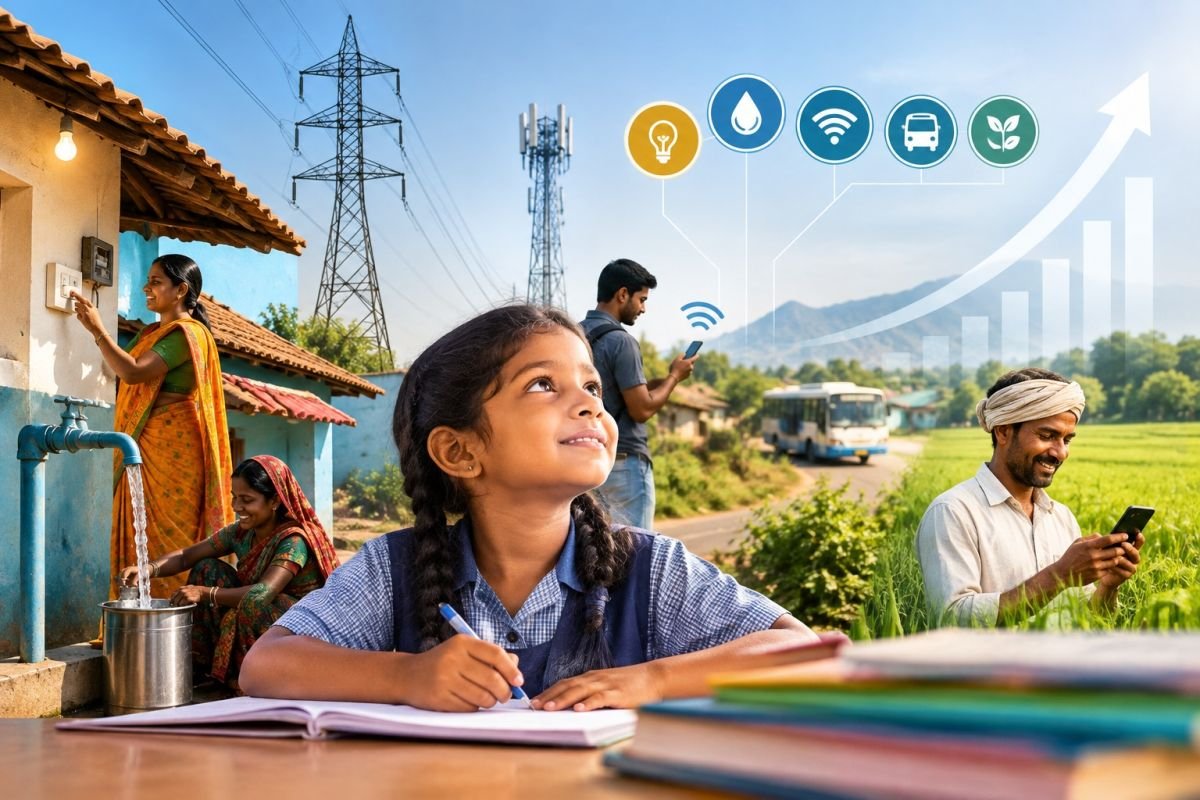
The building record is formidable, as rural households with piped drinking water have risen from about 21 per cent to nearly 82 per cent, and household electrification is complete. Internet subscriptions have grown from 302 million to 969 million, Aadhaar covers 95.67 per cent of the population, and social protection has widened from 22 per cent in 2016 to 65.3 per cent now.
Poverty has receded with it: 5.1 per cent of Indians live below $3 a day and 9.6 per cent below $4.20. Under-five mortality has fallen from 43 to 28 per 1,000 live births, unemployment has halved from 6.1 per cent in 2017-18 to 3.1 per cent in 2025, and installed renewable capacity per capita has nearly tripled since 2014-15.
Critics who skip these figures forfeit their credibility early.
But some of the figures are older than they look. The official multidimensional poverty number, 14.96 per cent, rests on survey data from 2019 to 2021, so a headline about the India of 2026 describes households as they stood five years ago.
The difference between the date of a number and the date of its publication is a policy variable in its own right.
Water shows where the machinery stops.
India reports 95.7 per cent access to drinking water and 83.4 per cent access to sanitation, while only 19.2 per cent of its wastewater is treated.
A house with a tap and a city with a sewer network can still feed a river that nobody can drink from. The access indicator records the connection and says nothing about the water that leaves it.
Health shows the same imbalance, in smaller ways.
Tuberculosis still afflicts 187 people per 100,000, and the global report puts maternal mortality at 80.5 deaths per 100,000 live births against the 87 in the national framework.
India now describes its progress through at least three lenses, the national framework, NITI Aayog’s index and the global report, and they do not always agree on the same indicator for the same year.
A country that wants to be believed on its achievements should be the first to reconcile its own numbers.
The plate tells the harder story.
Cereal yields have reached 3.6 tonnes per hectare, a record of agricultural competence, and 12 per cent of the population remains undernourished. Child stunting stands at 35.5 per cent, wasting touches 18.7 per cent of children, and only 23.6 per cent of young children eat a minimally diverse diet.
Food policy has long assumed that enough grain would eventually produce enough nourishment. The granary is full, but the plate of a two-year-old in Bahraich or Barmer is not.
Rice and wheat from a ration system supply calories, while a stunted child needs protein, micronutrients, clean water and a mother with the education and rest to feed her well.
The framework itself names child nutrition, labour quality and regional disparity as its remaining challenges.
Employment invites the same scrutiny, since a jobless share of 3.1 per cent is a real gain, and the framework concedes that informality and the quality of work still decide outcomes.
In an economy where most workers cannot afford to be unemployed, that figure measures how little choice they have as much as how well they are doing.
The air is worse: pollution is associated with an estimated 132.1 deaths per 100,000 people a year, a toll that rivals diseases the health system has fought for decades.
Per-capita fossil emissions of 2.2 tonnes remain modest by global standards, which is India’s moral argument at climate negotiations and also its practical trap, since a country still industrialising can build clean from the start and loses that chance with each coal plant or diesel fleet commissioned on the old logic.
Four years remain before 2030, and the measures with the most force are those that move outcomes instead of inputs.
Poshan should answer for the share of young children eating a diverse diet, with grain tonnage and take-home rations set aside as the test.
Wastewater treatment should receive the mission-mode financing and monitoring that piped water received, with municipal borrowing, performance-linked central grants and city-level public reporting of treated volumes.
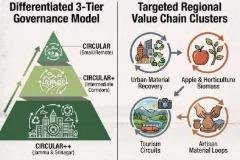
The employment indicators should be widened to wages, contract status and social security coverage. Budgets should be tied to SDG targets at state and district level, and Jammu and Kashmir’s UNDP-backed tagging of departmental spending, reviewed by its Chief Secretary in August, is a working template.
India should publish one reconciled SDG dataset annually, with notes wherever national and international figures diverge, and release core household survey data on a fixed schedule.
India’s 2026 record supports two statements that lie uneasily together.
The country has built an impressive machinery of access and has not built a comparable machinery of outcomes.
The goals furthest from reach, nutrition, clean water, air and decent work, belong to no single ministry, and no ribbon-cutting can finish them.
They belong to the municipal office, the anganwadi and the district planning cell, where the work is slow and rarely photographed.
Whether the next four years go to that work will decide if the 94th rank is remembered as a turning point or as a respectable plateau.
- The author is a pracademic working on government policy and public institutions. He can be reached at [email protected].