
By Syed Nissar H. Gilani
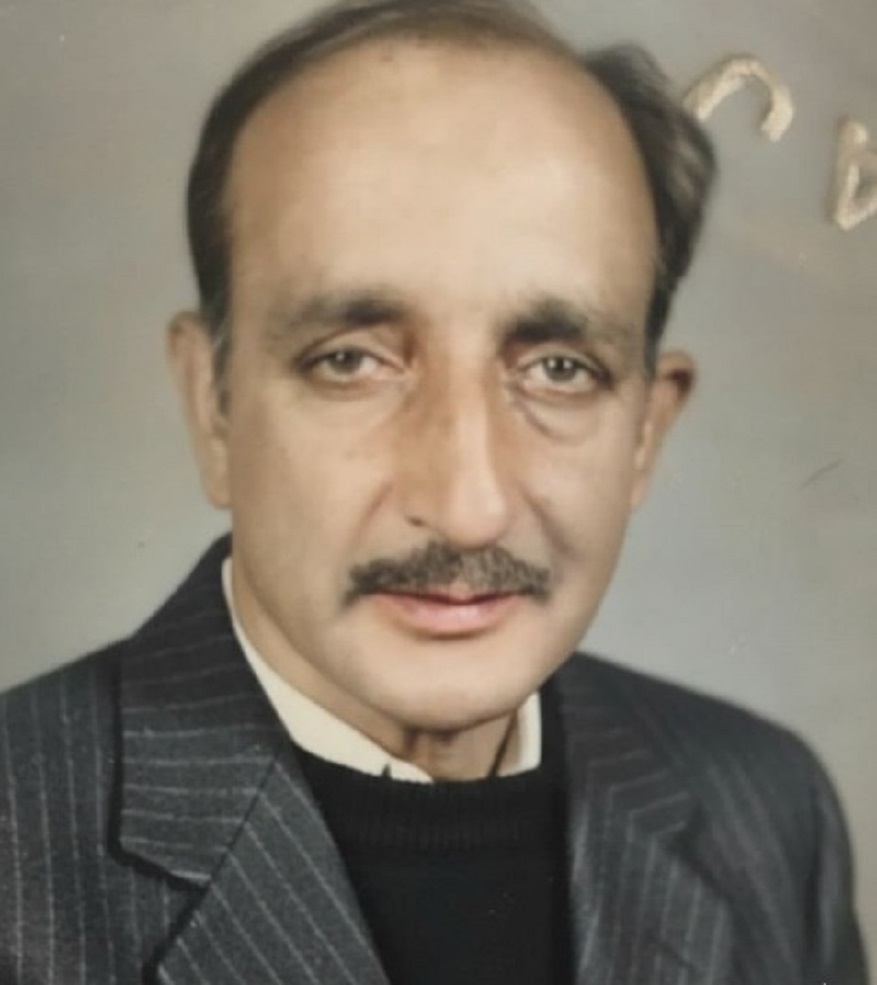
I still keep this photograph tucked away, its edges softened by time. It was taken in August 1979, and it was never meant for a family album.
The picture was for a passport, a very particular one.
The Haj passport issued then by the Indian foreign ministry came as a single-entry document, valid only for the duration of the pilgrimage. Its cover was brick red, the paper coarse and hard to the touch, a booklet that looked and felt provisional, as if it already knew it would soon be surrendered and disappear from use.
My father held that passport in his hands at the end of a long working life. He was a medical officer, known among colleagues for “putting a long innings” into public service, and retirement was due in December that year.
At 55, he decided this would be the moment to go to Mecca. The choice settled easily within the family. There was happiness, pride and a sense that the timing carried its own logic. His request for pre-retirement leave went through without delay.
The journey began in Bombay, as Mumbai was then called. From there, special Air India charter flights carried pilgrims to Jeddah. Many Kashmiri men travelled with sacks of rice, spices and utensils, preparing for weeks away from home. My father packed light, trusting the arrangements that came with the pilgrimage.
The aircraft were often wide-bodied Air Jumbos, staffed by crew members from Kashmir. Among them was Akbar Jan, the son of the well-known Dr Ali Jan, serving as chief air host.
I travelled with my father to see him off. We stayed at the Sabu Siddiq Mussafir Khana near Crawford Market, close to the Haj Committee office. Qazi Mohammad Amin, a former IAS officer and then secretary of the Haj Committee in Bombay, arranged a room for us.
Those days before departure unfolded through visits, paperwork and shared meals, held together by generosity from friends who treated my father’s journey as something that belonged to all of us.
One evening stands out clearly. Inspector Pednekar, posted at the Byculla Railway police station, came himself to receive us. He later invited us to his flat in Andheri West for dinner.
Diwali was close, and the city glittered with lights strung across balconies and shopfronts. The laddoos he served that night still return to me with their sweetness intact, carrying the warmth of that home and the care behind the gesture.
Two days later, my wife and I joined Qazi Amin, Inspector Pednekar and other friends at Santa Cruz International Airport. Blessings were exchanged, hands clasped, prayers whispered. My father walked towards the aircraft holding the brick-red passport that would take him to the holy land.
In Jeddah, systems already set in place guided the pilgrims. Officials from the Jammu and Kashmir government handled the logistics on arrival. Each Kashmiri pilgrim flying that year had deposited Rs 11,000 in advance, covering the journey from Srinagar to Bombay and onward to Saudi Arabia.
At the airport, each person received a draft of Rs 2,200, converted into Saudi riyals for immediate needs. The exchange rate stood at about three Indian rupees to one Saudi riyal. The process was efficient, designed to ease people into unfamiliar terrain.
My father completed the rites in Mecca amid the press of bodies and the heat around the Grand Mosque. His plan was to continue on to Medina. That decision placed him on the right side of history by the narrowest margin.
He left Mecca one day before armed dissidents seized the Grand Mosque in November 1979, on the first day of the Islamic year 1400. The siege lasted two weeks and shook the Muslim world. News travelled slowly then, but its impact carried far. Had he stayed another day, he would have been caught inside the compound during one of the most violent episodes the site has known. Instead, he was already in Medina, spared the fear and confusion that followed.
The rest of his pilgrimage unfolded in Medina, surrounded by calm and reflection.
When he returned to Srinagar, the stories he brought back moved easily between devotion, history and everyday survival.
One account, retold many times in our family, captured that balance perfectly.
Heat weighed heavily on the pilgrims. One evening, a man rushed out of a washroom shouting that a dead body lay wrapped in white cloth inside a tub. Panic spread through the room. My father and others hurried to see. The scene resolved itself into laughter.
The “body” belonged to an elderly Kashmiri pilgrim, alive and deeply asleep. To escape the heat, he had climbed into the porcelain tub, covered himself with his ahram and positioned himself beneath the exhaust fan.
What looked like death revealed ingenuity and exhaustion instead.
When my father finally returned home, gratitude filled the house. Relatives gathered, prayers were offered, and a feast marked his safe arrival.
He came back having fulfilled a religious obligation, carrying memories shaped by narrow escapes, shared kindness and moments of humour born from hardship.
That brick-red passport no longer exists as a document of travel. But its story remains, bound to a year when faith, history and chance crossed paths, and to a father who stepped into that crossing and returned.
- The author is a former civil servant from Jammu and Kashmir.