By Mohammad Hanief
The year began silently enough. Then the rain came. And it kept coming.
2025 unfolded as an unrelenting season of warning bells for Jammu and Kashmir. Torrential downpours, sudden cloudbursts, flash floods and landslides followed each other with unsettling ease.
The year was marked by raging recurrence.
Rivers overflowed into unfamiliar places. Roads gave way moments after repairs. And families had to leave their homes again and again.
The region has always lived with risk. Steep slopes, restless rivers and loose soil are part of everyday geography here.
But what made 2025 different was the speed and scale of change.
Long dry stretches gave way to intense rainfall with little pause. Rivers swelled faster than memory allowed. Drainage systems failed because they were built for a climate that no longer exists.
The monsoon months carried the heaviest weight.
The Jhelum and its tributaries rose steadily in the valley, spilling into low-lying neighbourhoods and farmlands. Water stayed for days, soaking homes and orchards alike. Wetlands that once absorbed excess rain could no longer cope, narrowed over years by encroachment and neglect.
In towns, drains overflowed. In villages, fields turned into shallow lakes.
Apple growers felt the blow sharply. Trees suffered as waterlogged soil and eroded ground took their toll during a key growing window. For many, the loss went beyond a single season’s income. It was the undoing of years of careful care.
The danger arrived faster in Jammu.
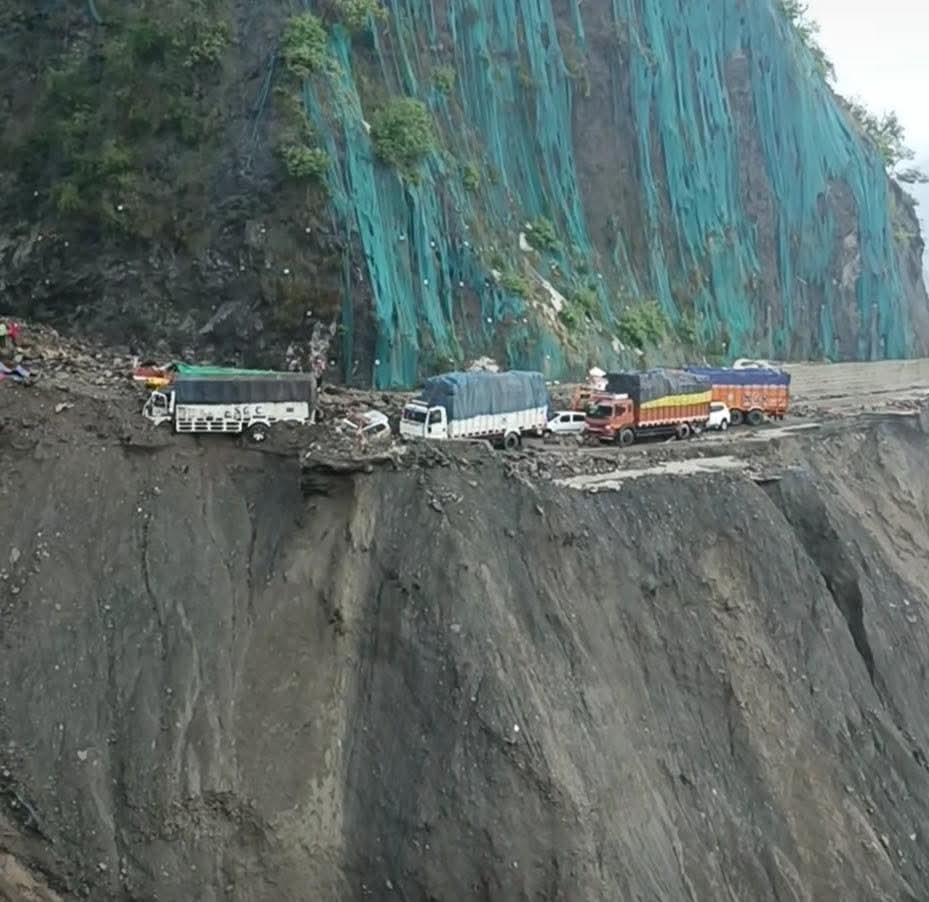
Cloudbursts in hilly districts sent walls of water rushing down seasonal streams. Vehicles were swept away. Footbridges vanished in minutes. Landslides followed, sealing off villages and forcing long detours around mountains that seemed to be slipping under their own weight.
National Highway 44, the region’s main artery, shut repeatedly. Each closure carried the same message: connection here is always provisional.
Cloudbursts became the year’s most feared word.
They arrived suddenly, pouring unimaginable volumes of rain into narrow valleys.
In remote hamlets, people barely had time to react. Mud and stones surged through homes, leaving behind silence and the slow work of counting losses.
The cost went far beyond the headlines. Agriculture, horticulture and livestock suffered deeply. Tourism slowed as roads closed and uncertainty spread. Schools, health centres, power lines and water systems took damage that would take months to undo.
For households already stretched by rising prices and uncertain work, recovery felt distant.
The disasters also exposed gaps that communities had long sensed.
Weather alerts came, but often too broadly to capture local danger. Communication failed at crucial moments.
In many places, neighbours and volunteers were the first to respond, pulling people to safety before official help arrived.
It was a sign of both the strength of community bonds and the limits of systems built for milder times.
Rescue and relief followed as best they could. Emergency forces, local officials and civil groups worked through flooded streets and blocked roads. Shelters opened. Medical teams moved in. Slowly, debris cleared and services returned.
But the scale of damage made one thing clear: responding after the fact was no longer enough.
After hit by multiple disasters, the language began to change in the region. The focus shifted from relief to resilience. Authorities spoke more openly about climate risk and long-term planning. Early warning systems, better forecasting and real-time communication became priorities.
Rebuilding started with new questions: can this road survive heavier rain, can this slope hold, can this river breathe?
Urban planning came under fresh scrutiny. Floodplains and wetlands were re-examined. Drainage systems were redesigned. Building rules tightened, at least on paper.
Environmental repair moved closer to the centre, with renewed attention to forests, watersheds and soil conservation.
Perhaps the most important shift was silent.
Communities began to prepare themselves. Training in first aid, evacuation and local response spread through schools and villages. Farmers explored ways to adapt crops and water use.
The idea took hold that strength is not only built by engineers and officials, but by people who live with risk every day.
The calamities of 2025 came as a pattern. Rain followed by repair, followed by rain again. The lesson was not subtle.
Jammu and Kashmir is entering a new climate reality, one that demands humility, foresight and care.
The mountains will not stop moving. The rivers will not wait.
What remains is the choice of how to listen, and how to live with what we hear.
- The author is a senior analyst based in Srinagar. He can be reached at [email protected].