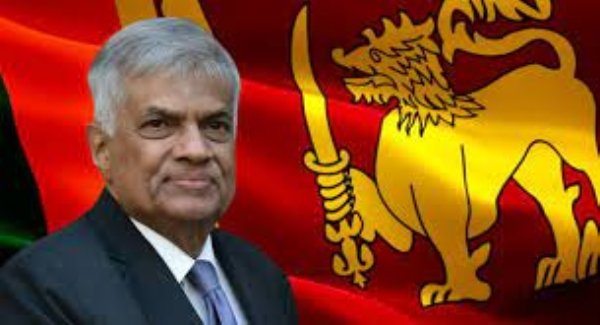
Colombo/New Delhi, 23 August (H.S.): Less than 24 hours before his arrest, former Sri Lankan President Ranil Wickremesinghe spoke exclusively to Sputnik India, reflecting on the country’s ongoing economic turmoil, democratic challenges, and delicate foreign policy balancing act. His remarks, now seen in the shadow of his detention, offer a revealing look at how one of Sri Lanka’s longest-serving leaders sought to defend his record and frame the nation’s path forward.
Defending His Record
Wickremesinghe began by addressing the widespread criticism that his government was responsible for Sri Lanka’s unprecedented economic collapse. He firmly rejected the notion that the crisis was of his making, pointing instead to long-standing structural weaknesses that had been accumulating for years.
“The collapse was not created by my administration alone,” he told Sputnik. “It was the result of rising debt, delays in reform, and governance failures that stretched back decades. My task was to stabilize an economy that was already collapsing.”
While acknowledging that his government had not been able to ease the hardships faced by ordinary citizens, Wickremesinghe positioned himself as a manager of crisis rather than its author.
The Human Cost of Economic Collapse
Describing the crisis as one of the most painful chapters in Sri Lanka’s history, Wickremesinghe underscored the human dimension of what is often presented as a financial story.
“This was not just about numbers or debt ratios,” he said. “It was about families queuing for fuel, children going without medicine, and workers losing their livelihoods.”
He argued that Sri Lanka’s survival depends on a combination of domestic reforms and international support. Debt restructuring, fiscal discipline, and industrial strengthening are essential, but so is cooperation with the global community.
“No country in our position can recover in isolation,” he added. “We need both discipline at home and assistance from abroad.”
Democracy and Public Anger
The former president acknowledged the anger and frustration of citizens, many of whom took to the streets during the 2022 crisis demanding accountability. He said those demands were legitimate, but warned against allowing anger to undermine democratic institutions.
“I understand the calls for change,” Wickremesinghe said. “But if we allow public anger to dismantle our institutions, we will create instability that prevents long-term recovery. Change must take place within the democratic framework, not outside of it.”
This balancing act—between public pressure for accountability and the safeguarding of democratic structures—remains one of the central tensions in Sri Lanka’s ongoing political landscape.
Navigating Between India, China, and the West
Turning to foreign policy, Wickremesinghe highlighted Sri Lanka’s strategic location in the Indian Ocean and the complexities it creates in global politics. He stressed that the country cannot afford to become a pawn in great power rivalries.
–
On India, he was clear: “India has been one of our most vital partners during the crisis, extending credit lines, fuel, and humanitarian aid when we needed it most.”
–
On China, he acknowledged the country’s role as a major creditor and said its participation in debt restructuring talks was critical.
–
On the West, he emphasized that institutions like the IMF remain key to securing reforms, transparency, and investment.
“Our future depends on balance,” he told Sputnik. “We must engage constructively with all partners, without aligning ourselves exclusively with one bloc against another.”
Within hours of making these remarks, news broke of Wickremesinghe’s arrest, a development that has further polarized opinion in Sri Lanka. Supporters view it as a politically motivated move that could destabilize the fragile recovery process, while critics argue it is a necessary step toward accountability for years of economic mismanagement.
Credit: Interview conducted by Sputnik India
Hindusthan Samachar / Indrani Sarkar