By Wani Hayat
Inside Government Middle School in Budgam district, Grade VI children wait for their first class. They whisper, fidget, and look toward the door.
Ten minutes go by, then twenty. Their science teacher still does not come.
A boy shrugs and says what everyone already knows: “Sir will come after the meeting.” He is right.
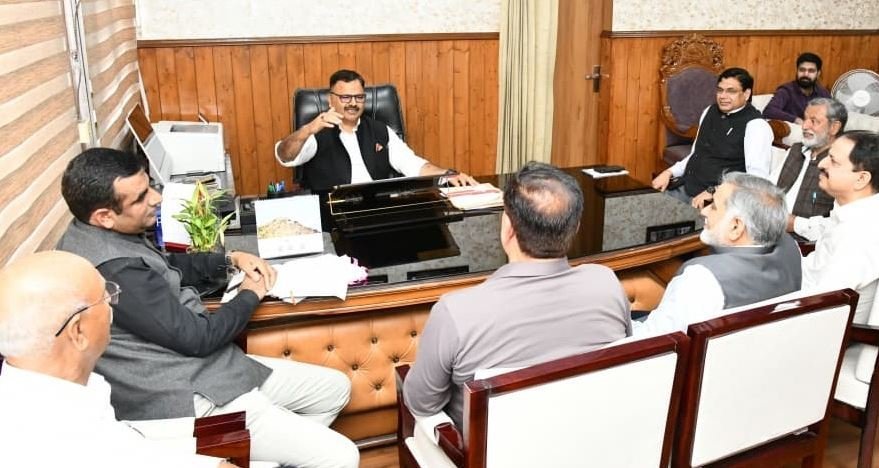
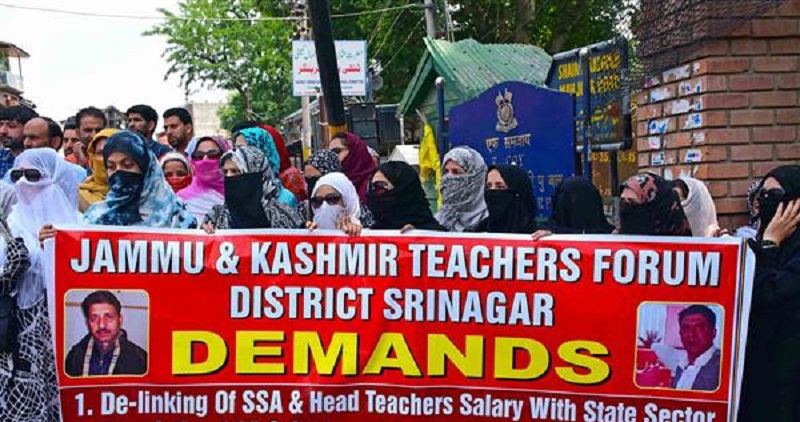
The man is twenty kilometres away, signing a petition at the Deputy Commissioner’s office because a teachers’ forum booked the 9am slot. After that he must reach the District Institute of Education and Training office for a second roll call held by the Rehbar-e-Taleem group.
By the time he returns, the last period is over and the kids have walked home.
Children here learn early that “meeting” is just another word for empty classroom.
Kashmir runs 18,724 government schools for 13.6 lakh students. One in every four has fewer than twenty pupils. UDISE+ 2025 lists 119 schools that have zero children, but every one still draws full staff salaries.
The excuse is always the same: “We are on official duty.” In plain words, duty means another meeting.
Headmasters have stopped pretending. A school in South Kashmir pinned a note to its gate last week: “No classes today, teachers attending federation work.”
The federation came up in May with a push for quicker promotions. It has no office of its own, so it uses school buildings for its rallies.
Teachers say they have already lost scores of working days to its programmes since summer.
Parents have run out of patience.
Rubina Jan of Budgam sold her gold bangle and moved her daughter to a private school that charges Rs 1200 a month. “At least the teacher is there every morning,” she says. She is not alone.
ASER 2024 tested simple reading in 1,600 valley villages. Only 24% of Grade V children in government schools could read a Grade II story. In private schools the rate was 79%.
The difference is seat time: private teachers stay inside classrooms while government staff sign registers.
Dropout numbers follow the same curve. Primary pupils leaving mid-year have climbed from 3.89% in 2023 to 6.2% this year.
Forums were born to fix small problems. One asked for timely salary, another for transfer transparency. Each carried a catchy slogan: “Students First,” “Quality for Every Child.”
The slogans are still printed on banners that now hide empty corridors. The Government school school mentioned earlier has four separate banners hanging above its gate. None of them belongs to the school.
The department keeps a list of recognised bodies. The list runs to 63 names and covers three pages. No one can explain why a zone with six schools needs twelve associations.
The only clear rule is that every new body demands representation on every committee, which means more trips to the district headquarters.
A Zonal Education Officer showed his diary for October: 37 meetings in 22 working days. The topics ranged from “eco-club logo design” to “winter uniform colour shade.”
Each meeting required at least two teachers from every school. “I sign attendance sheets faster than lesson plans,” he admits.
The damage moves downstream. Children left with substitute staff lose interest and stay away. When attendance falls below fifty percent for three months, the state merges the school.
Since 2022, 4,400 tiny institutions have been shut, most of them in remote areas where a walk to the next village means crossing a mountain stream.
The closures save money on paper, but they push girls out faster because parents will not risk the longer journey.
The solution is simple. Treat teaching hours as sacred. Make biometric attendance record public online. Any teacher who misses more than fifteen days without a valid reason loses a day’s pay. Finland did the same and kept teachers in class for 190 days a year without spending an extra rupee.
Second, move every grievance online. Salaries, transfers, pension papers can be tracked through a single dashboard. No teacher should travel for a signature that a mouse can give.
Third, cap the number of associations. One forum per zone, elected for two years, with a written constitution that puts classroom time above protest time. Any rally during school hours should trigger automatic suspension of the office bearers.
Kashmiri students have already lost too much to lockdowns, street shutdowns and network bans. They cannot afford to lose the one place that still promises a way out: the classroom.
The next time a bell rings and a teacher is missing, the question is simple. Who sent him away, and who will bring him back?