Srinagar- When Bashir Masoodi invested ₹2 lakh in copper late in 2025, he focused on the numbers flashing on the Multi Commodity Exchange screen. Copper futures for the January 2026 series traded near ₹1,300 per kilogram, a sharp contrast to the ₹160 per kilogram level seen in 2004.
That long climb reflected a return of more than 700 percent over two decades and convinced him that copper had entered a new phase.
By early 2026, the value of Masoodi’s copper exposure had grown to about ₹3.4 lakh, giving him a profit of ₹1,40,000 in a matter of months.
He followed the market through MCX futures, the primary route available to Indian investors since copper does not have an exchange traded fund option in the country.
“Gold and silver always dominate the talk,” Masoodi said while holding a copper glass passed down from his grandmother. “But when I looked at the price history and saw how copper moved with industry and power projects, the story felt different and much bigger.”
On the MCX, copper trades as a futures contract with a standard lot size of 2,500 kilograms. At a price of ₹1,300 per kilogram, a single contract carries a total value of around ₹32.5 lakh.
Traders do not pay the full amount upfront. Instead, they post a margin of roughly 10 to 15 percent, which means an investor needs about ₹3 lakh to ₹6 lakh to hold one contract. Exchanges allow margins to be split between cash and approved shares, usually in a fifty-fifty ratio.
Daily mark-to-market adjustments sit at the heart of copper trading. Gains and losses are settled at the end of each session, tying traders closely to every price move.
Investors who want to stay invested beyond a contract’s expiry roll over their positions by selling the expiring contract and buying a later-month series.
Copper’s sustained rise has pushed these once-technical terms into everyday conversation among traders and small investors.
Its price now signals changes that extend well beyond commodity screens.
“Copper sits at the center of the modern economy,” said Shiv Kumar, a Mumbai-based commodities strategist. “Electric vehicles use much more copper than petrol cars. Renewable energy projects depend on copper wiring. Data centers rely on it for power distribution and cooling. Demand flows from every direction.”
India’s copper prices respond closely to global trends, currency movement, and supply pressure.
A weaker rupee often adds upward force, while rising global demand tightens availability.
Industry data shows India consumes close to 1.9 million tonnes of copper each year and imports a large share because domestic production falls short.
Forecasts from leading research firms point to copper demand rising sharply through the next decade as countries expand power grids, build electric transport systems, and scale digital infrastructure.
Analysts expect these sectors to account for a growing share of copper use, placing further pressure on supply.
That worldwide demand reaches Kashmir, where copper holds meaning far deeper than price charts.
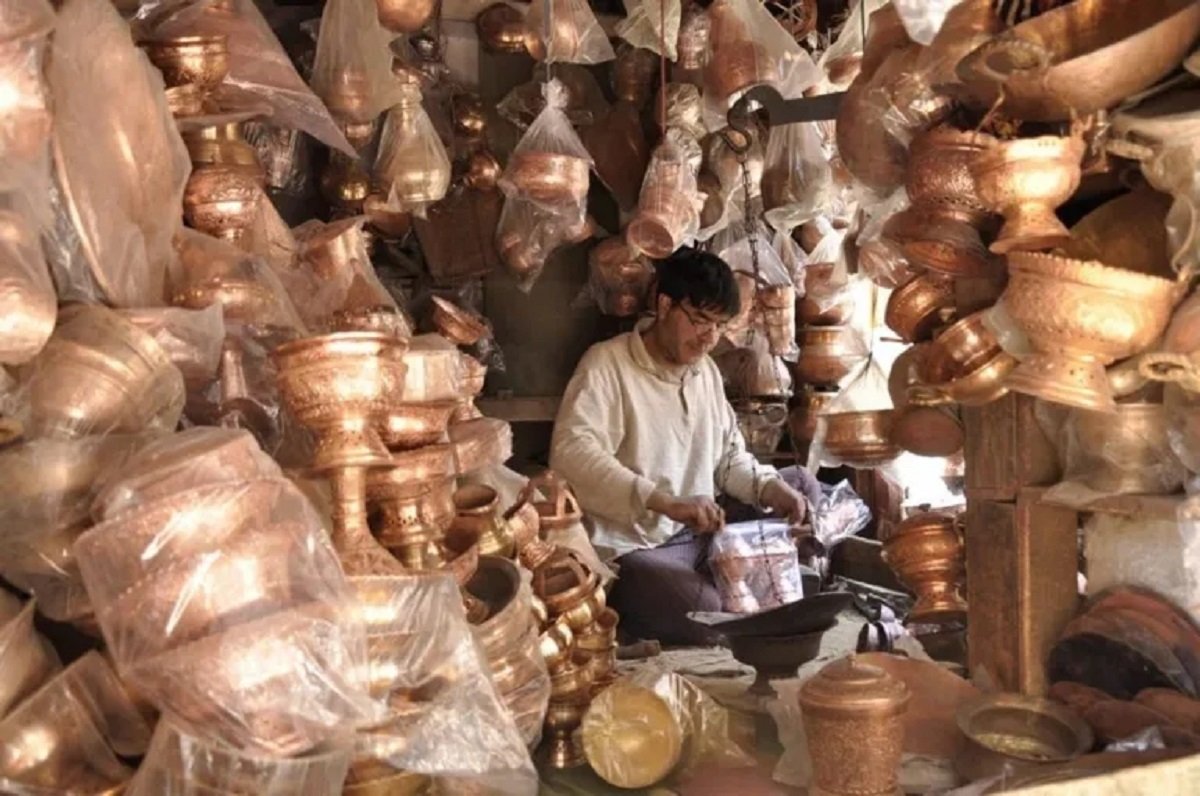
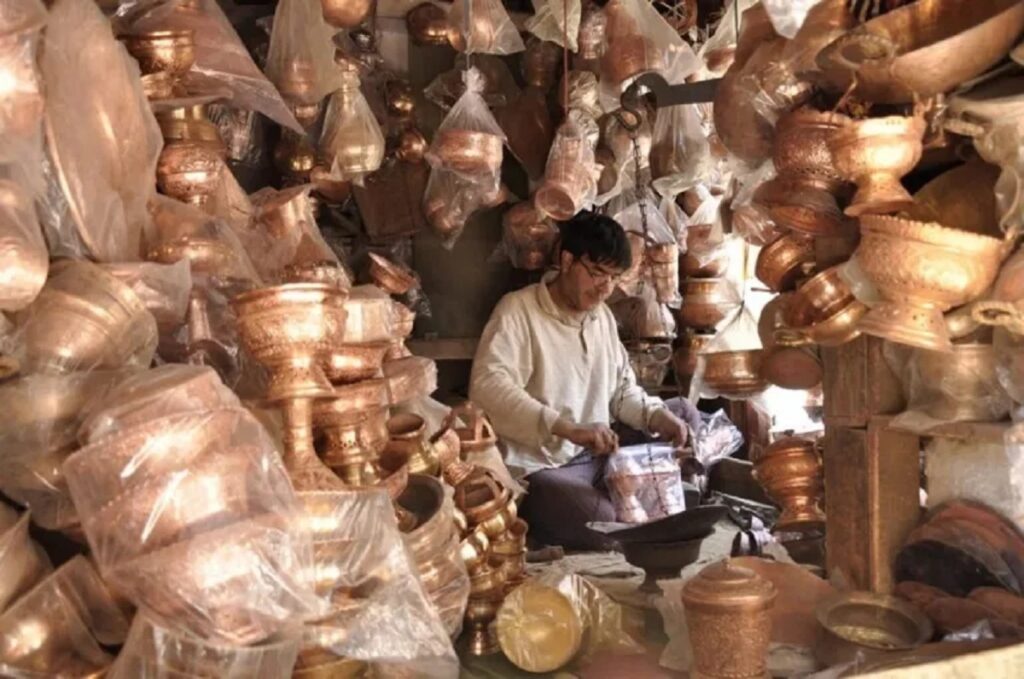
In old neighbourhoods near Zaina Kadal and Saraf Kadal, craftsmen continue shaping copper into samovars, engraved plates, serving trays, and water vessels. The craft dates back several centuries and reflects Persian influence and royal patronage.
“My family has worked with copper for generations,” said Ghulam Rasool, a 68-year-old trader whose shop displays rows of polished utensils. “People trusted copper because it lasted long and worked well in cooking and heating. Every wedding and gathering needed it.”
These objects once filled Kashmiri homes and kitchens. Stainless steel and aluminum later replaced many of them because of lower prices and easier upkeep.
Even so, copper never vanished. Heirlooms stayed on shelves and in storage trunks, waiting for renewed attention.
That attention has now returned from an unexpected direction.
Rising copper prices have pushed families to reassess the value of old utensils. Collectors and traders now seek authentic hand-made pieces, especially those with detailed engraving and clear origins.
Masoodi noticed that shift while tracking global markets. His decision to invest followed his sense that copper linked inherited value with modern demand.
“When the same metal connects my grandmother’s kitchen to electric cars and power grids, it changes how you see it,” he said.
But for Kashmiri artisans, renewed metal interest has not eased long-standing challenges.
Factory-made copper goods enter markets at lower prices, tightening competition for hand workers. Trade groups have begun pushing certification and labeling systems to help buyers identify genuine craft work.
“Machines shape copper fast,” said Manzoor Ahmad Baba, a coppersmith in Srinagar. “Hand work takes time and skill. People who understand the difference still come looking for it.”
Beyond these regional realities, copper is becoming more central to global technology systems.
Electric vehicle charging stations, transformers, battery systems, and data centers consume large quantities of the metal.
Analysts warn that future supply may struggle to match demand unless mining investment increases sharply.
“The next decade belongs to metals tied to electrification and digital growth,” said Egest Balla, a market analyst tracking infrastructure demand. “Copper stays at the heart of that change because alternatives cannot match its efficiency at scale.”
Policy planners in India also watch closely. Heavy reliance on imported copper exposes the economy to global price swings. Discussions around strategic reserves, recycling, and domestic capacity expansion remain active as infrastructure spending rises.
Back in Srinagar, Masoodi checks copper prices each morning before work. His trading app sits beside shelves holding old copper vessels polished by time and use. He weighs both with equal care.
“I entered this market because the numbers made sense,” he said. “I stayed because copper tells a longer story about where the world is going and where we come from.”
That story unfolds daily across trading screens, workshops, and homes, as copper futures continue to trade near record levels on the MCX.
Clearly, a metal shaped by Kashmiri hands centuries ago now powers the global economy, linking traditional craft to modern wealth.