
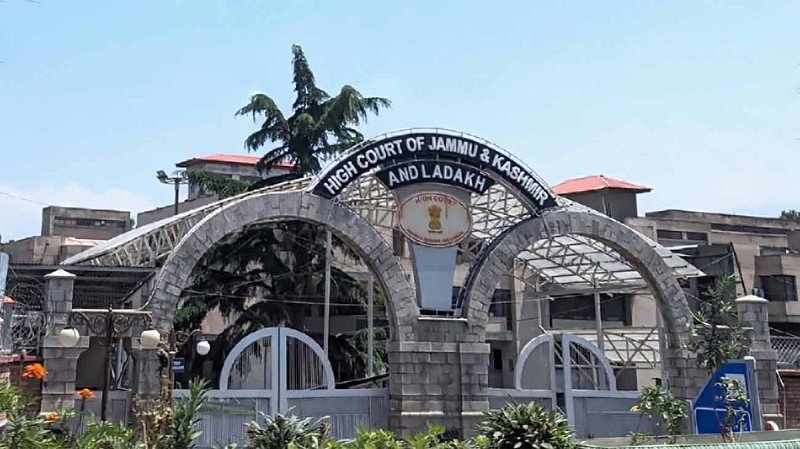
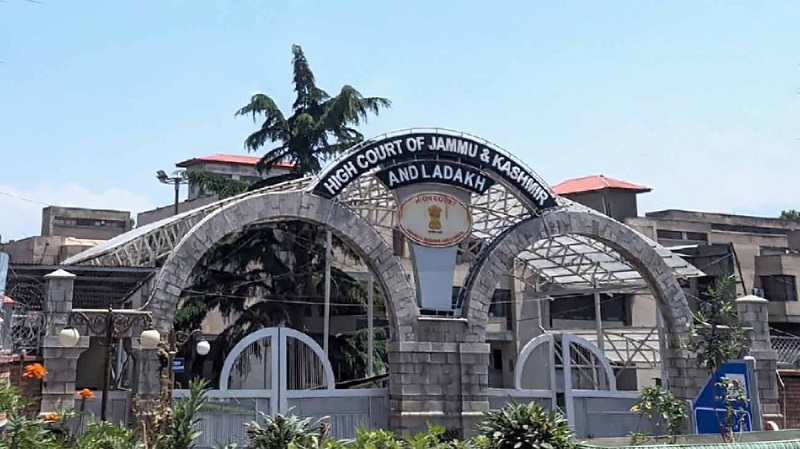
Srinagar- Observing that the primary objective of compassionate appointment is to provide immediate relief to a bereaved family and prevent it from falling into destitution, the High Court of J&K and Ladakh has set aside its Single Bench order directing the government to appoint a man on such grounds, noting that the claim was made after a delay of eleven years.
A Division Bench of Justice Sindhu Sharma and Justice Shahzad Azeem allowed an appeal filed by the J&K administration and quashed the May 27, 2015 judgment.
The case arose after one— AR Sheikh, a Warder in the Prisons Department, died in harness on June 8, 1998. His son applied for compassionate appointment in 2009, about 11 years after his father’s death, upon attaining majority.
The government had rejected the claim on the ground that it was not covered under Rule 3 of the Jammu and Kashmir (Compassionate Appointment) Rules, 1994, which mandates that an eligible family member must apply within one year from the date of death of the deceased employee. Though the limitation period was later extended to five years in certain cases, the court noted that the application still fell far beyond the permissible time, observing that the single bench failed to take into account the statutory limitation period and the object underlying compassionate appointments.
“The rationale is that if the family has managed without assistance for a sustainable period, it emphasizes that they have alternative means of substance, negating the need for compassionate relief,” the Division Bench said.
The Division Bench also noted that Sheikh’s wife had claimed to have applied earlier but failed to provide requisite documents when asked, and no record of such an application was traceable.
Relying on the Supreme Court’s ruling, the Division Bench reiterated that delayed claims made after a dependent attains majority, long after the employee’s death, are liable to be rejected as time-barred.