Delhi, 22 September (H.S.): In a major push to revitalize tourism, transportation, and cultural industries, the government announced on Monday a significant reduction in the goods and services tax (GST) rates for hotels, buses, and artisanal products. The revised rates, which take effect immediately, are expected to make domestic travel more affordable, encourage the use of public transport, and provide vital support to artisans and the cultural economy.
Hospitality and Tourism
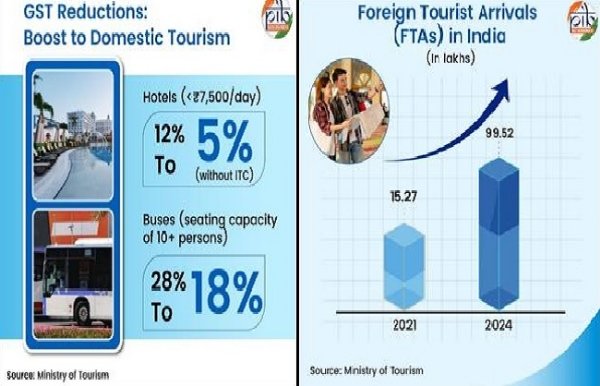
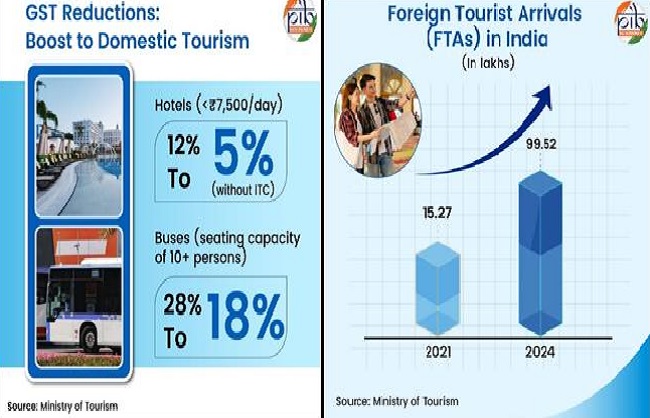
The GST Council, in its 56th meeting earlier this month, slashed the GST rate on hotel stays costing less than ₹7,500 per day from 12% to 5% (without input tax credit). This move is projected to make hotel accommodations more economical for middle-class travelers and budget tourists, bringing India’s hospitality infrastructure in line with global tourism benchmarks. The government anticipates that lower costs will not only attract more domestic travelers but also enhance India’s appeal as a destination for international visitors. The policy is also expected to incentivize investments in mid-tier hotels, homestays, and guesthouses, leading to job creation and better tourism infrastructure. There is optimism that the cuts will spur weekend travel, pilgrimage circuits, and eco-heritage tourism.
Transportation
In a parallel reform, the GST on buses with a seating capacity of more than 10 persons has been reduced from 28% to 18%. This reduction is likely to benefit bus fleet operators, schools, corporate entities, tourism service providers, and state transport undertakings. The move is expected to lower ticket prices, especially on semi-urban and rural routes, and encourage the shift from private vehicles to shared and public transport. Officials predict that this will not only ease traffic congestion and reduce pollution but also facilitate the expansion and modernization of bus fleets, making public transport more comfortable and safe for commuters.
Art and Cultural Goods
The GST Council has also reduced the tax rate on art and cultural goods from 12% to 5%. This applies to sculptures, statuettes, original carvings, prints, lithographs, handcrafted jewelry, stone artifacts, and inlay work. The revised rate is a direct boon for artisans, sculptors, and craftsmen—many of whom are part of India’s traditional cottage industries. The government believes this step will help preserve temple architecture, folk art, fine printing, printmaking, and stone craftsmanship, ensuring that these vibrant traditions remain economically viable. The move is also seen as a way to promote Indian culture and craftsmanship globally and integrate heritage economies with modern markets.
Broader Economic and Social Impact
The GST rate reductions are anticipated to have wide-ranging benefits:Tourism Growth: Cheaper travel and accommodation are expected to increase both domestic and international tourist footfalls.
Job Creation: The hospitality, transportation, and handicrafts sectors are likely to see a surge in employment opportunities.
Cultural Preservation: Traditional Indian art forms will gain new economic viability, aiding their conservation.
Sustainability: Promoting public transport is expected to reduce emissions and traffic congestion.
Government data reveals a sharp increase in foreign tourist arrivals post-pandemic, jumping from 1.53 million in 2021 to 9.95 million in 2024, reflecting renewed global interest in India as a travel destination. Officials say the latest GST reforms will further accelerate this momentum, positioning India as a competitive and inviting market for travelers and investors alike.
The Centre has also announced comprehensive efforts, through the Ministry of Culture, to actively support artisans, cultural institutions, and the preservation, promotion, digitization, and global showcasing of India’s rich cultural heritage—including traditional arts, monuments, and heritage sites.The GST Council’s latest decisions mark a strategic effort to stimulate economic activity across key sectors while reinforcing India’s position as a leading cultural and tourism destination.
—————
Hindusthan Samachar / Jun Sarkar