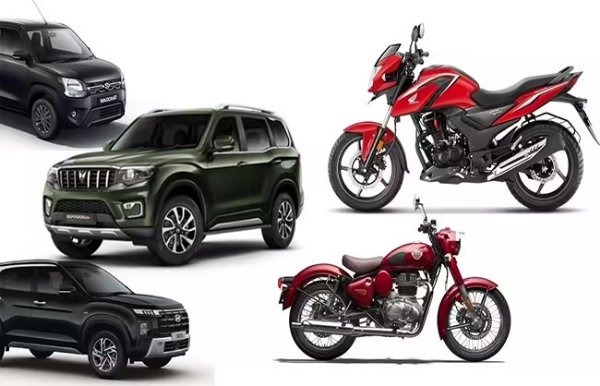
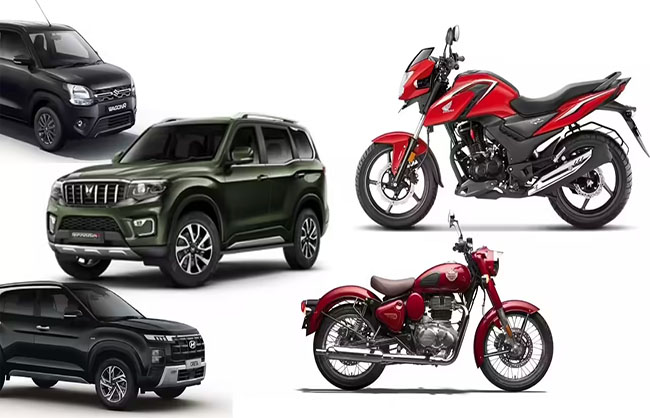
New Delhi, September 4 (H.S.): The GST Council has approved sweeping reforms in the Goods and Services Tax (GST) structure, moving towards a simplified two-tier system of 5% and 18%. As part of these revisions, small cars and motorcycles up to 350cc will become significantly more affordable. The new rates will come into effect on September 22, coinciding with the start of Navratri.
Finance Minister Nirmala Sitharaman announced the decisions at a press conference following the 56th meeting of the GST Council. Revenue Secretary under the Finance Ministry, Arvind Srivastava, explained that under the revised structure, petrol, LPG, and CNG cars with an engine capacity below 1,200cc and length under 4,000 mm, as well as diesel cars under 1,500cc and 4,000 mm in length, will now attract 18% GST instead of the existing 28%. Similarly, motorcycles with up to 350cc engine capacity will also be taxed at 18%, down from 28% currently.
Vehicles with higher specifications—petrol cars above 1,200cc and longer than 4,000 mm, diesel vehicles exceeding 1,500cc or 4,000 mm, as well as motorcycles over 350cc and racing cars—will face a higher GST slab of 40%. Importantly, small hybrid cars will also benefit from the rationalization, while electric vehicles will continue to enjoy the concessional GST rate of 5%. Additionally, GST on automobile parts has been reduced from 28% to 18%.
Welcoming the reforms, Santosh Iyer, Managing Director and CEO of Mercedes-Benz India, said, “The government has addressed a long-standing demand of the automobile industry by rationalizing GST rates. This progressive step will stimulate consumption, provide the much-needed push to the sector, and ultimately strengthen the economy.”
Currently, vehicles are taxed at a base rate of 28%, the highest GST slab, along with a compensation cess ranging from 1% to 22% depending on engine size and vehicle category. This leads to an effective tax rate of around 29% for small petrol cars and nearly 50% for SUVs.
—————
Hindusthan Samachar / Jun Sarkar