By Fiza Masoodi
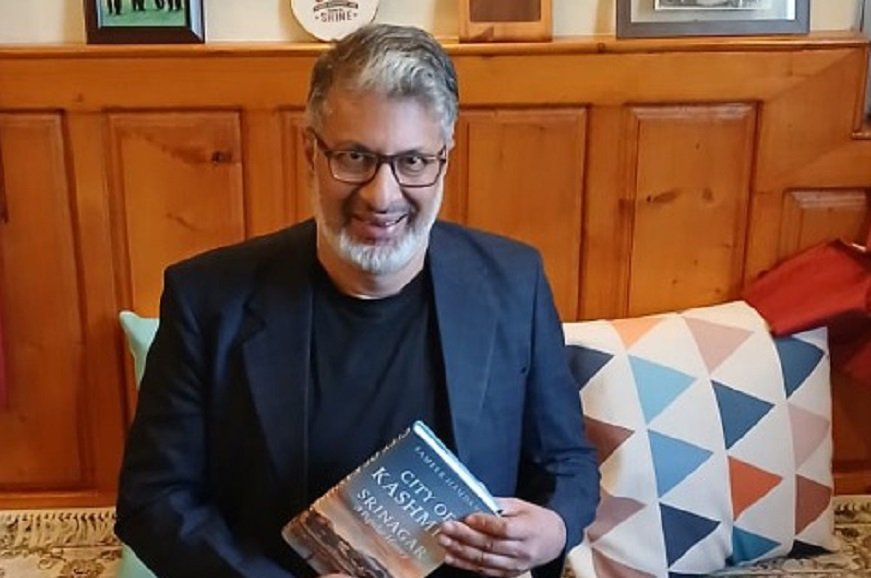
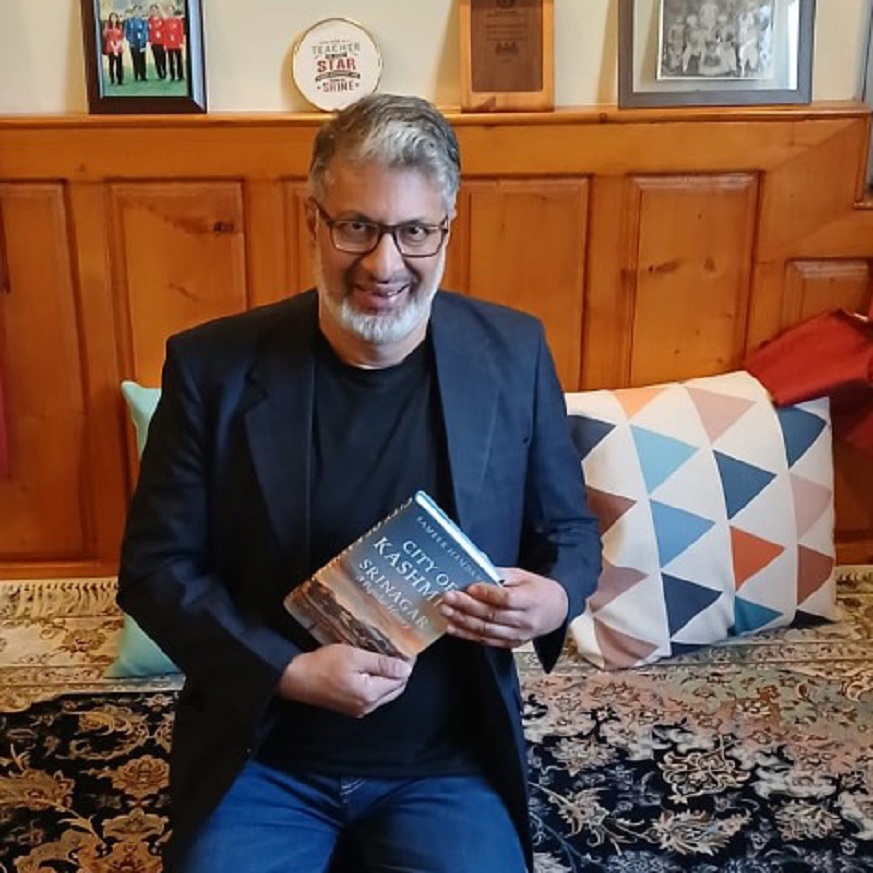
I stepped into City of Kashmir like a traveller entering streets shaped by empires, saints, and ordinary lives.
It felt like walking beside Joseph Roth in Hotel Years, through narrow streets and scarred cafés, reading the small moments that captured a Europe in decline.
Roth traced a wounded continent’s slow transformations. Hamdani traces Srinagar with equal attentiveness.
He moves through the city’s history with care, allowing its memory, buildings, stories, and everyday life to emerge naturally.
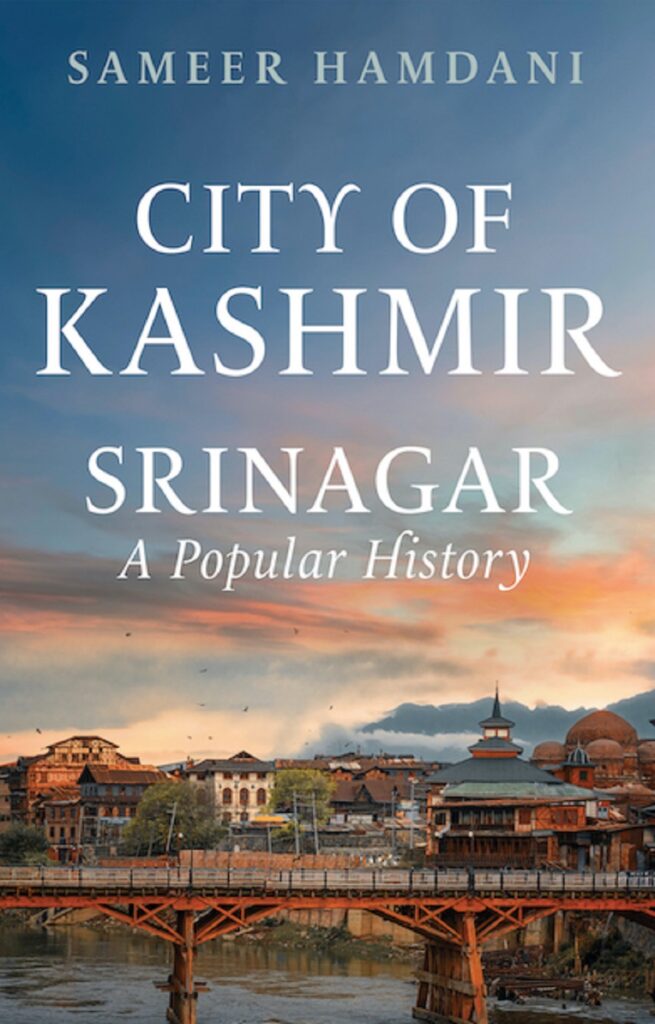
The timing of the book matters, as Srinagar today is surrounded by accounts that flatten its past and simplify its present.
The city circulates through ideas shaped by romance, conflict, and mistrust. Often described as the second-oldest city in South Asia, once a Central Asian crossroads before 1947, it now exists inside frames built by scholars, sightseers, scribes, and storytellers who carried admiration and unease in equal measure. Their writings hardened into myths, misunderstandings, and competing claims.
Against this background, Hamdani writes as someone intent on recovery rather than correction. His Srinagar emerges as a place shaped by centuries of movement, exchange, and layered belonging.
Hamdani’s training as an architectural historian gives the book its distinctive touch. Buildings, shrines, streets, and objects serve as points of entry into larger histories.
The narrative opens deep in the past, with Lalitaditya Muktapida, the eighth-century Kashmiri ruler whose campaigns carried power beyond the mountains and into the plains. Lalitaditya appears neither as legend nor ornament. His presence signals an early moment when Kashmir stepped into a wider political imagination.
Through this figure, Hamdani establishes a central idea of the book: Srinagar has always stood in conversation with distant worlds.
From there, the narrative flows forward with ease.
One chapter moves into the Mughal period through a scene filled with anticipation and rumour.
In the mid-17th century, François Bernier travelled to Kashmir with Nawab Danishmand Khan, part of the entourage accompanying Emperor Aurangzeb on his first visit to the valley. As the imperial party left Shahjahanabad, the streets buzzed with speculation.
Some imagine a march toward Kandahar. Others whisper about the emperor’s health. Niccolò Manucci points to RoshanAra Begum, Aurangzeb’s sister, suggesting the journey served as a public display of her rising influence.
Hamdani places these accounts side by side, showing how power moves through rumour, narrative, and carefully staged presence.
Spiritual life runs through the book as one of its strongest currents. In “The Saint of the City,” Hamdani turns to Sheikh Hamza Makhdoom, a figure whose presence continues to shape Srinagar’s religious imagination.
Hamza arrives from Sopore as a young seeker, absorbed in study, work, and devotion.
As his reputation grows, Kashmir’s political order shifts. Power moves from the Shahmiris to the Chak rulers, and religious patronage follows new lines.
Hamza’s rising authority becomes linked to Sunni assertion during a period of deep change.
His shrine, set on the slopes of Koh-i-Maran, draws support across generations. Mughal emperors grant endowments. Afghan governors pay tribute. Merchants and ordinary devotees keep its life alive.
From its height, the shrine overlooks the city, holding centuries of faith, power, and memory within its walls.
One of the book’s great pleasures lies in its attention to ordinary life.
The chapter “Chai” distills everyday life in Kashmir into three objects: the kanger, the pheran, and the samovar.
The samovar, brought from eighteenth-century Russia, sets the pulse of daily life. Tea seals companionship, a shared cup opens conversation, and history takes root in everyday habit.
Hamdani focuses on small social cues. Slurping pleases in one setting and offends in another. Some cups are emptied, others left behind. A Hindu woman may lift the cup with the sleeve of her pheran, while Muslim women usually hold it directly.
These gestures show how difference folds into habit, giving Srinagar its texture.
Social life takes on sharper edges in the chapter on tanz, street satire.
Hamdani shows humour as one of the city’s most natural ways of speaking. Tanz begins on the pend, the narrow wooden ledge outside shops where men gather at dawn and dusk. Talk drifts from lanes to chowks to bridges, and sometimes even slips into mosque hammams, much to the irritation of the devout.
This humour crosses class and status with ease. It pokes fun at pretension, cuts down false refinement, and keeps things in balance through wit.
In these moments, Srinagar feels fully alive, talking back to itself.
The book also traces Srinagar’s long confidence in itself.
Historically, Srinagar saw itself as Kashmir’s only real city, different from the villages and towns around it. City life came with confidence and polish, and with clear ideas about who belonged. Medieval poets made fun of hillbillies, and later writers pushed the divide even further through satire.
Hamdani places this mindset in a larger story about how cities shape class and identity. Even then, Srinagar kept pulling people in, and within a generation many newcomers picked up the city’s ways, their earlier roots slowly fading.
Trade and movement run through the book as lasting forces that shape the city.
Inscriptions, tombstones, and travel permits trace Kashmiri merchants across Ottoman lands, Safavid Iran, Mughal India, and Tibet. A bilingual permit sealed by the Dalai Lama points to Kashmiri traders moving through the Tibetan highlands.
These journeys show up in everyday life. Architecture, clothing, food, and craft carry marks of Central Asia, the Indian plains, and places farther away.
Cultural mixing appears here as something lived and visible, present on the streets and along the river rather than confined to ideas on a page.
The twentieth century comes into focus in one of the book’s most striking chapters, “City of Revolt.”
Hamdani recounts 1989 through atmosphere and sequence, tracking how events unfolded on the ground.
He places Srinagar within a wider world in flux: the Soviet withdrawal from Afghanistan, and political change across Eastern Europe.
Radios carry these developments into Kashmiri homes, shaping conversations across the city.
Then winter arrives, and the rupture begins.
Hamdani writes with clarity and restraint, letting lived experience explain what followed.
Throughout City of Kashmir, Hamdani avoids sweeping claims.
The book moves easily between text and life, archive and street, monument and object. Each chapter opens a fresh entry into the city’s long memory.
Srinagar comes into view as a place shaped by exchange, hierarchy, humour, devotion, and habit, carrying its past through people who drink tea, trade stories, poke fun at authority, build shrines, and walk its lanes.
Reading City of Kashmir feels like walking with someone who notices everything, much like following Joseph Roth through Europe’s scarred streets after World War I.
Srinagar unfolds slowly, full of memory, humour, and devotion.
By the end, the city feels vivid and alive, a place that lives beyond the spotlight and inspires awe.
- The author is a Srinagar-based scribe and startup founder. She can be reached at [email protected].