By Hamid Rather
Arshid Bashir leaned back in his office chair, staring at the file in front of him: FIR No. 164/2025.
His client, Parvaiz Ahmad Rather, was facing criminal charges.
Bashir has handled some of the biggest and strangest cases of his career in the High Court and Supreme Court. He has fought complex corporate disputes, high-profile matters, and cases that made headlines.
But this was different.
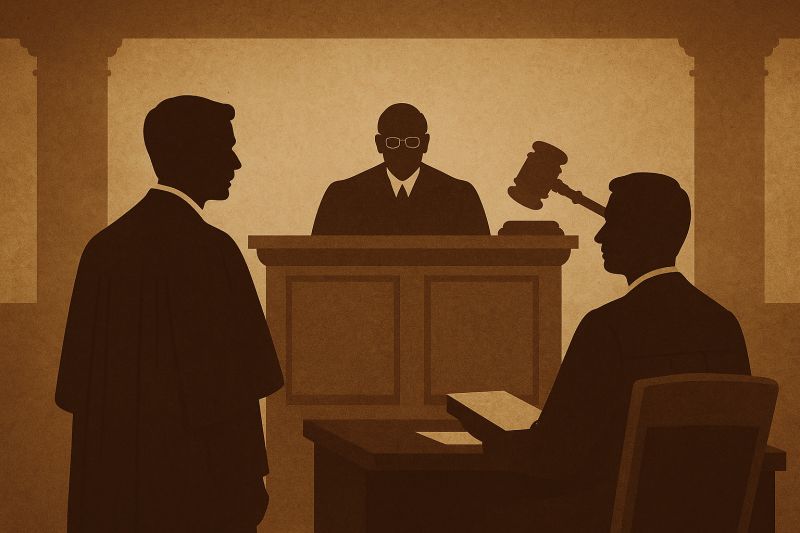
It all began with a routine courtroom session in Beerwah, Budgam. Rather, a lawyer himself, was cross-examining a prosecution witness.
During the questioning, he raised objections. The presiding judge overruled them. That should have ended the matter.
It did not.
The Additional Public Prosecutor, irked by the objections being overruled, filed a complaint with the police.
A normal courtroom disagreement became FIR No. 164/2025 under sections 132 and 351 of the BNS.
Bashir, a lawyer from Sultanpora, Kandi, Baramulla, who regularly appears in the country’s top courts, knew the case would need careful handling.
He paced his office, reviewing notes, thinking about how to explain to the High Court that this matter never should have gone to the police.
Together with co-counsel Asif Ahmad Bhat, he made the argument clearly and calmly.
“Any disagreement should have been handled by the judge,” Bashir told Justice Sanjay Dhar. “If there was a problem, the Bar Council is the right place. Criminal charges were not needed.”
The judge listened and agreed the petition had merit.
Justice Dhar paused the investigation and gave Rather a week to submit a certified copy of the FIR.
Notices went to the Union Territory of J&K and the Additional Public Prosecutor.
The next hearing is scheduled for February 27, 2026.
Even after the ruling, Bashir could feel the tension.
In a career filled with high-stakes cases, this one reminded him that even small courtroom moments can spiral unexpectedly.
For the local legal community, the case raises sharp questions: How far can disagreements go before they become misconduct? Which paths should lawyers take when disputes arise?
As the next hearing approaches, Srinagar’s legal circles are watching closely.
The outcome could change how courtroom conflicts among lawyers are handled for years to come.
- Hamid Rather is an advocate practicing at J&K High Court.