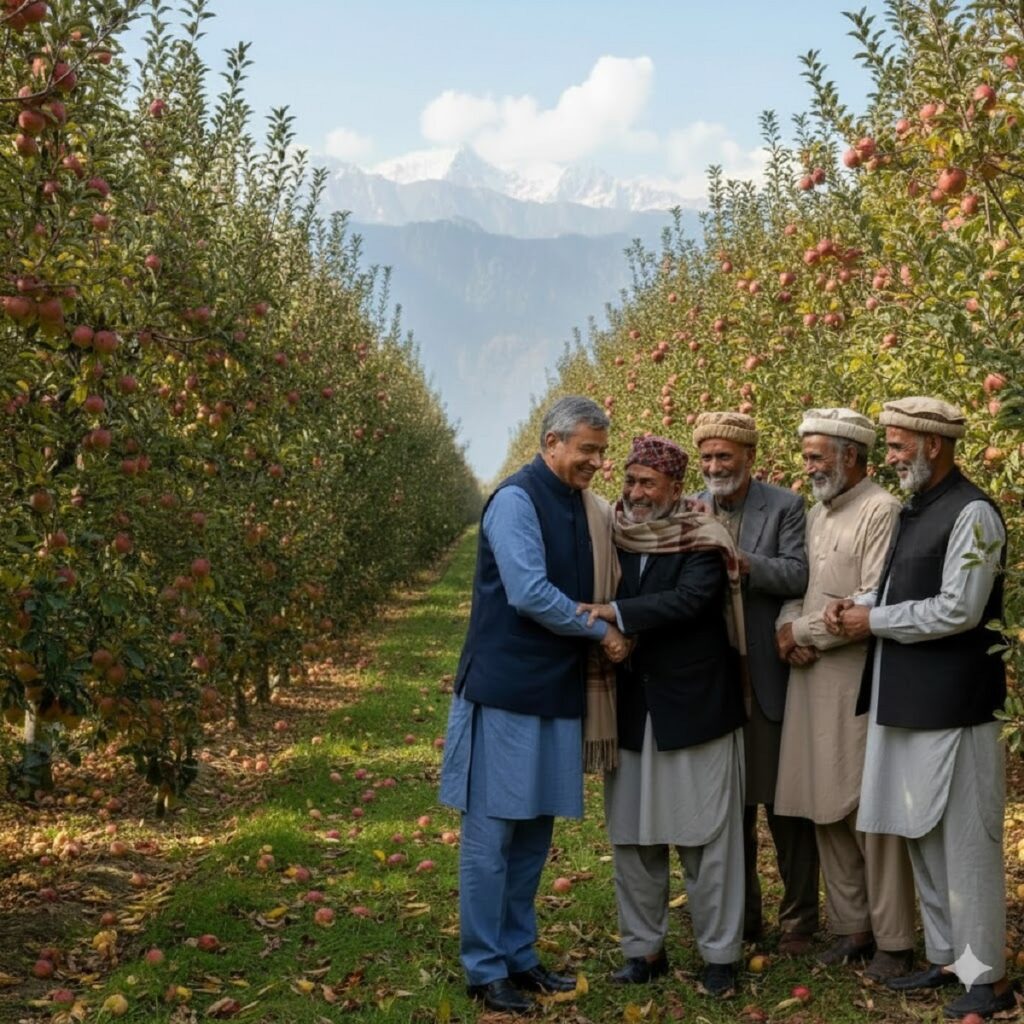
I can still picture what I saw on December 26, 2025, while walking through Babhar, Keegam, Check Niltrisal, Check Nazneenpora and Kunsoo, villages spread between Pulwama and Shopian.
I was there with fellow activists from the Jammu and Kashmir Climate Action Group, and the feeling in those orchards unsettled me.
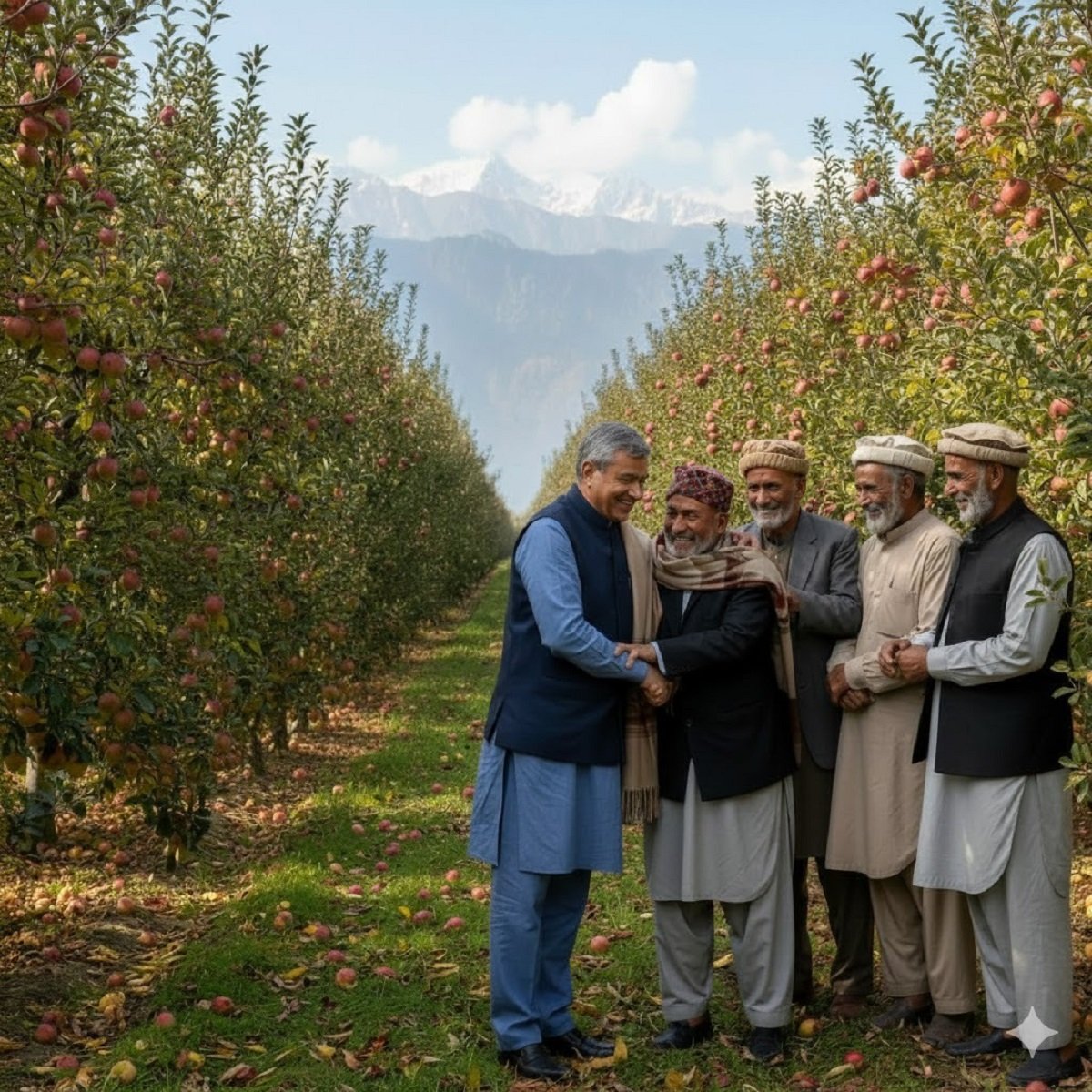
Apple farmers stood beside their trees, watching survey teams place masonry pillars marked in yellow, fully aware of what those markings could mean.
The railway line under survey would cover just 27 kilometres, running from Kakapora in Pulwama to Kunsoo in Shopian.
That short stretch cut straight through the heart of these villages.
Nearly ninety percent of families depend on apple farming, and the proposed line threatened their income, land and the local environment at the same time.
People felt cornered and unsure how to speak, even though the danger was unfolding right in front of them.
When we sat with farmers and listened, the frustration came pouring out. Many believed raising their voice would change nothing.
But once we started sharing their concerns publicly, backed by clear facts and numbers, the mood began to shift.
Social media posts caught attention, journalists reached out, and silence slowly gave way to public debate.
Soon, people started calling it a Chipkoo-like movement, because villagers stood up to protect trees that sustained their lives.
This struggle had already surfaced earlier.
In November 2024, survey work began in Bijbehara in Anantnag district for the proposed Bijbehara to Pahalgam line. I visited those areas too and saw similar anger and fear. MLA Bashir Veeri raised the issue repeatedly for over a year, and MLA Altaf Kaloo wrote to the chief minister in January 2026.
During the winter session of parliament in 2024, Srinagar MP Aga Syed Ruhullah spoke strongly in the Lok Sabha and demanded a social impact assessment, which the Right to Fair Compensation Act of 2013 makes mandatory.
In December 2024, I visited Dhirhama village with a team from Kashmir Observer. Villagers protested openly against the railway surveys, and a short video report from that visit spread widely online and reached millions.
Attention dipped for some time, then returned sharply when the same survey work appeared in Pulwama and Shopian. DDC member Raja Waheed called me several times, and together we focused on spreading awareness and explaining the law.
People wanted clarity, and I explained how the proposed alignment broke environmental rules, since it also involved mulberry, willow, chinar and walnut trees protected under the Jammu and Kashmir Specified Trees Act of 1969.
I spoke about the Fair Compensation Act of 2013, which applies in Jammu and Kashmir and stresses consent of local people during land acquisition. Farmers like Ummer Wani and Mohammad Aslam spoke openly about these legal protections, and those videos travelled far online.
After that December visit, I followed the case for new developments. More journalists visited these villages, political leaders began speaking publicly, and farmers who once stayed silent stepped forward.
PDP leader Mehbooba Mufti raised the matter, as did MLAs Waheed Parra, Ghulam Mohiudeen Mir and Shabir Kullay. DDC member Raja Waheed stayed active, and several BJP leaders joined in.
BJP Rajya Sabha MP Ghulam Ali Khatana took the issue directly to railway minister Ashwini Vaishnaw.
That combined effort made a difference.
On February 3, 2026, the railway minister announced that the Bijbehara to Pahalgam and Awantipora to Shopian rail proposals stood suspended. He said the decision followed objections from farmers, elected representatives and the Jammu and Kashmir government.
These surveys had continued for nearly two years, covering over 40 kilometres in one case and 27.6 kilometres in the other, and had caused anger in villages where tracks would cut through apple orchards.
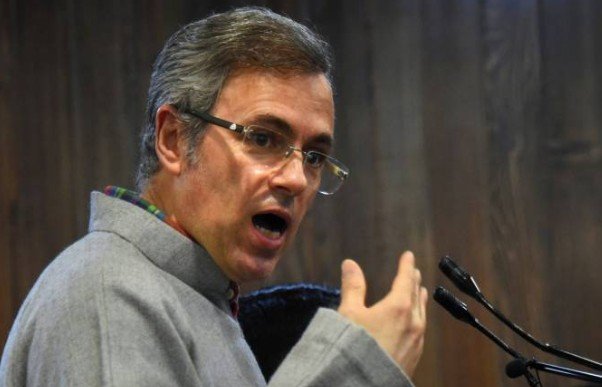
Chief minister Omar Abdullah welcomed the decision and asked for more coaches and better frequency on the Katra to Srinagar Vande Bharat trains.
Relief spread quickly through Anantnag, Pulwama and Shopian. Apple growers spoke about finally breathing easier after months of worry.
This moment mattered beyond orchards and income. It showed that public voices can still influence decisions, even in places where people often feel ignored.
My own bond with railways carries emotion.
I travelled by train from Srinagar to Maharashtra and Gujarat for the first time in my life, and that journey felt unreal. Railways connect India and Kashmir in powerful ways. People here never opposed the Katra to Srinagar line, which stands as an engineering marvel. The opposition arose only when new lines threatened forests and orchards for short stretches that offered little benefit at great cost.
Ashwini Vaishnaw, an IIT Kanpur graduate and former IAS officer with experience in government and the corporate world, took a call that balanced development with people’s lives.
By shelving these projects, he helped protect thousands of trees and the livelihoods of apple farmers in Anantnag, Pulwama and Shopian.
More than that, the decision sent a message that listening still matters.
And in a place where trust runs low, that choice opened space for better understanding between New Delhi and Kashmir.