By Ikkz Ikbal
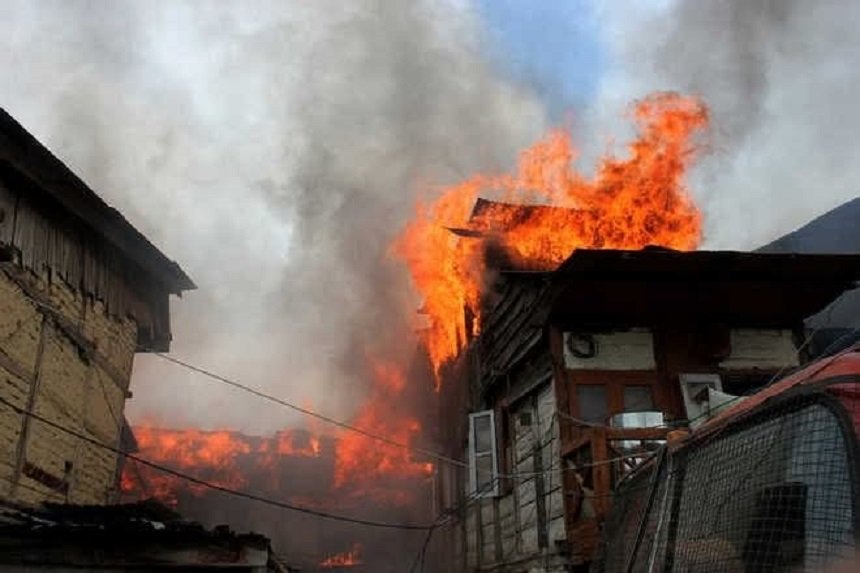
Fire trucks have been racing through Kashmir almost every night this season. Sirens cut through the shivering cold, echoing off empty streets as crews rush toward homes already glowing with orange light.
Winter has only begun, and the valley is witnessing a troubling surge in fire incidents that shows no sign of slowing down.
The danger grows sharper with every degree the temperature drops.
This rise feels alarming because these fires rarely stay contained. Houses in older neighbourhoods stand close together, many built with timber frames that catch in seconds.
A spark inside one kitchen or bedroom can spread across an entire lane before families understand what has happened. People step out into the freezing night wearing pherans, watching flames swallow years of work, saving only what they can grab during those frantic moments.
The broader numbers show how deeply the crisis has taken hold.
In 2024, the Fire and Emergency Services Department responded to 6,752 calls across Jammu and Kashmir. Nearly 3,000 buildings were damaged. Twenty-three firefighters were injured while trying to pull people out.
Over the six-year period from 2018 to 2023, the region witnessed 26,354 fire incidents that claimed 486 lives and left more than 500 people injured.
Each statistic carries a human story, often unreported and sometimes too painful for families to retell.
Much of the problem begins inside homes.
The shivering cold pushes families to depend heavily on heaters, electric blankets and extension cords that work through the night. Markets are filled with inexpensive heating devices, especially electric blankets that lack auto shut-off systems, sturdy wiring or proper insulation.
These blankets promise comfort at a low price. Their hidden faults reveal themselves only when a circuit overheats or a loose wire sparks beneath a pile of bedding.
When paired with worn-out household wiring, old fuse boxes and overloaded extension boards, the risk grows quickly.
These fires often feel sudden, though the triggers have been present for years.
A mother may save her children in time but lose the wooden trunk where she kept their childhood photographs. A shopkeeper may close his store with pride after a long day, only to return at dawn to find the shutters warped and the space inside reduced to blackened metal. A family of five may climb onto their rooftop, waiting for firefighters to reach them as smoke fills their rooms.
These are moments that stay with people long after the flames die down.
The crisis reaches beyond homes as well.
Forests across Jammu and Kashmir have been burning at higher rates. In 2024-25, the region recorded 1,243 forest fires that destroyed more than 3,500 hectares of land. The previous year saw 607 such cases.
During one ten-day stretch last spring, 94 forest fires were reported. Hillsides that once turned lush each summer now show dark streaks where flames left their mark. Rising temperatures, dry spells and human negligence all play a part.
Authorities have been urging the public to treat winter with more caution. Households are encouraged to unplug heaters and electric blankets before sleeping, avoid low-quality devices, check wiring, replace old fuses and keep sand buckets or extinguishers within reach.
These are small steps that blend easily into daily routines. They take minutes, though they carry the power to protect homes built through years of hard work.
Kashmir has always learned to live with hardship. Floods, storms and long winters have shaped the region’s sense of resilience. Communities come together quickly when someone loses a home.
That same instinct can guide the response to the growing fire crisis.
Being careful means keeping families safe. Small steps like turning off heaters, choosing safer blankets, and upgrading extension boards can make a big difference.
The comfort people seek during the cold months should never place them at risk.
As more fires sweep through the valley, it is clear that winter warmth needs attention, and each household has a part to play in preventing the next alarm.
The author is a principal and education advocate based in Kashmir. He can be reached at [email protected].