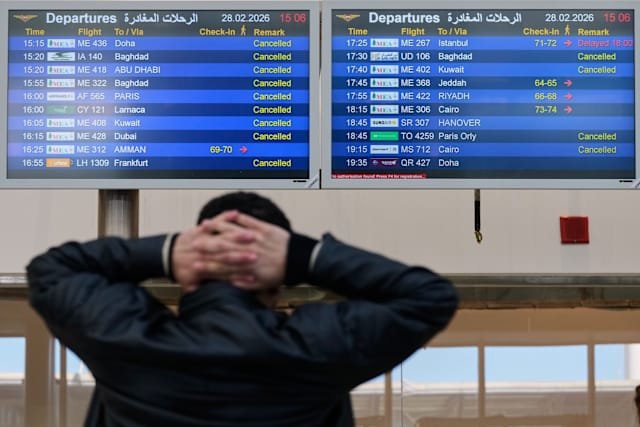
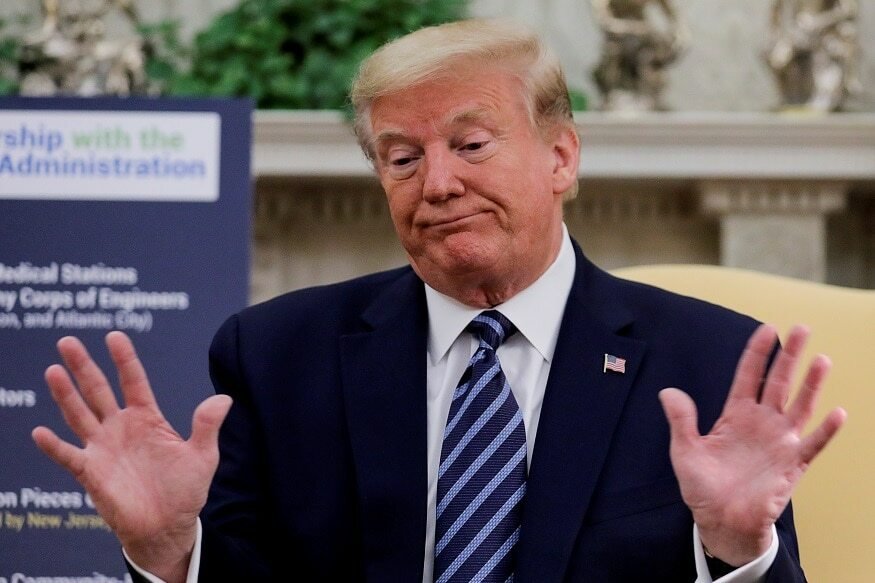
Dubai — As Iran’s street unrest appeared to subside and daily life in Tehran returned closer to normal, President Donald Trump on Friday struck a notably softer tone, publicly thanking Iranian authorities for what he said was a decision to halt mass executions and suggesting the United States may be stepping back from earlier hints of military action.
“We’ve been told that the killing in Iran is stopping, and there’s no plan for executions… I’ve been told that on good authority… And I greatly respect the fact that they cancelled,” Trump told reporters at the White House.
Trump echoed the claim on his social media platform, posting that more than 800 people had been set to be executed but now would not be. “Thank you!” he wrote.
His remarks followed several days in which he repeatedly suggested the U.S. might respond militarily if Iran’s government used severe measures to crush protests that had turned violent. The shift in tone added to the impression that the threat of imminent American intervention was easing.
Trump had previously written in support of protesters, “Help is on the way.” Asked Friday whether that message still applied, he answered, “Well, we’re going to see.”
Pressed on whether Arab or Israeli officials had urged him to back away from striking Iran, Trump insisted the decision was his alone. “Nobody convinced me,” he said. “I convinced myself.”
On the ground in Iran, there were no signs of protests for days in Tehran, where shopping and street life resumed. A week-old internet blackout, however, continued. Authorities also reported no unrest elsewhere in the country.
Still, Iran’s leadership signalled it was prepared to take a hard line. In a major Friday prayer sermon broadcast on state radio, Ayatollah Ahmad Khatami prompted chants from worshippers, including, “Armed hypocrites should be put to death!”
Khatami, a member of Iran’s Assembly of Experts and Guardian Council, portrayed the protesters as ‘bullets’ of Israeli Prime Minister Benjamin Netanyahu and ‘Trump’s soldiers’, warning both leaders to expect ‘hard revenge from Iran.’
“Americans and Zionists should not expect peace,” he said.
Widespread Damage From Protests
Khatami also offered the first broad accounting of damage from the protests, saying 350 mosques, 126 prayer halls and 20 other religious sites had been vandalised or set on fire. He said 80 homes belonging to Friday prayer leaders were damaged, along with 400 hospitals, 106 ambulances, 71 fire vehicles, and another 50 emergency vehicles.
Meanwhile, Iran’s exiled Crown Prince Reza Pahlavi urged Washington to follow through on its earlier signals of support, calling Trump “a man of his word.” Pahlavi, whose father was toppled in the 1979 Islamic Revolution, said he still believed the U.S. president’s promise of assistance.
But a growing sense that both the demonstrations and the prospect of U.S. retaliation were receding was underscored by diplomatic concerns. One diplomat told The Associated Press that senior officials from Egypt, Oman, Saudi Arabia and Qatar warned Trump that American military intervention could destabilise the region and shake the global economy.
Crisis Over or Just a Pause?
Whether the moment of crisis has passed or whether this is merely a pause remains unclear.
U.S. media reports suggested a carrier strike group led by the USS Abraham Lincoln had been told to redeploy from the South China Sea, widening Trump’s options.
As often with Trump, the effect was to keep allies, adversaries and markets guessing. He did not rule out military action, saying he would “watch and see what the process is” before deciding what to do next.
Yet even if Washington is tempted by the prospect of finally breaking the Islamic Republic after decades of hostility, analysts warn that air strikes, while capable of inflicting enormous damage on Iran’s security apparatus and its nuclear and missile programmes, are unlikely on their own to topple the government.
Caution in Washington
In Washington, there are also voices urging caution. The Islamic Republic is battle-hardened and has shown it can weather repeated storms, a far more formidable opponent than fragile states such as Venezuela, despite the latter’s vast oil reserves.