By Syed Sammar Mehdi
Srinagar- Farmers in Pulwama and Shopian are raising alarm over a proposed railway line that they say threatens their livelihoods and the local environment.
The 26-kilometer stretch, planned between Kakapora in Pulwama and Kunsoo in Shopian, would cut through highly productive apple orchards and other horticulture land, according to local residents and climate activists.
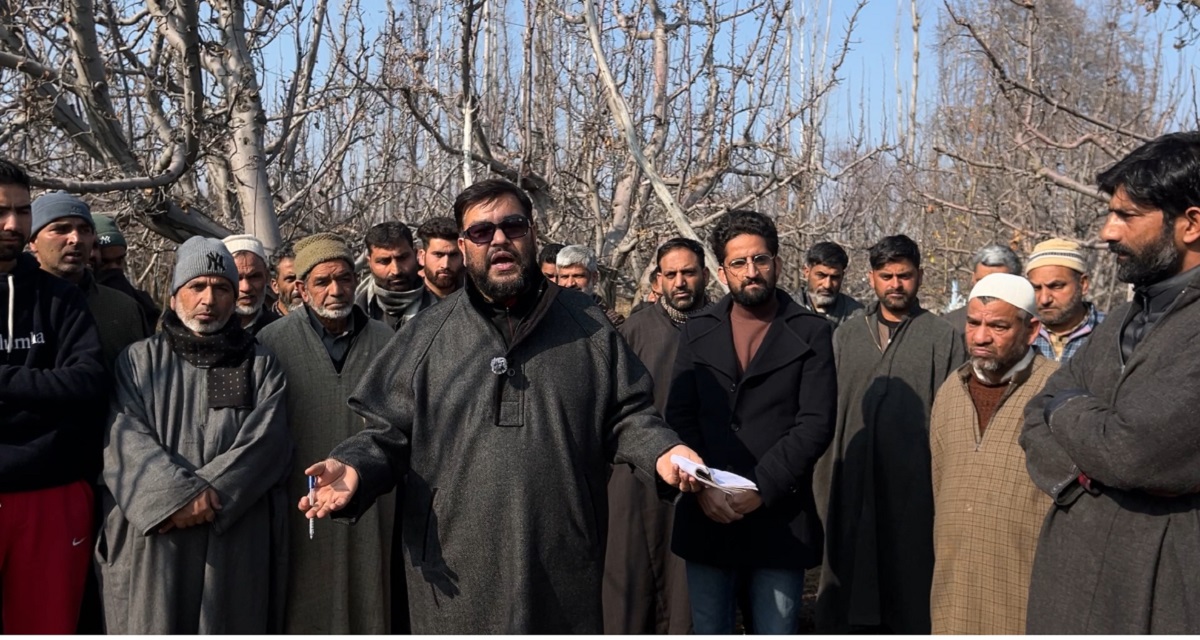
On Thursday, members of the J&K Climate Action Group (JKCAG), led by Dr. Raja Muzaffar Bhat, visited several affected villages, including Babhar, Keegam, Check Niltrisal, Check Nazneenpora, and Kunsoo. They met with dozens of farmers who described the project as disastrous.
“Almost seven lakh apple and other trees in this area could be cut down,” Dr. Bhat said. “Fully grown apple trees, as well as mulberries, walnuts, chinars, and willows, are in the alignment of the railway. Dozens of irrigation channels would also be blocked. This project would harm both the environment and the livelihoods of local communities.”
Farmers told the group that Kakapora already has a functioning railway station, which sufficiently meets regional connectivity needs. They argued that the 26-kilometer rail line is unnecessary and would come at an enormous ecological cost.
“Laying this line and destroying seven lakh trees is simply suicidal,” said Farooq Ahmad Dar, a farmer from Kunsoo. “We want a social impact assessment and consultations with local bodies like Halqa Majlis and Gram Sabhas. Authorities are ignoring land acquisition laws, and nobody is asking what we want.”
Senior members of JKCAG, including Ajaz Sofi, Raja Aamir Khan, and Dr. Bilal Nabi, also urged authorities to intervene.
Dr. Bhat appealed directly to Chief Minister Omar Abdullah to raise the matter with the Union Railway Minister, suggesting that instead of building a new line, the existing road between Srinagar, Pulwama, and Shopian be widened to ease traffic.
The dispute highlights the growing tension between development projects and environmental conservation in the Kashmir region, where horticulture is a key source of income for local communities.