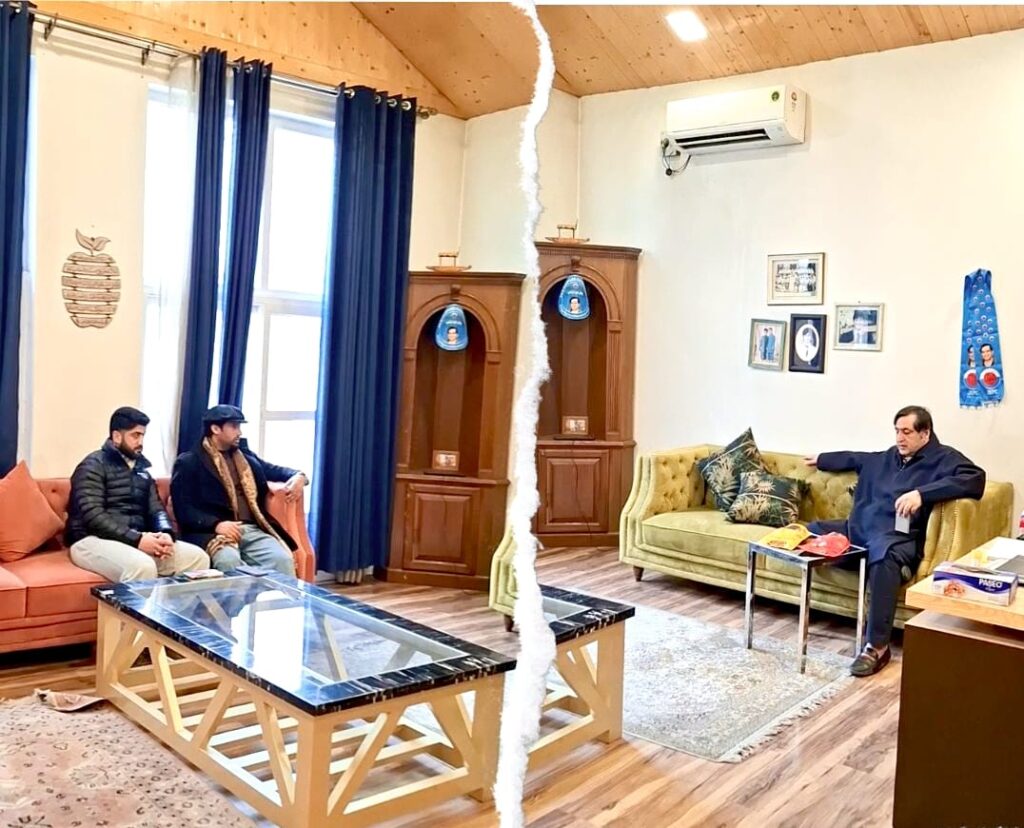
By Arshid Mehraj
Srinagar- Youth concerns in Kashmir are breaking past rallies and protests, finding their way into the corridors of power.
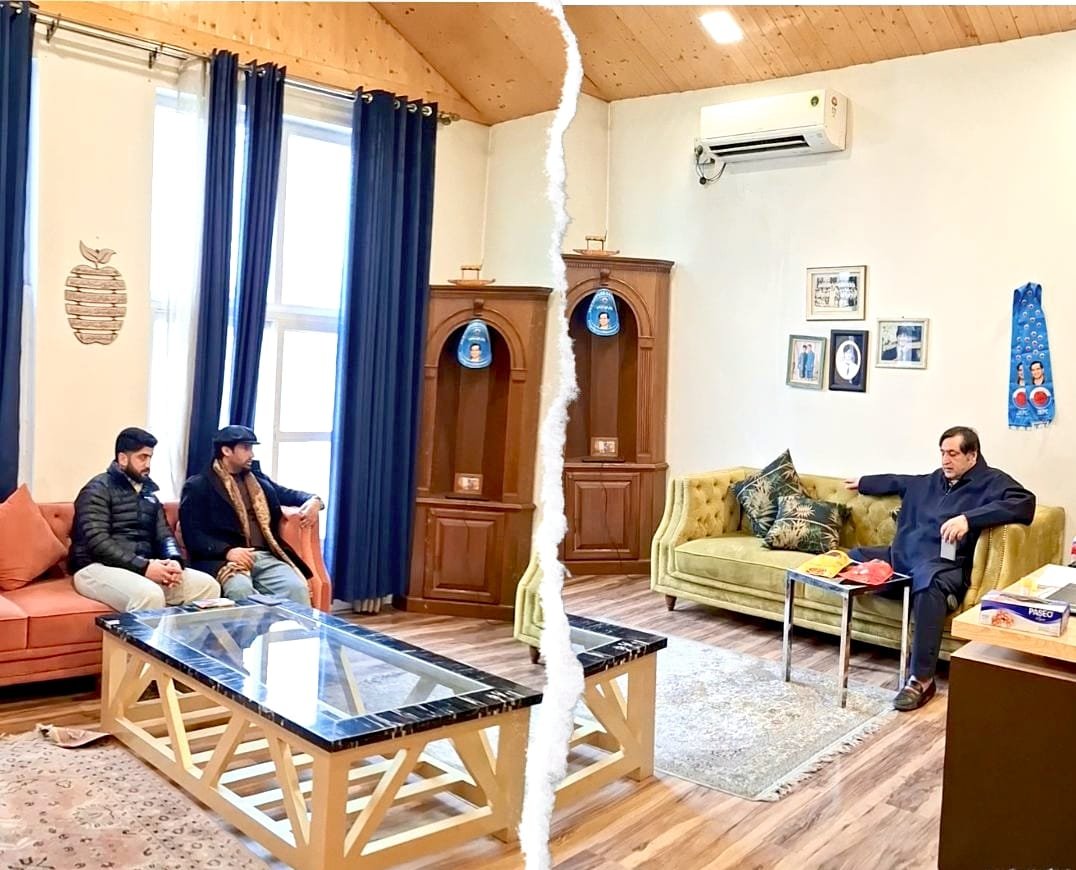
This Sunday morning, the shift became clear when a young party leader showed up at his senior’s home in Sonwar with a folder full of an entire generation’s worries.
Hamid Rather, a young lawyer from Pattan and youth spokesperson for the Jammu and Kashmir People’s Conference, carried papers that told the story of long waits, growing frustrations, and hopes on hold.
There were electricity bills matching or even exceeding rent. Lists of daily-wage workers who hadn’t been paid for months. Job rejection emails that all started the same way: “We regret to inform you.”
“They’re not asking for the impossible,” Rather said. “They just want the work they applied for, the salaries they earned, bills they can pay. That’s it.”
Sajad Lone, party president, sat in a bright living room with his phone face down, nodding thoughtfully, chin slightly raised.
Rather laid the papers on the table. “These are not just numbers,” he said. “They are voices, that can’t be expressed on the street right now, so they’ve come here.”
The 2024 assembly elections, held nearly a decade after the last vote, had been shaped decisively by young voters. They came out in large numbers, motivated by hopes that their welfare, jobs, and future would finally matter. Many of them overwhelmingly supported certain parties, believing their vote would translate into real change.
A year after the elections, young people are still waiting for change, and anxiety is growing.
Even parties they backed are now expressing helplessness or confusion over addressing their concerns.
Meanwhile, jobs remain hard to find for youth in Jammu and Kashmir, where unemployment ranks among the highest in India.
Official data from 2023 shows that over a quarter of 20–29-year-olds were out of work, far above the national average.
“Many engineering graduates are now driving cabs or delivering parcels,” says Shamim Bisati, a recruiter with a private firm. “Postgraduates spend years waiting for government jobs that never seem to open up. Daily-wage workers, who keep schools and offices running, are left unpaid for months.”
Meanwhile, costs, from rent to electricity, continue to climb.
“Private-sector opportunities remain scarce,” Bisati continues. “And even the growing startup ecosystem offers limited relief.”
Jammu and Kashmir has over a dozen incubation centers, but, insiders say, most young people struggle to find proper mentorship, guidance, or funding.
“As a result,” says Tufail Hassan, a young startup founder, “many talented youth remain stuck, frustrated, and unsure about their future.”
Back to Sonwar, Rather and Lone went through the folder, discussing unpaid wages, delayed recruitment, and bills families could not afford.
Once the “dark horse” of Kashmir politics and a probable chief minister in the pre-2019 era, the PC chief absorbed the gravity of the situation in silence, breaking a paperclip as he read through the papers.
“If these issues aren’t addressed here,” Lone said, “they will appear somewhere else. And when that happens, no one can control how they are expressed.”
Outside, Srinagar carried on with a normal Sunday. Inside a political room near Gupkar, the focus kept returning to youth concerns.
“It’s obvious,” Rather said later, “these problems are pressing. They don’t wait for speeches or rallies, and ignoring them is no longer an option.”
Clearly, youth anxieties stemming from scarce government jobs to limited startup opportunities are still influencing political debate, even a year after the elections.
In Sonwar, Sajad Lone’s living room made it clear: ignoring the young is no longer possible.