I have walked along the Rambiara River at Trenz in Shopian more times than I can remember.
The river has always been a part of people’s lives here, a companion to orchards, fields, and homes.
In summer, children play in its shallow waters. When the rains come, it rises and roars, a reminder that it gives life but cannot be controlled.
Two years ago, everything along its right bank began to change.
Poplar and willow trees, acacia, apple saplings, and vegetable plots were cleared. Families who had farmed the land for generations lost their connection to the soil.
Local Halqa Majlis, the panchayat that should have been consulted, was bypassed, and the community had no say in a decision that uprooted their livelihoods.
Now, an industrial estate is rising on the very land that once held those orchards and fields.
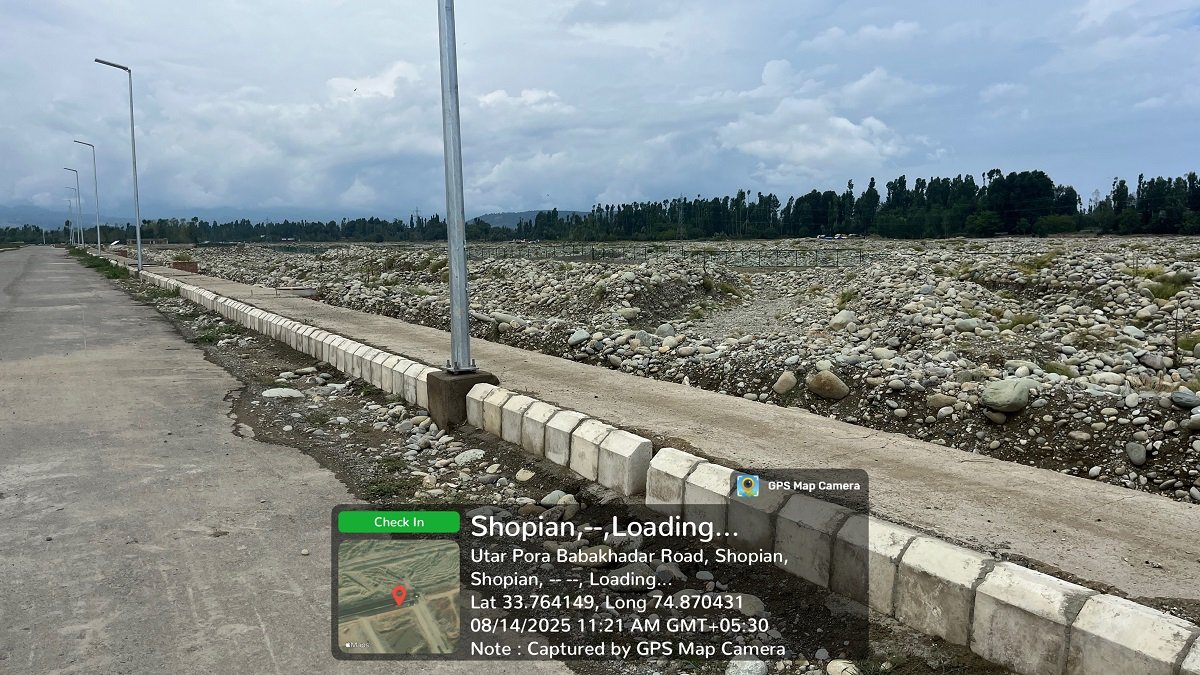
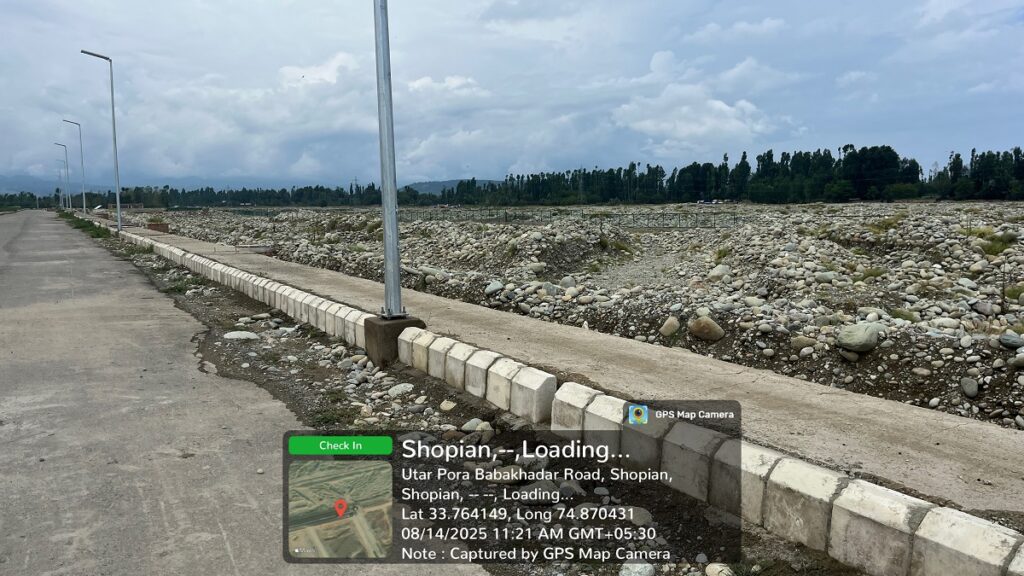
The J&K State Industrial Development Corporation, SIDCO, is building factories and commercial complexes on 500 kanals, just thirty meters from the river.
The estate sits directly on a floodplain, the natural runway the Rambiara has always used to carry high waters during the rains.
Concrete barriers and factories will line the right bank, protecting buildings but forcing the river toward the unshielded left bank.
There, villages like Dombwani, Nazneenpora, Adoora, and Sheikhpora rely on agriculture, orchards, and small plots to survive.
These families have nothing to buffer them when floods arrive.
I have brought these concerns before the authorities in written representations. I even approached the National Green Tribunal in New Delhi, presenting maps, hydrology reports, and local testimony.
The silence in response has been deafening.
Officials act as if the land is vacant and buildable, ignoring its ecological role and historical function.
The Rambiara is a major tributary of the Jhelum, originating in the Pir Panjal mountains, nourishing fields, orchards, and communities along its course. Its seasonal floods are nature’s way of maintaining balance.
The consequences of ignoring this balance are clear.
Narrowing the river with concrete will choke its flow, pushing water onto the unprotected left bank. Poor families, farmers, and orchard owners will bear the brunt.
Homes may be lost, fields destroyed, and livelihoods wiped out.
When floods come, they will follow the path of least resistance, and the people of these villages will pay for mistakes made far from their homes.
Illegal riverbed mining has already weakened the banks, making the flood threat even greater.
This is not unused land. It was fertile, productive, and protected by trees that prevented soil erosion.
The Naid Gund residents who once farmed the riverbanks had no power to resist. Two years ago, their vegetable plots were removed without compensation or consultation, despite their status as legitimate stakeholders under state land laws.
Similar to highway and railway projects, where local panchayats are compensated during land acquisition, the people of Trenz were overlooked.
SIDCO and government authorities must recognize that the Rambiara is a floodway.
They must halt industrial expansion on the right bank, enforce responsible urban planning, and construct protective measures for the left bank communities before it is too late.
Ignoring the needs of the people while prioritizing industry will lead to environmental catastrophe.
The river will follow its natural course. It will reclaim the land forced into concrete, and the unprotected will suffer the consequences.
Walking along the banks today, I see bulldozers and steel frameworks where willows once swayed.
The river, patient as ever, continues to flow, carrying the warnings of generations.
If development ignores these warnings, the floodwaters will tell the story of loss.
For the left bank families, the Rambiara will be a force that destroys what they have built with their own hands.