With slanted coverage and an almost complete occlusion of alternate points of view, even in news, by the ‘mainstream media’ in the US, a neutral observer might be forgiven for believing that democracy is dead in the country.
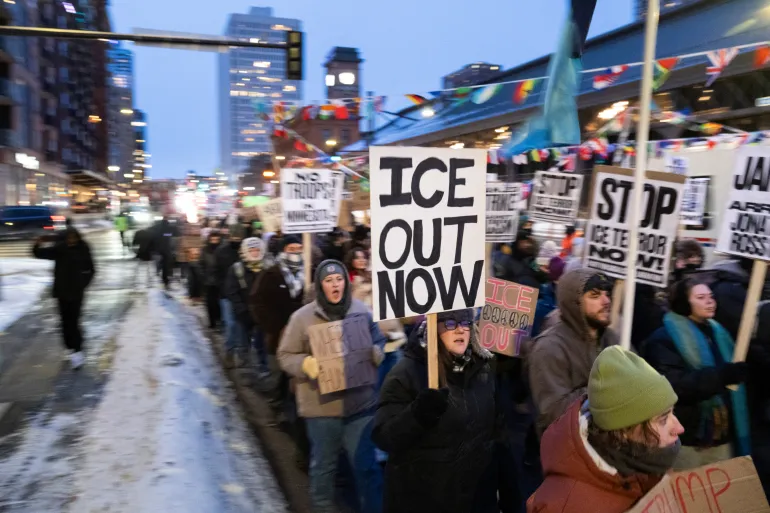
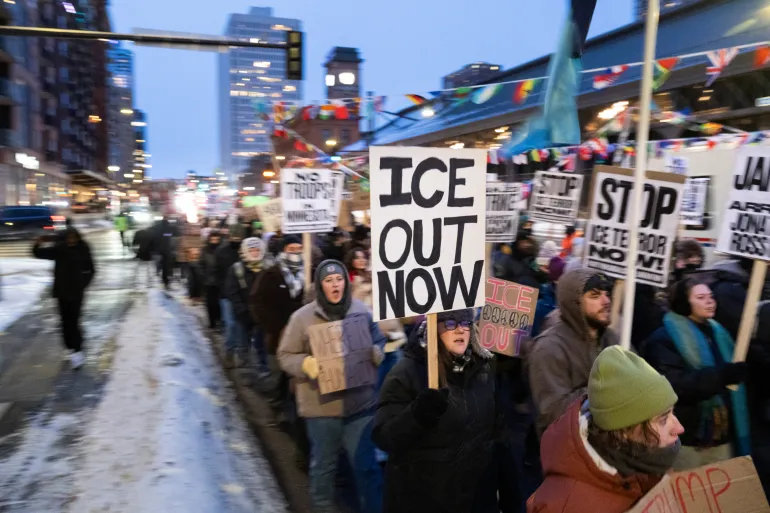
Be it the protests over ICE raids, the ruckus over deportation, or other related issues, the media’s slant and bias suggest it is all over.
In this ‘melee,’ Minnesota appears to be the state where it is all playing out.
The question is: is democracy dead in the US? Is Minnesota emblematic of the deep polarization in the country and a bellwether for developments there?
If not, what is the real issue, and what is at stake?
First, democracy is not dead in the US.
This assertion may best be validated by the freedom of the media in the country. The media, the fourth estate, has not been gagged. Perhaps in any other country than the US, given the level, intensity, and copiousness of negative coverage of the Trump administration, most of which borders on vituperative scurrilousness, there would have been a media blackout.
If the media is free in the US, is that the only yardstick to measure democracy and freedom? No.
Consider elections then.
The 47th president of the US assumed the highest office of the country in free and fair elections. While conflating elections with democracy is somewhat reductive and a baseline definition of the same, many political scientists hold it to be so.
What about deportations and arrests in the US? Are these an infringement on freedom and liberty?
Barring a couple of very sad and unfortunate incidents, including the death of a woman at the hands of an ICE agent and a male nurse yesterday, no egregious incidents of overreach that suggest infringement on or curtailment of freedom have come to light.
It may also be pertinent to posit here that, as ICE continues its remit, there are parallel protests going on. No martial law or decree has been imposed that undermines or undercuts legitimate protest.
If democracy is in good health in the US and freedom is not infringed upon, what explains the protests and the ‘country on edge’ that the mainstream media would like the world to believe?
The nub of the issue appears to be the nature of America. By way of a phrase that is a bit of a caricature, the issue is: “Whose America is it anyway?”
Is it an immigrant nation, or a settler one? Is the identity matrix of the country up for grabs? Is identity politics, or should it be, a surrogate for real and nagging substantive politics and the issues therein?
These are some of the salient questions that appear to inform the matrix that is the US today.
The issue then whittles down to the competing ‘Idea(s) of America.’ In the crucible of these competing ideas of America is illegal immigration into the country.
This is a very real and persistent issue. It stands to reason that any country in the world would not want to admit migrants who do not take the legal route, let alone the US.
Yes, at times, some stories of immigrants crossing borders are harrowing, and their journeys are fraught with risks, but every country has an absorptive capacity and allied issues of law and order to manage.
Once illegal immigration meshes with the US’s ‘market-led and desired immigrant flows,’ reaction from the ‘natives’ of the country is to be expected.
Consider an example to illustrate this point.
Education, including primary, secondary, and tertiary, provision is a public good in many decolonized countries.
Person A, from country A, whose education is sponsored by the state, becomes skilled at a certain vocation. But Person B, from America, where higher education is very expensive, has to think twice about educating himself or herself.
The choice is stark: incur student debt and get an education, or settle for ‘blue-collar work’, which, in any case, is disappearing.
Person A applies for a job and, given the ‘skills premium,’ gets a reasonably high-paying one. Person B has to suffer the consequences of context and structure. He or she does not have full agency, and the pecking order in the labor market creates a new ‘class hierarchy.’
In this milieu, it may even be natural for the natives to react.
This is the corollary to one idea of America that the other idea of the country is reacting to.
If l’affaire Minnesota is emblematic of, and the real ‘name of the game’ is actually, the nature of the United States and its competing ideas, how can the confrontation end?
No neat and clear answers present themselves here. The hope is that some sort of closure that is satisfising can be reached, ending the current impasse.
But even if this confrontation ends, the question of the competing ideas of America, where immigration, whether illegal or legal, is the centerpiece of the conflict, remains unaddressed.
One ‘answer’ may be to inject some proportion into immigrant flows into the United States, the kind that the country can absorb culturally, politically, and economically.
But who can be allowed into the country? And who or what is to determine that?
The answer to this question lies solely and wholly with the people of the United States.