I was thousands of kilometres away in Kutch, Gujarat, when my phone began ringing with emergency calls from Kashmir recently.
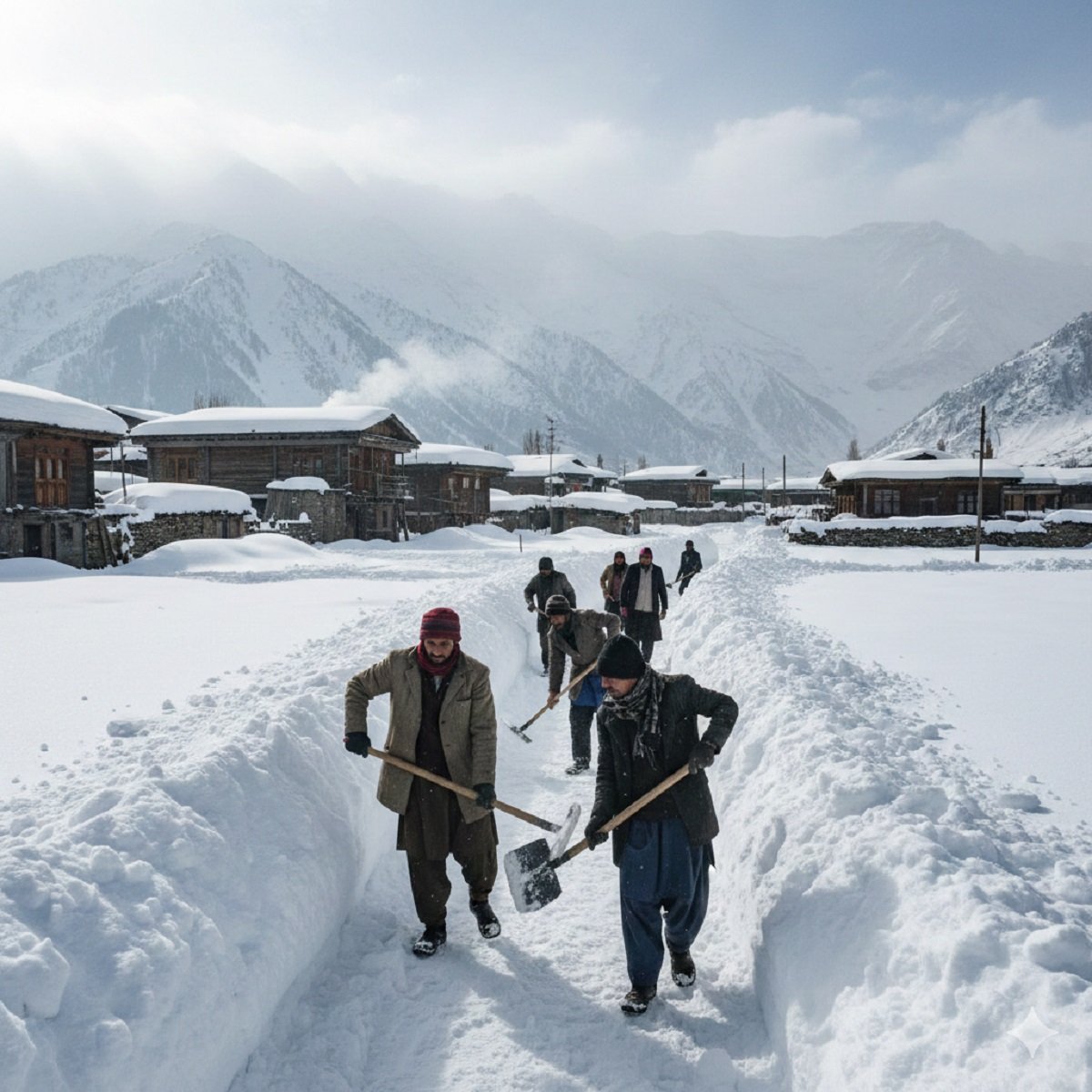
Villagers from Kralgam Ledden, Doba Watakaloo, Chalyan Choontinar, and Gogjipather in Charar Sharief, Budgam, were frantic: “Three days have passed, and the snow is still blocking our roads.”
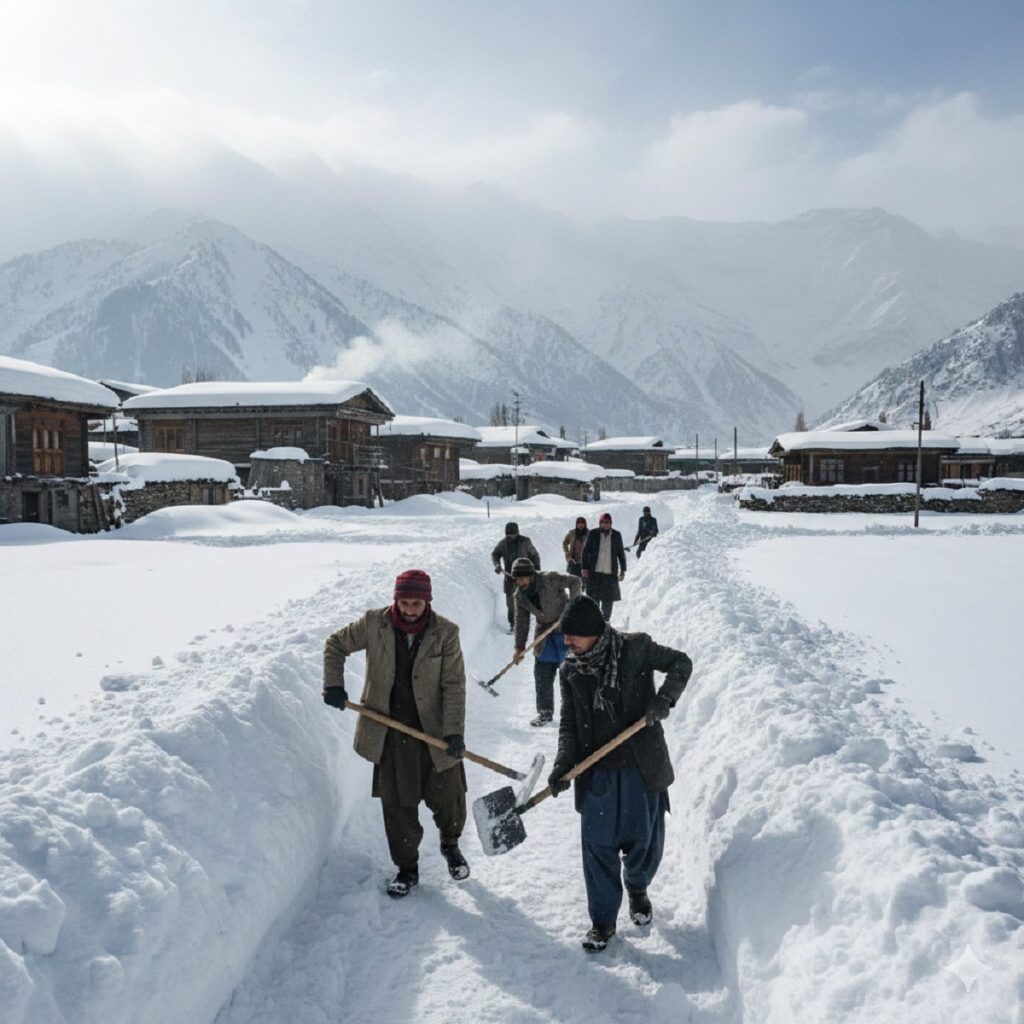
They sent videos of streets buried under four to five feet of snow, children unable to reach tuitions, elderly trapped at home, and families struggling to fetch essentials.
I shared these clips on social media to grab officials’ attention, hoping someone would act, but the silence was deafening.
Snow is a fact of life in Kashmir, but systems to deal with it remain inconsistent. I have spent over a decade arguing that rural employment programmes can be used for snow clearance.
MG-NREGA, now VB-GRAMG under the Viksit Bharat Guarantee for Rozgar and Aajeevika Mission (Gramin) Act 2025, promises work to rural communities, but in practice, snowbound villages remain isolated and idle for days.
The law has passed Parliament and received the President’s assent, but winter exposes the gap between policy and reality.
Before MG-NREGA, government departments in J&K routinely engaged local communities to clear snow from their own villages.
Locals were hired seasonally to keep lanes, paths, and link roads open. They knew every twist, turn, and slope. Machines were scarce, and heavy equipment could never reach narrow streets, rooftops, or lanes where villagers lived.
Human labour, guided by native understanding of terrain, snow patterns, and risks, was the most effective tool.
That model still works today and could be revived.
VB-GRAMG funds could be used to employ villagers to clear snow in their own areas. This would bring immediate and lasting benefits, including work during idle months, safer roads, and a community-driven approach to winter response.
Over the years, I have pursued this through RTIs, video reports, and meetings with MPs and MLAs.
In January 2022, I met Mohammad Akbar Lone, then MP from Baramulla, and urged him to raise the issue of snow clearance under employment schemes. He subsequently wrote to Union Minister Giriraj Singh seeking immediate intervention.
Local MLAs, including Dr Bashir Veeri from Bijbehera, acknowledged my advocacy and discussed it with multiple ministers. The Rural Development Minister, Javid Ahmad Dar, agreed to coordinate with the Union Ministry.
But a year later, snow clearance under VB-GRAMG remains largely unaddressed.
This apathy continues even as winter cripples Kashmir’s upper reaches. Roads in Shopian, Budgam, Kupwara, Baramulla, Bandipora, and Kulgam remain blocked for days.
JCBs clear main roads, but machines damage road surfaces and leave inner lanes untouched. In narrow streets, snow from rooftops quickly fills the cleared paths.
Manual clearing remains the only effective solution, and local employment under VB-GRAMG could make this systematic and swift.
Taken further, a regularised winter workforce could provide essential support beyond street clearance.
Every year, snowfall leads to medical emergencies that cannot reach hospitals in time. Pregnant women, patients with chronic illnesses, and elderly residents are trapped in remote villages. Deaths in transit occur when ambulances cannot move on blocked roads.
A trained local winter alert force could monitor high-risk areas, assist with immediate transport, and act as watch and warden for remote corners of Kashmir.
This would combine employment, public safety, and disaster preparedness in one program.
Rozgar Guarantee is alive in the law but dead in practice. Programs that work in Maharashtra, Rajasthan, or Kerala cannot be copied in Himalayan regions. Life halts for months in snowbound villages.
Engaging locals for snow clearance under VB-GRAMG would create work, protect infrastructure, and fulfill the law’s promise: providing meaningful employment where it is needed most.
The argument that snow clearance does not create physical assets misses the larger point.
Around 2011, Kinnaur district in Himachal Pradesh included snow clearance under NREGA. J&K has yet to submit a formal proposal to the Union Ministry.
Clearing snow in a timely manner is an asset. It preserves roads, prevents costly machine damage, and sustains communities through idle months.
If convergence works for Swachh Bharat Mission Gramin waste management, it can work for snow clearance too.
The cost of inaction is tragic and traumatic for people still at the mercy of the weather.
Villagers still wade through knee-deep snow for essentials, children miss classes, and medical emergencies go unanswered. Contractors clear main roads alone, leaving inner lanes blocked and locals without work.
A locally engaged winter workforce would create jobs, support emergency services, and help snowbound villages function on their own.
The solution is practical, and well within the framework of VB-GRAMG.
Until then, each winter brings the same frantic calls from the same villages, including the ones I received while I was in Gujarat.