By Syed Arsalan Abid
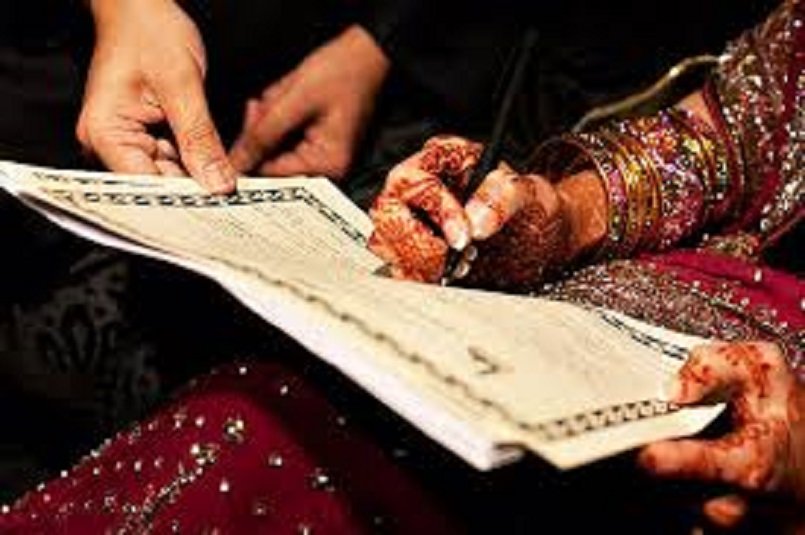
Srinagar- Farhana still remembers the number. It was read out softly during her nikah in Srinagar’s old city, noted down by the imam, and nodded at by the witnesses. Her mehar was fixed at ₹600,000.
“It sounded official,” she said. “I thought it meant something.”
It never came. When her marriage ended three years later, the number stayed on paper. The furniture her parents had given stayed with her former husband. The promise made to her, she said, silently disappeared.
But now, the Supreme Court of India said that promise was never meant to be silent.
In a latest judgment in State of U.P. v. Ajmal Beg & Anr., the court spoke with rare clarity about mehar under Muslim law and the way it has been reduced to a formality across the country.
The case itself dealt with a dowry death. But the court widened its focus, directly addressing Muslim marriage practices and the social acceptance of dowry.
The judges were unambiguous. Dowry, they said, has no sanction in Islam. What Islamic law mandates is the opposite.
Mehar is a compulsory gift from the groom to the bride. It is an essential part of the nikah. Without it, the marriage contract is incomplete.
To underline that this was not a cultural interpretation but a religious command, the court quoted the Qur’an, citing Surah An-Nisa, which directs men to give women their bridal gifts graciously. Mehar, the court said, is meant to honour the woman and secure her financial independence.
The judgment landed with force in Kashmir, where marriage rituals are deeply religious.
“At weddings, everything looks Islamic,” said Zahoor Ahmad, who has managed wedding arrangements across Budgam and Pulwama for two decades. “The verses are recited, the mehar is announced. But the real money flows the other way.”
Sofa sets, appliances, carpets and gold routinely move from the bride’s family to the groom’s home. Mehar, meanwhile, is often fixed at a small amount, payable later, sometimes never.
The Supreme Court acknowledged this reality directly.
It noted that dowry entered Muslim marriages not through doctrine but through social pressure, cultural imitation and economic competition.
Over time, the judgment said, these forces hollowed out the protective role of mehar.
“In many Muslim marriages,” the court observed, “mehar continues to be stipulated, but often only in nominal terms.”
For Advocate Ruqaya Bashir, who practices family law in Srinagar, this line reflects what she sees daily.
“Women come with nikahnamas that look valid but offer no real protection,” she said. “Mehar was supposed to be their safety net. It has become symbolic.”
The apex court warned that when dowry overshadows mehar, women lose an important source of economic security and bargaining power.
The impact is most visible during divorce or widowhood, when unpaid or nominal mehar leaves women financially exposed.
Advocate Shahid Bhat, a criminal lawyer in Baramulla, said the judgment also settles a long-standing confusion.
“People often defend dowry by calling it tradition,” he said. “The court has said clearly: tradition cannot override faith or law.”
The judges reinforced this point by referring to the Dowry Prohibition Act of 1961.
The law explicitly excludes dower or mehar from the definition of dowry for Muslims governed by Shariat law. Mehar is legally protected. Dowry demands, whether before or after marriage, remain a criminal offence.
“This distinction matters in court,” advocate Bhat said. “But it should matter more at home.”
Clerics say the ruling reflects principles long taught in Islam.
“Financial responsibility was placed on the groom,” said Ghulam Nabi, an imam who has solemnized marriages in Srinagar for over 30 years. “Turning this around in practice is injustice disguised as tradition.”
Many women encounter this “tradition” even before their marriages begin.
Saima, a young woman engaged in Sopore, said her family insisted on keeping the mehar low to avoid tension.
“They said, ‘We will give enough anyway,’” she said. “I didn’t feel I could argue.”
The Supreme Court did not call for new laws or state enforcement. Its tone was restrained. It placed scripture, statute and social practice side by side, and left the contradiction exposed.
“The message is difficult to dismiss,” said Kulsum Shafi, a rights activist in Srinagar. “Dowry, even when normalized, is neither Islamic nor lawful. Mehar, when reduced to a ceremonial figure, fails the very women it was meant to protect.”
Farhana still keeps her nikahnama folded in a steel trunk. After hearing about the judgment, she said it did not change her past. But it changed how she understood it.
“At least now,” she said, holding the paper carefully, “the law agrees that it was never just a number.”