Jammu- One year after its historic inauguration, Northern Railway’s Jammu Division has emerged as a symbol of connectivity, resilience, and economic transformation in the Himalayan region. Established as India’s 70th railway division and inaugurated by Prime Minister Narendra Modi on January 6, 2025, the Jammu Division has played a pivotal role in integrating Jammu and Kashmir more closely with the rest of the country.
The year 2025 proved to be a landmark period, defined by major infrastructure achievements, enhanced passenger services, growth in freight movement, and a renewed sense of optimism among the people of the region.
Connecting the Valley, All Year Round
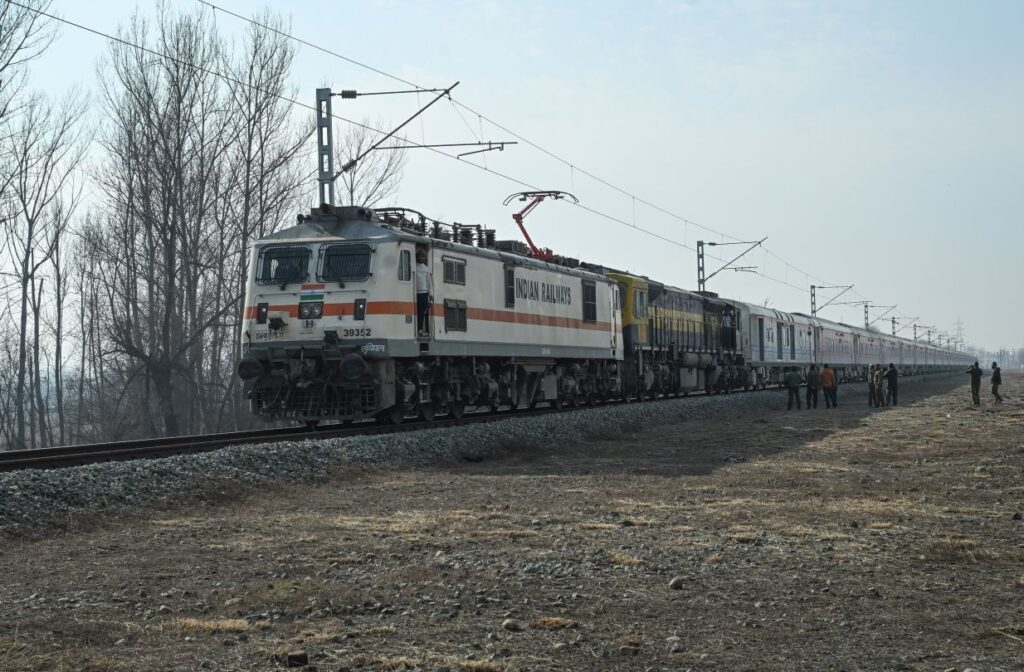
At the heart of this transformation lies the Udhampur–Srinagar–Baramulla Rail Link (USBRL), inaugurated by the Prime Minister on June 6, 2025. For the first time, the Kashmir Valley gained seamless, all-weather rail connectivity with the rest of India—an achievement long considered one of the most challenging railway projects in the world.
Complementing this milestone were the dedication of the Chenab and Anji rail bridges, engineering marvels that stand as testaments to India’s technical expertise. The Chenab Bridge, the world’s highest railway bridge, has become both a strategic asset and a global symbol of modern Indian engineering.
Vande Bharat Reaches the Valley
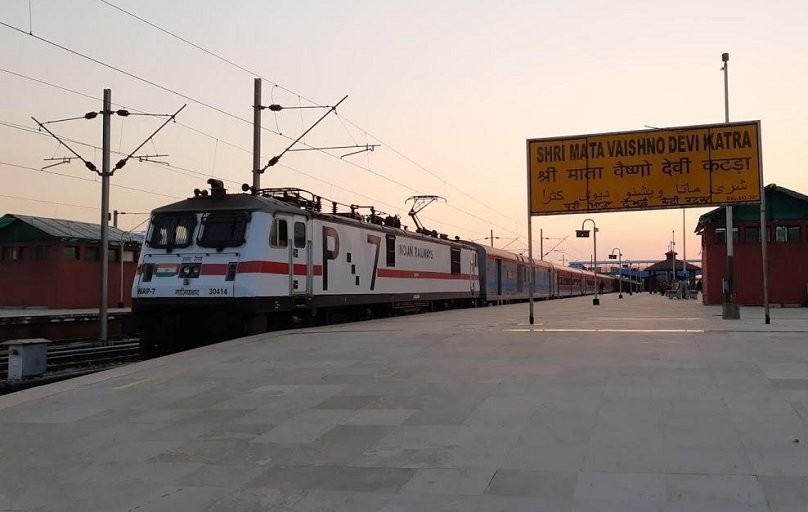
Another highlight of the year was the introduction of Vande Bharat Express services to Kashmir. The Shri Mata Vaishno Devi Katra–Srinagar Vande Bharat has already carried over 3.75 lakh passengers, significantly reducing travel time and offering a faster, more comfortable journey through the mountains.
Boost to Religious Tourism
Rail connectivity also strengthened spiritual tourism. The Katra–Amritsar route enhanced access between two of North India’s most important religious centres, facilitating smoother journeys for pilgrims visiting the Vaishno Devi shrine and the Golden Temple.
Freight, Farmers, and the Local Economy
The Jammu Division made notable strides in freight operations, directly benefiting local farmers and industries. In 2025 alone, more than 20,000 tonnes of apples and 1.5 lakh tonnes of cement were transported by rail.
The commissioning of the Anantnag Goods Shed, with a handling capacity of 1.5 lakh tonnes of cement, further strengthened logistics in the Valley. For the first time, automobile and food grain rakes reached Kashmir by rail, while cherries and mulberries were successfully transported from the Valley to Bandra in Mumbai—marking a breakthrough in cold-chain and perishables logistics.
Revenue Growth and Vigilance
The division also strengthened its financial performance. Over ₹94 crore was secured through new non-fare revenue contracts, while ticket-checking drives recovered ₹3.72 crore from more than 63,000 cases, reinforcing operational discipline.
Railways That Never Sleep
Behind these achievements stands a workforce committed to round-the-clock service. Railway staff across the division continue to operate 24×7, ensuring safety, punctuality, and reliability in one of the country’s most challenging terrains.
Reflecting on the division’s first year, Uchit Singhal, Senior Divisional Commercial Manager, Jammu Division, said:
“The year 2025 was challenging for the Jammu Division, but the railways made every possible effort to ensure the convenience, safety, and comfortable travel of passengers. With these efforts, the Jammu Division is rapidly moving towards excellence. This new chapter is bringing better connectivity and prosperity to the people of Kashmir. In 2026, we will write the second chapter with new projects.”
As the Jammu Division steps into its second year, it carries with it the promise of deeper integration, faster growth, and a railway network that continues to reshape lives across Jammu and Kashmir—one track at a time.