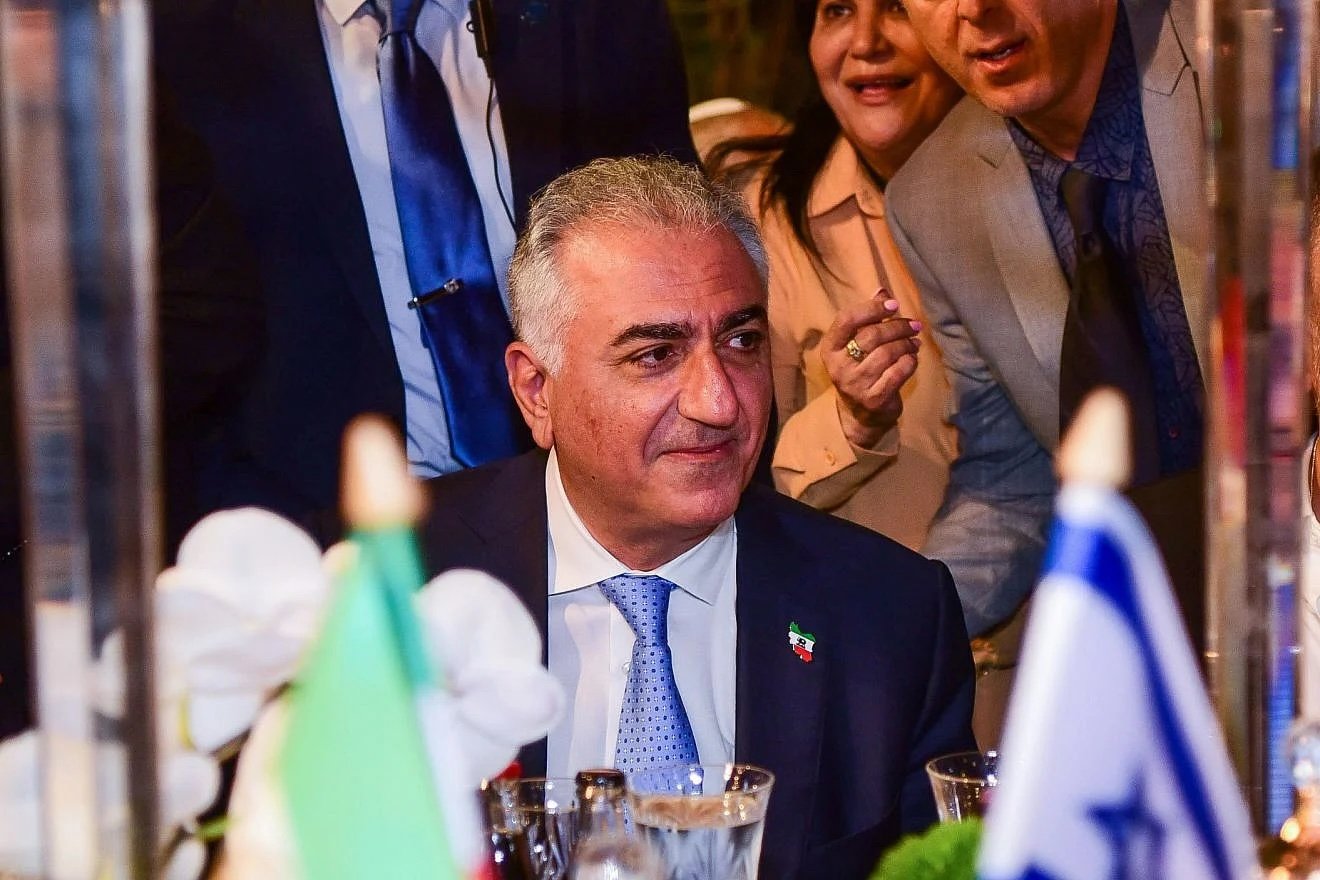
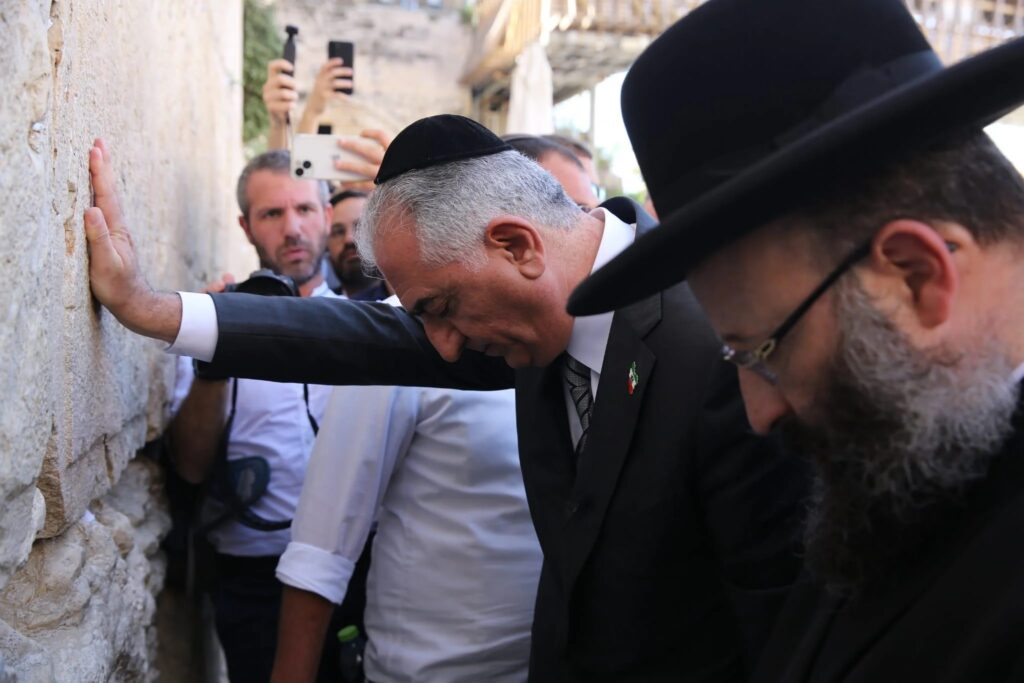
Dubai- Exiled Iranian Crown Prince Reza Pahlavi laid out his aspirations on Thursday for how Iran would act if the Islamic Republic were toppled, saying a future Iran under his leadership would immediately recognise Israel, rebrand the Abraham Accords into what he called the “Cyrus Accords”, and bring Iran’s military nuclear programme to an end.
Pahlavi has been very adamant about recognising Israel within a transition government’s first week of existence, without any preconditions.
In a statement posted on X, Pahlavi wrote:
Let me be clear about how a free Iran will act toward its neighbours and the world after the fall of this regime.
In security and foreign policy, Iran’s nuclear military programme will end. Support for terrorist groups will cease immediately. In diplomacy, relations with the United States will be normalised, and our friendship with America and her people will be restored. The State of Israel will be recognized immediately. We will pursue the expansion of the Abraham Accords into the Cyrus Accords, bringing together a free Iran, Israel, and the Arab world.
Pahlavi’s father, Shah Mohammed Reza Pahlavi, was overthrown in the 1979 Islamic Revolution that ushered in the current Islamic Republic. In recent days, Pahlavi urged protesters onto the streets as Iranian authorities shut down the internet and launched their crackdown.
“The fall of the Islamic Republic and the establishment of a secular, democratic government in Iran will not only restore dignity to my people, it will benefit the region and the world,” Pahlavi posted in a video on X, laying out his plan.
Analysts, however, say Pahlavi’s public positioning appears aimed less at building a domestic movement and more at securing backing from the U.S. President Donald Trump.
“Pahlavi is really struggling to win Trump’s approval, to give the impression he has that strong support, but it doesn’t seem to be working,” said Trita Parsi, executive vice president of the Quincy Institute, a Washington think tank, and author of several books on Iran. Many of his goals also dovetail with the wishes of hard-line Israeli Prime Minister Benjamin Netanyahu, who has forged a close partnership with Trump.
“He’s trying to get support from the US government because he’s not trying to do a revolution from below, but he’s trying to get installed from above. That’s a reflection of the lack of confidence and shows he has a real lack of a base of support,” Parsi said.
Some observers said Pahlavi’s messaging was crafted primarily for Western audiences. Pahlavi’s video on his future plan was made in English, not Farsi, because he’s trying to appeal to Trump, rather than the Iranian people.
Pahlavi has long cultivated a relationship with Israel, which had a close relationship with Iran before the Islamic Revolution. Pahlavi visited Israel in 2023 and met Prime Minister Benjamin Netanyahu, a long-time hawk on Iran whose criticism of Tehran’s 2015 nuclear deal fuelled Trump’s decision to withdraw the US from the JCPOA accord.
Trump’s reservations over a ‘nice guy’
Trump expressed reservations about Pahlavi, frequently calling him a “nice guy” in interviews but raising doubts about whether Iranians would accept his leadership.
“He seems very nice, but I don’t know how he’d play within his own country,” Trump told Reuters on Wednesday. “And we really aren’t up to that point yet.”
The president added, “I don’t know whether or not his country would accept his leadership, and certainly if they would, that would be fine with me.” Pahlavi released his video on X soon after the interview.
Back in Iran, media continued to portray him as politically irrelevant or even dangerous. Iranian media, which for years mocked Pahlavi as corrupt, has blamed “monarchist terrorist elements” for the recent demonstrations.
On Thursday, the Student News Network broadcast interviews with people on the street that were dismissive of Pahlavi.
“He’s making a big mistake. Tell him to get lost,” one person said. Another yelled, “Death to the shah!”
Pahlavi’s only hope of gaining power is with Washington’s support, including US military intervention, analysts say. Trump has appeared to walk back threats of US military intervention in recent days but hasn’t ruled it out.