
By Nazakat Aslam
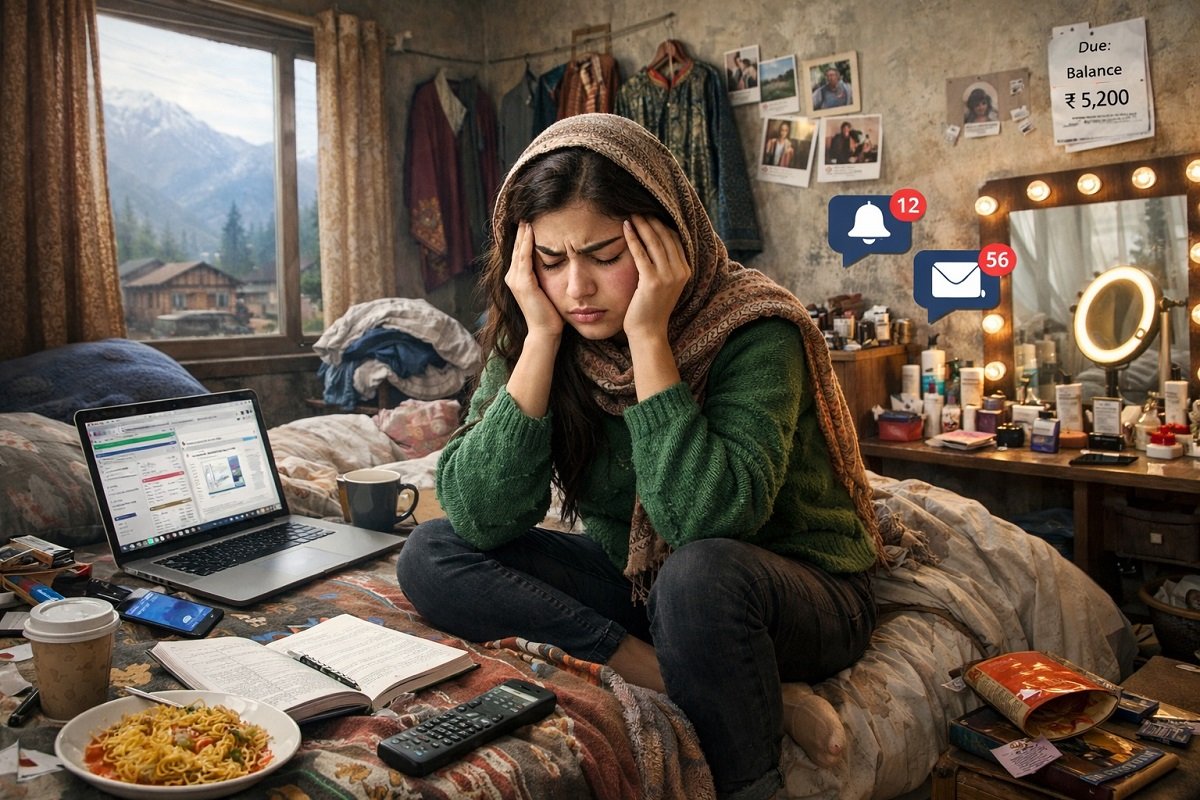
Srinagar- When 15-year-old Aaliya began feeling tired all the time, her family initially blamed school stress. Between early mornings, tuition classes and hours spent on her phone after homework, exhaustion had become routine. What unsettled her mother more, however, was that Aaliya’s sleep had become erratic, her mood unpredictable, and her periods irregular.
“My periods don’t always come on time,” Aaliya said. “That worries my mother more than me. But I also feel drained most days. I don’t sleep properly, and sometimes I feel irritated or low without knowing why.”
A medical consultation later suggested that sustained academic pressure, reduced physical activity and prolonged screen exposure were contributing to hormonal imbalance. Aaliya’s experience, doctors say, is becoming increasingly common among adolescent girls across Kashmir.
Doctors across the region report a marked rise in hormonal and reproductive health concerns among adolescents, with patients as young as 11 presenting with clusters of symptoms that extend well beyond menstrual irregularities.
Medical professionals attribute this shift to changing adolescent lifestyles shaped by prolonged screen exposure, academic pressure, disrupted sleep cycles, poor dietary habits, declining physical activity and sustained psychological stress.
Gynaecologists say outpatient departments are increasingly seeing school-going girls between the ages of 11 and 16 with symptoms that include sudden weight gain or loss, persistent acne, disturbed sleep, anxiety, early ovarian cyst formation and PCOS-like hormonal patterns.
“What concerns us is the constellation of symptoms we are seeing in very young girls,” said Dr Sumaira Jan, gynaecologist and obstetrician. “We are observing insulin resistance patterns, cystic ovarian changes on ultrasound, significant weight shifts and stress-linked hormonal imbalance. Ten years ago, it was uncommon to see PCOS-like features in a 12-year-old. Today, it is no longer unusual.”
Doctors stress that disruptions taking root during adolescence, if left unaddressed, are more likely to persist into adulthood as chronic reproductive, metabolic or mental health conditions.
When diagnosis comes too late
Health experts caution that reproductive health conversations in Kashmir often begin much later than they should, usually when women seek care for fertility-related concerns in their twenties or thirties. By then, many hormonal patterns have already stabilised, making intervention more complex.
Dr Jan noted that PCOS-spectrum symptoms are now being identified during adolescence itself, often linked to sedentary routines, irregular eating patterns, high screen dependence and sustained academic stress.
“Earlier, these patterns would surface clinically much later,” she said. “Now, hormonal dysregulation is being detected while the endocrine system is still developing. If these trajectories are not corrected during adolescence, they tend to consolidate and become much harder to reverse in adulthood.”
Another school-going girl, aged 13, said she was advised to modify her daily routine after developing early signs of hormonal disturbance.
“After school I used to stay on my phone for hours. All our work was online,” she said. “I felt exhausted all the time. Now my mother makes sure I go for walks every day.”
Doctors say such accounts underline the importance of addressing adolescent reproductive health in real time, rather than treating it as a retrospective concern once complications emerge later in life.
Medical professionals consistently point to reduced physical activity, calorie-dense diets and chronic stress as key contributors to adolescent hormonal disruption.
“In this age group, even small lifestyle imbalances can have disproportionate hormonal effects,” Dr Jan said.
Mental health specialists say psychological stress further compounds these changes. Wasim Kakroo, a psychologist who works with adolescents, said young people today experience little mental downtime.
“Academic competition, constant digital engagement and social comparison keep adolescents in a prolonged stress response,” he said. “Over time, elevated cortisol interferes with sleep, mood regulation and reproductive hormone signalling. These changes often develop gradually and are normalised, delaying medical attention.”
Families on alert
Parents, too, are becoming increasingly cautious. A mother of two adolescent daughters said she has grown more mindful of diet, sleep routines and screen use at home.
“You hear about girls developing health problems so early now,” she said. “Even when you try to regulate phones and food, the anxiety doesn’t really go away.”
Doctors emphasise that early screening and timely lifestyle intervention can prevent temporary adolescent disruptions from evolving into long-term conditions.
“Adolescence is where prevention should begin,” Dr Jan said. “With early counselling, routine monitoring and lifestyle correction, many of these patterns are reversible.”
Experts argue that the widening spectrum of health concerns seen among adolescents, including hormonal dysregulation, PCOS-like changes, sleep disruption, anxiety, weight fluctuation and stress-related physical symptoms, must be recognised as a public health issue rather than treated solely as a private family matter.
While the long-term consequences may extend into adulthood, clinicians say these conditions are already shaping girls’ daily lives, schooling and mental health during their formative years.
For doctors working with adolescents across Kashmir, the message is consistent: hormonal and reproductive health trajectories are increasingly being set early. Addressing these concerns during adolescence could influence not only future health outcomes, but the present well-being of a generation of young girls.