A Kashmiri teen taps his phone at a local bakery to pay, and the transaction completes in seconds. He grabs the bag and move on without considering the effort behind that money or its potential other uses.
Apps, alerts, and UPI make digital payments feel like magic to kids. But real understanding often falls short.
These quick taps build habits that last long after school.
Kashmir life brings uncertainty. Jobs remain scarce, self-employment rises, and families depend on seasonal work in orchards or tourism, remittances from abroad, or a single paycheck.
In such a place, mastering money management proves essential.
Financial smarts sound fancy, but they boil down to basics: how people earn, save, spend, borrow, invest, and protect cash.
These basics empower young Kashmiris to gain independence and launch businesses.
Many adults still scramble to grasp savings and investments too late in life. This reality underscores the need to teach children early.
India’s education rules already promote money lessons in schools. Kashmir stands to benefit greatly by adopting them.
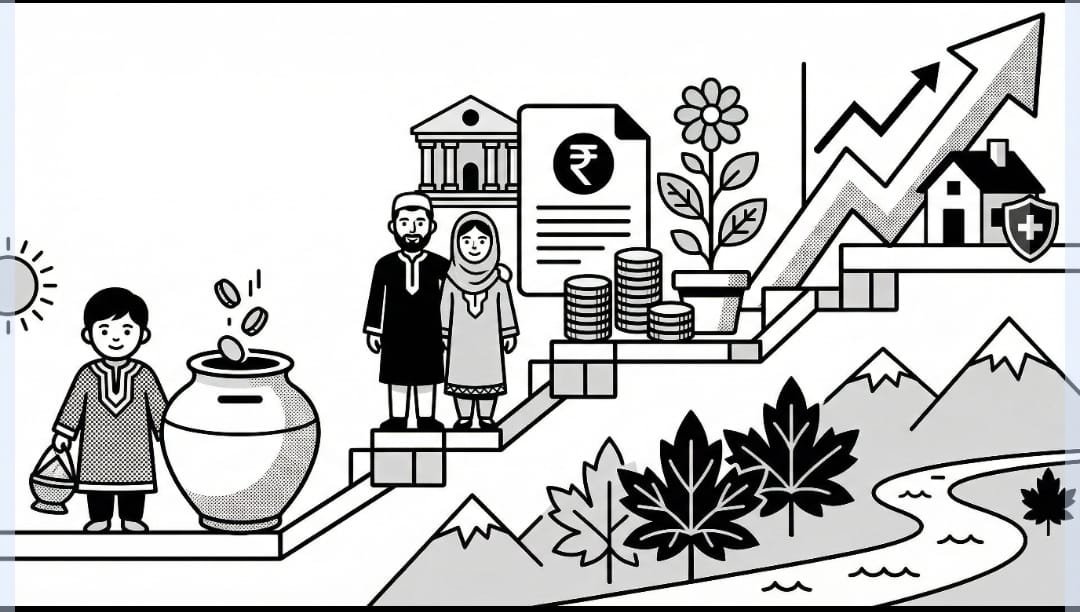
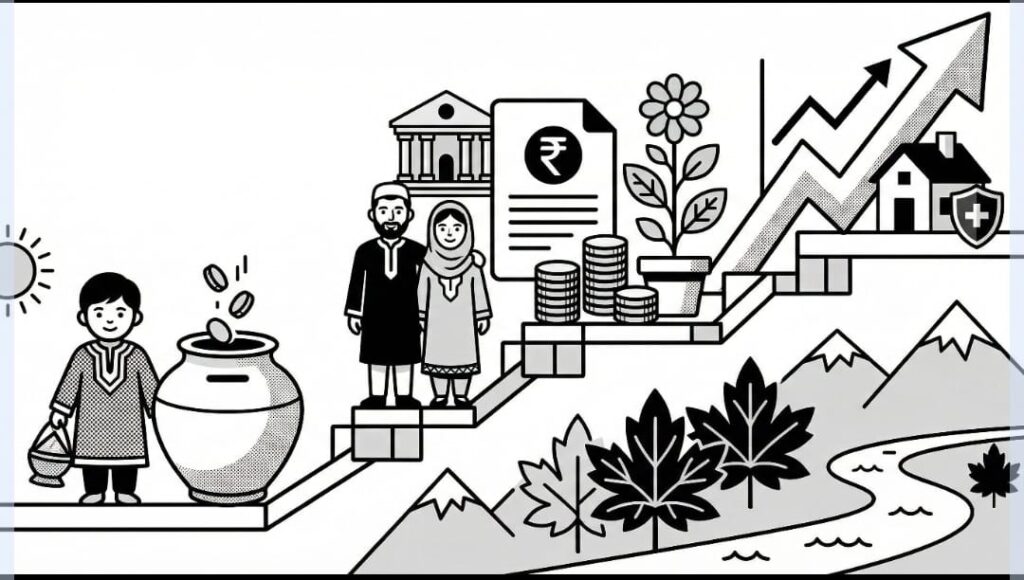
Lessons begin at home with a piggy bank, pocket money, and goals like saving for a book or cricket bat. Children quickly learn that money stays limited and saving takes priority over spending.
Schools contribute through simple savings logs where kids track what they set aside and what they spend.
Children soon grasp the difference between needs and wants.
Once saving becomes routine, introduce banks. A savings account secures money, earns interest, and remains accessible when needed.
Teach about ATMs, PIN security, and identifying fake bank texts. A visit to the local branch solidifies the concepts.
As children mature, explore fixed deposits, mutual funds, and stocks.
Classes use straightforward examples and small projects to demonstrate how money grows over time, how risks and rewards balance, and how investing demands patience rather than quick gains.
Protection forms another key lesson.
Many families rely on one earner, so insurance holds vital importance. Children learn that life and health coverage maintains stability during illness or loss, preventing the need to sell assets. Simple stories clarify these points.
Schools build these skills progressively. Younger students focus on saving and choices. Middle schoolers handle budgets, digital payments, interest, inflation, and scams. Older students delve into investing, goal planning, taxes, and small business operations.
Linking lessons to local contexts like orchards, tourism, crafts, and self-employment keeps them practical.
Families and communities join the effort. Children observe adults managing shops, farms, and homes. Parents share budgets, bring kids to banks, and discuss savings, transforming daily routines into lessons.
Local professionals and groups offer workshops to reinforce the ideas.
That teen at the bakery will continue tapping screens. With these skills, each tap gains meaning.
It transforms everyday purchases into wise choices and equips a generation to earn, grow, and protect their achievements.