By Mohsin Masoodi
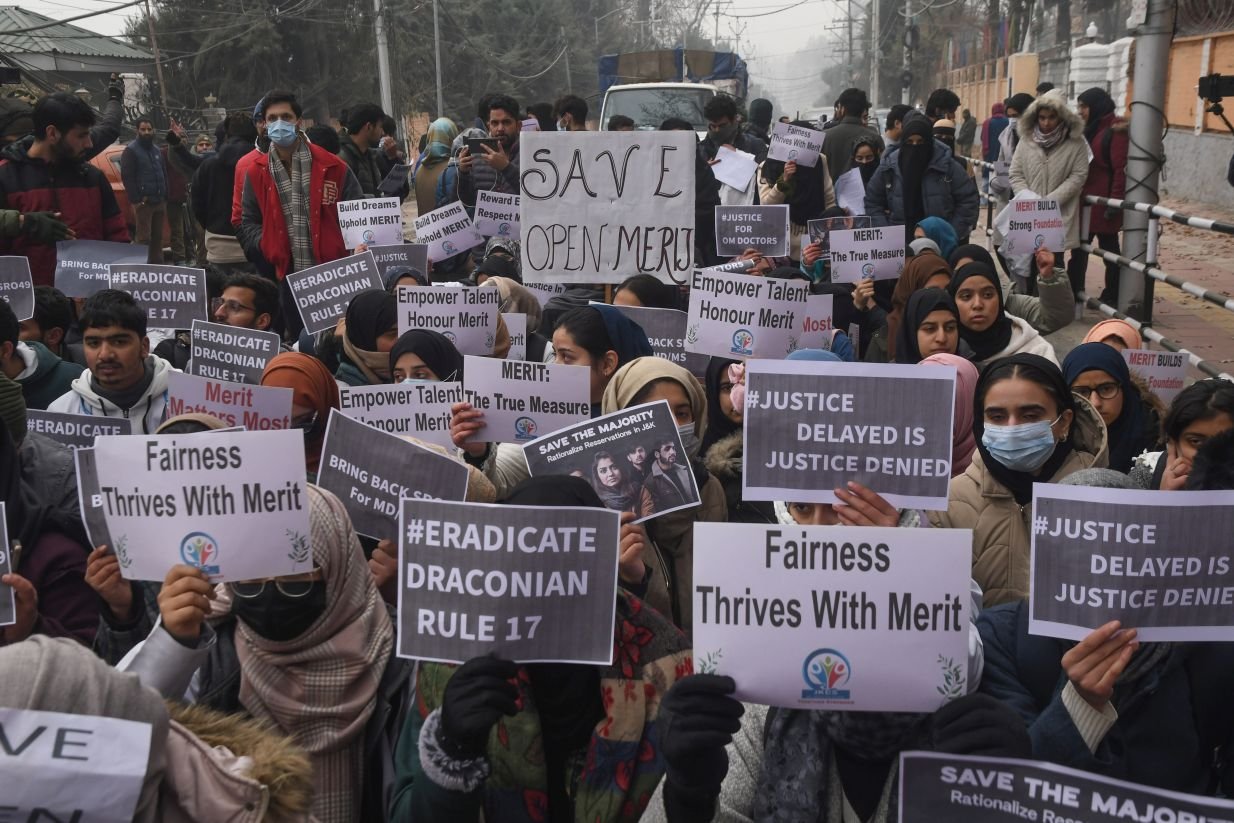
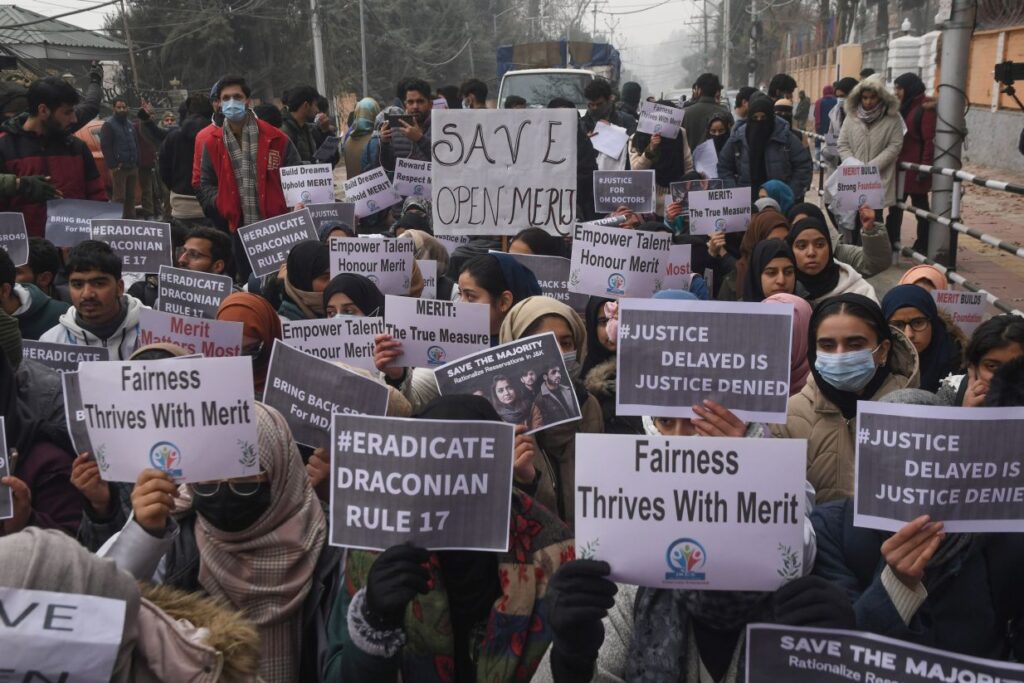
Even in 2026, students and professionals in Jammu and Kashmir confront the same challenge: merit alone does not matter.
The reservation system dominates education, employment, and promotions, and the general category (GC) or unreserved population, which makes up nearly 70% of the region, competes for a shrinking share of seats and jobs.
Understanding the structure of reservations clarifies why merit-driven candidates face such formidable obstacles.
J&K divides reservations into vertical and horizontal categories. Vertical reservations assign quotas to specific groups: Scheduled Castes (8%), Scheduled Tribes 1 (10%), Scheduled Tribes 2 (10%), Other Backward Classes (8%), International Border/Area of Locust Control (4%), Residents of Backward Areas (10%), Economically Weaker Sections (10%), and Scheduled Tribes of Kargil/Ladakh (4%).
These quotas add up to 64% of all seats, leaving only 36% as Open Merit (OM) for competition without category preference.
Horizontal reservations operate across both vertical quotas and Open Merit. Persons with disabilities and ex-servicemen receive 10% of total opportunities, proportionally deducted from every category.
This further reduces the seats available to unreserved candidates.
Open Merit may seem fair, but reality tells a different story. Reserved candidates who meet or exceed the cutoff can also claim Open Merit seats, effectively shrinking the unreserved share.
A GC student scoring the cutoff of 70 out of 100 competes against reserved candidates with similar marks.
As a result, unreserved students often access only 20-25% of opportunities, while reserved candidates occupy the majority.
The consequences extend far beyond undergraduate admissions.
Professional courses, government jobs, and promotions follow similar patterns. NEET PG, the medical entrance exam for specialty courses, highlights the disparity clearly.
In 2024 and 2025, only 26-27% of selected students across J&K came from the GC/unreserved category. One student may earn an MD in medicine at state rank 37, while a reserved candidate can secure the same seat at rank 300.
Even after Ladakh’s separation, the 4% quota for STK/STL persists in J&K, further limiting opportunities for the ethnic Kashmiri-speaking population.
The demographic reality makes the imbalance starker.
Nearly 70% of the population vies for only 25% of seats and jobs. This situation affects every vital sector, including healthcare, engineering, and administration.
If current policies continue, Kashmiri-speaking officers, doctors, engineers, and bureaucrats could become increasingly rare over the next two decades.
Excessive quotas that reward mediocrity at the expense of talent undermine fairness. Rationalizing reservations across all categories would protect merit while still supporting disadvantaged groups.
Merit should thrive alongside social equity instead of taking the back seat.
Reforming the system can restore hope for the majority without harming those who genuinely need support.
It ensures talent rises, opportunity expands, and society benefits from the skills and energy of all its members.
The time has come for Jammu and Kashmir to act.
Reforming reservations can lift merit, honour achievement, and open doors for all students and professionals.
- The author is a third-year MBBS student at Government Medical College, Kathua. He can be reached at [email protected]