
Kashmir, Observer, Jammu, Srinagar, Latest Kashmir News, Kashmir News, Kashmir Latest News
By: Capt (Dr) Sohail Nasti
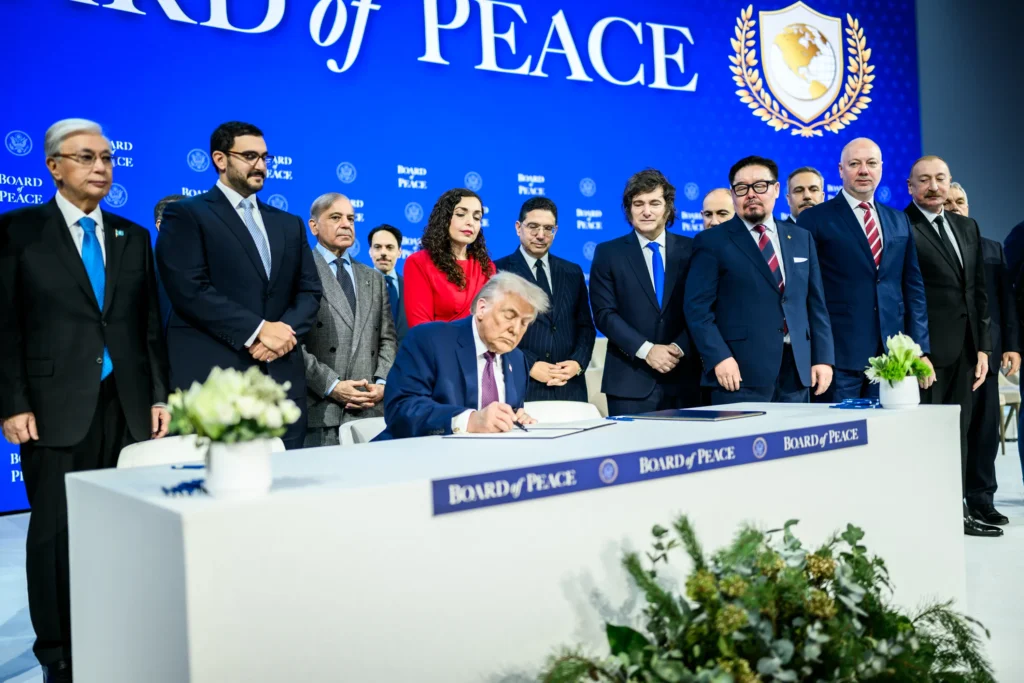
At the World Economic Forum in Davos, U.S. President Donald Trump formally launched what he describes as the “Board of Peace”, an international forum intended to shape a durable peace in Gaza and contribute to stabilisation, reconstruction and humanitarian relief. On its face, the ambition to end a protracted conflict and alleviate immense human suffering deserves broad support. Yet the structure of the forum, its membership and the political context surrounding it raise crucial questions about legitimacy, inclusivity and national sovereignty.
Central to any credible peace initiative must be the meaningful inclusion of those directly affected by the conflict. In this case, however, not a single recognised representative of the Palestinian people, whether political leaders, civil society voices or community representatives, appears to have a seat at the table. A peace process that excludes the primary stakeholders cannot credibly claim to be a peace process at all.
Even more contentious is Pakistan’s decision to join this Trump-initiated body. Islamabad confirmed its participation at Davos alongside roughly twenty other nations. The government has framed the move as a diplomatic success and described it as part of a collective effort to support a permanent ceasefire, expand humanitarian aid and rebuild Gaza under recognised international frameworks.
However, this decision has been sharply criticised domestically. Opposition lawmakers and political commentators have underscored that Pakistan’s entry was undertaken without prior consultation with the parliamentary opposition or the development of broader national consensus, amplifying concerns that such a pivotal foreign policy move lacks constitutional grounding and public endorsement. In democratic systems, decisions of such geopolitical consequence, especially those that potentially position a country within a high-stakes, U.S.-led initiative, are generally expected to be debated and endorsed through robust legislative processes.
Adding to the controversy are reports and rumours circulating within political and social media spheres suggesting that Pakistan may commit military units; notably, armoured regiments such as the 19th Lancers, the 13th Lancers and the 5th Horse (Probyn’s Horse) have been earmarked for a force in Gaza under U.S. or Board auspices. While these units are historically significant armoured regiments within the Pakistan Army, there is no verified official confirmation that any such deployment has been authorised by the Pakistani government or approved by Parliament. Indeed, government and military sources have clarified that Pakistan will not unilaterally deploy troops for combat operations or peace enforcement absent a clear UN mandate and full constitutional oversight.
The absence of Palestinian representation reflects broader concerns about the nature of this initiative. To critics, the Board risks appearing less like a multilateral peace effort and more like a politically framed club that consolidates influence among participating governments, potentially prioritising strategic or economic alignments over genuine conflict resolution. It is not unreasonable to question whether a body steered by a leader with well-known commercial interests can fully disentangle geopolitical strategy from reputational or economic considerations.
To build lasting peace and stability in Gaza and the wider region, several core principles must be upheld:
Inclusive Representation: Palestinians must have substantive participation in any forum or plan that determines their future.
Legitimacy and Accountability: Initiatives should be anchored in widely recognised international law and multilateral institutions, notably under clear UN mandates.
Domestic Consensus: Countries engaging in global diplomatic efforts, particularly those that may affect military posture or sovereign policy, should ensure transparency and consensus at home.
Absent these foundations, even well-intentioned efforts risk doing more harm than good, legitimising processes that lack grounded support among those most affected and undermining democratic mechanisms within participating nations.
As global leaders reflect on how best to support peace in one of the world’s most enduring and painful conflicts, it is imperative that a truly representative, transparent and consultative process replaces initiatives that may otherwise be perceived as exclusive or politically driven. Only then can the international community meaningfully contribute to a just and enduring peace.
The author is a UK-based philanthropist and diplomatic analyst. The views expressed are the author’s own and do not necessarily reflect those of any government body, organisation or institution with which he is associated.
The post Trump’s ’Board of Peace’: Vision, Limits, and Trade-offs appeared first on Kashmir Observer.