By Muskan Shafi Malik
In October 2023, far from home, archaeologist Mohmmad Ajmal Shah sat in France staring at an old, pale photograph. It showed three low mounds in Zehanpora, Baramulla.
The earth seemed ordinary, almost invisible, but something beneath it was calling to him.
Baramulla has seen spades before. Records trace digs back to the 1860s.
At Ushkur, once called Hushkapura, the Archaeological Survey of India uncovered a stupa in the 1870s.
What came out of the soil surprised everyone: terracotta heads shaped in the Gandharan style, proof that Kashmir was tied into a larger Buddhist world of art and ideas.
Then the clock jumped to 1914.
At Parihaspora, archaeologists exposed a monastery, a stupa, and a temple. The pieces were scattered, but the pattern was forming.
After 1947, the ground fell silent for decades.
Until now.
Since July 2025, excavation has restarted at Zehanpora. This is the first major post-partition dig in the area, and it is changing how Kashmir’s past is read.
These mounds point to Kashmir’s long role as a meeting point of faith, learning, and power.
To see why, the story has to rewind more than two thousand years.
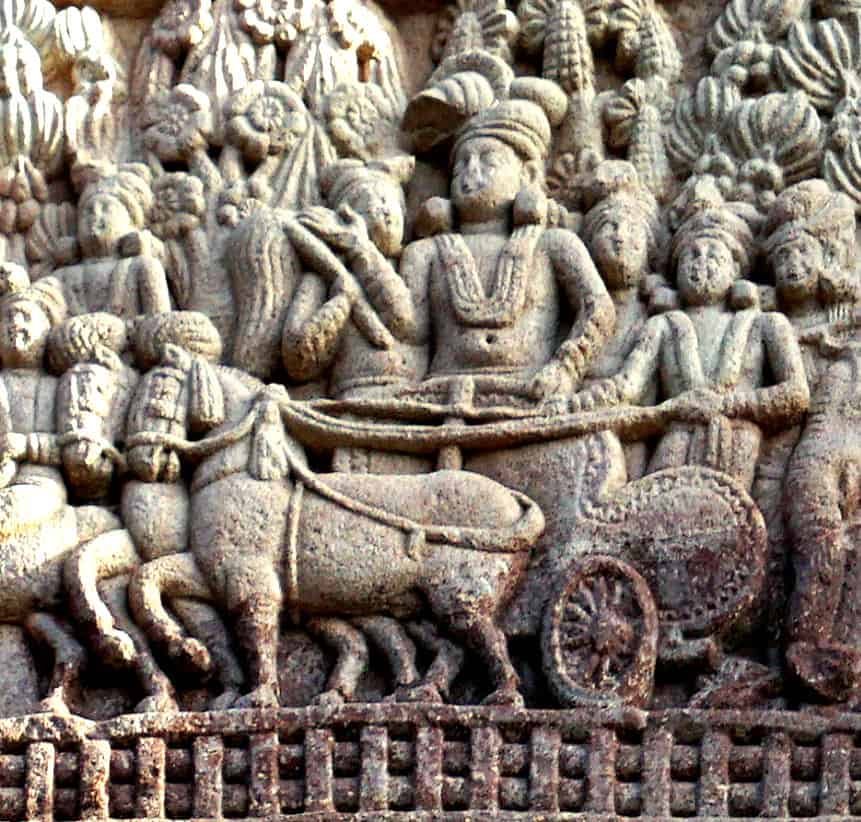
In the 3rd century BCE, Ashoka rose to power. Then came the Kalinga war, remembered for mass killing on a scale that shocked even a conqueror. Ancient accounts speak of lakhs dead or displaced. What followed made Ashoka one of history’s most discussed rulers.
He changed.
Ashoka turned to Buddhism and shaped his rule around Dhamma. He spoke of moral conduct, restraint, care for subjects, and rule by example.
The historian Kalhana, writing the Rajtarangini, says Ashoka founded ancient Srinagar and built viharas and stupas.
Inscriptions in Kashmir are rare, but tradition holds that Ashoka sent the monk Majjhantika to Kashmir and Gandhara, planting Buddhism deep in the region.
Kashmir did not stay on the margins.
Between the 1st and 3rd centuries CE, the valley became a major centre of Buddhist thought.
Under King Kanishka of the Kushan dynasty, the Fourth Buddhist Council met at Harwan, near Srinagar.
Chaired by Vasumitra, with Ashvaghosha present, the council organised Buddhist teachings and strengthened ideas of compassion and universal salvation.
Then came the travellers.
From the 4th to the 7th centuries, the Baramulla-Uri route served as a northern Himalayan corridor linking India with Central Asia.
The Chinese pilgrim Faxian, travelling between 399 and 414 CE, described Kashmir as a land shaped by Mahayana Buddhism, filled with monasteries.
Two centuries later, Xuanzang, visiting between 631 and 633 CE, wrote of a region known for learning, with hundreds of monastic institutions.
Kashmir was not a distant edge. It worked as a knowledge corridor. Buddhism, born in India, moved outward from here toward Gandhara, China, and beyond.
Long before modern diplomacy, this was India’s first major soft-power export, built on ideas rather than armies.
Zehanpora fits into this wider map.
It stands with other Buddhist traces at Ushkur, Harwan, Bijbehera, and Hutmura, all showing settlement layers, religious life, art, and economy. Together, they show how deeply Buddhism shaped Kashmir for centuries.
Ashoka’s story still cuts close to the bone.
After Kalinga, the king understood that force can impose silence, but it cannot build harmony. He shifted from punishment to persuasion, fear to dialogue, and narrow pride to plural ethics.
Without erasing borders, his rule humanised governance.
Kashmir’s modern conflicts mirror Ashoka’s pre-Dhamma phase, when power focused on land over lives.
His lesson unfolds through measured moral movement. Peace rises from ethical authority, while louder power falls silent.
Archaeology brings this lesson to light, uncovering it beneath the soil for all who seek it.
While books tell us what might have happened, sites show how people lived, built, worshipped, traded, and learned.
With Zehanpora, a Kashmiri village has stepped into history.
Layers of time are waiting to speak. Research will uncover more, scholars will follow, and heritage tourism can strengthen local livelihoods when guided by care and understanding.
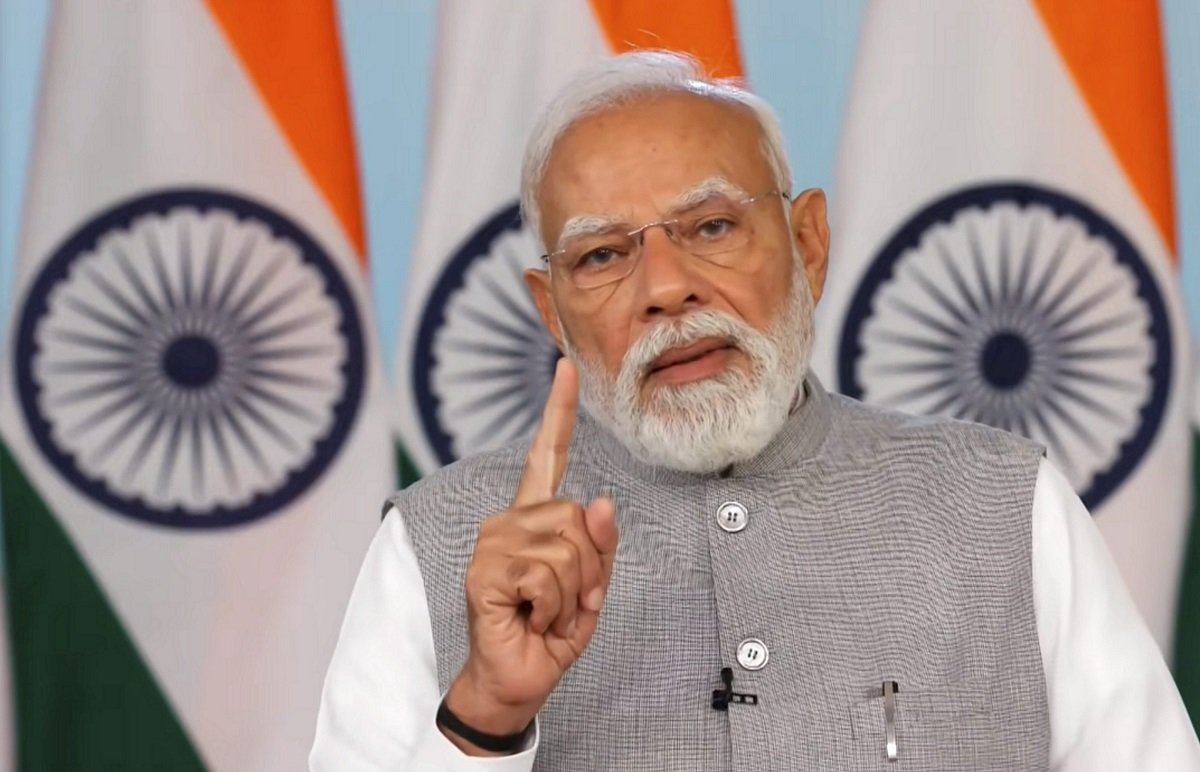
Prime Minister Narendra Modi, speaking on Mann Ki Baat, called the Zehanpora excavation a proud moment for India. It is, but pride must turn into understanding.
People need to see heritage beyond religion or sect. Archaeological finds speak for humanity as a whole. Schools, media, museums, and public programmes must explain context, evidence, and long timelines.
Respect for antiquity grows critical thinking and shapes a society that values proof over emotion.
The Archaeological Survey of India, using tools like GSI mapping and carbon dating, has expanded excavation and conservation.
Skill programmes such as PM VIKAS aim to train local youth in site management, conservation, and tourism.
These plans must move from paper to ground. Heritage walks, digital records, and museum outreach can create work while building community ownership of Kashmir’s past.
The earth at Zehanpora has started speaking.
From Kalinga to Kashmir, the story circles back to a single question: What kind of power lasts when the dust settles?
The answer may already be waiting under the next layer of soil.
- The author is pursuing an M.A. in History at Aligarh Muslim University. Her academic focus is Ancient Indian history, archaeology, material culture, and early religious traditions.