AP/ TANS
Dubai- Iran expanded its targets on Tuesday, striking the US Embassy in Saudi Arabia as Washington began to pull many staff out of the Middle East. The US and Israel battered Iran with airstrikes in what President Donald Trump suggested was just the start of a war that has severely disrupted the world’s supply of oil and gas, international shipping, and air travel.
The conflict escalated further on its fourth day, with Israel sending new ground troops into Lebanon and explosions ringing out in Iran’s capital. Hundreds of people have been killed, the vast majority in Iran.
The spiralling nature of the war raised questions about when and how it would end. Trump said it could last four to five weeks – but that the US was prepared to go longer. He seemed to leave open the possibility for more extensive US military involvement, telling the New York Post on Monday that he was not ruling out the possibility of boots on the ground.
Still, the administration’s objectives remain unclear. The initial US-Israeli strikes reportedly killed Iran’s Supreme Leader, Ayatollah Sayyed Ali Khamenei, and former President Donald Trump urged Iranians to rise up against their government. Instead, reports indicate a surge of national unity, intensified by a heavy civilian toll, including the deaths of 168 schoolchildren on day one of war in southern Iran.
Senior administration officials are now saying regime change was not the goal. Trump’s initial announcement of the strikes listed several grievances, from concerns about Iran’s nuclear and missile programmes to its leadership.
Washington pulls out staff
An attack from two drones on the US Embassy in Riyadh caused a “limited fire”, according to Saudi Arabia’s Defence Ministry, and the embassy urged Americans to avoid the compound. It followed an attack on the US Embassy in Kuwait, which announced Tuesday it had been closed until further notice.
Black smoke was seen rising over Riyadh’s Diplomatic Quarter, which houses foreign missions, after the attack, the Reuters news agency reported.
Foreign ministry in Kuwait released a statement on Tuesday saying that a “treacherous Iranian attack” targeted the US embassy building in Kuwait. This came a day after videos emerged that showed smoke emerging from near the embassy in Kuwait City.
The US State Department ordered the evacuation of non-emergency personnel and family in Kuwait, Bahrain, Iraq, Qatar, Jordan and the United Arab Emirates. In addition, the US has urged citizens to leave more than a dozen Middle Eastern countries, as have many other countries, though with much of the airspace closed, many remained stranded.
The US-Israeli strikes have killed at least 787 people, including 168 schoolchildren, according to the Iranian Red Crescent Society. In Israel, where Iranian missiles struck several locations, 11 people were killed. Lebanon’s Hezbollah has also struck Israel, whose retaliatory strikes killed 52 people in Lebanon.
The US military has confirmed the deaths of six American soldiers. Three people were killed in the UAE, and one each in Kuwait and Bahrain.
Israel and the US target nuclear facilities in Iran
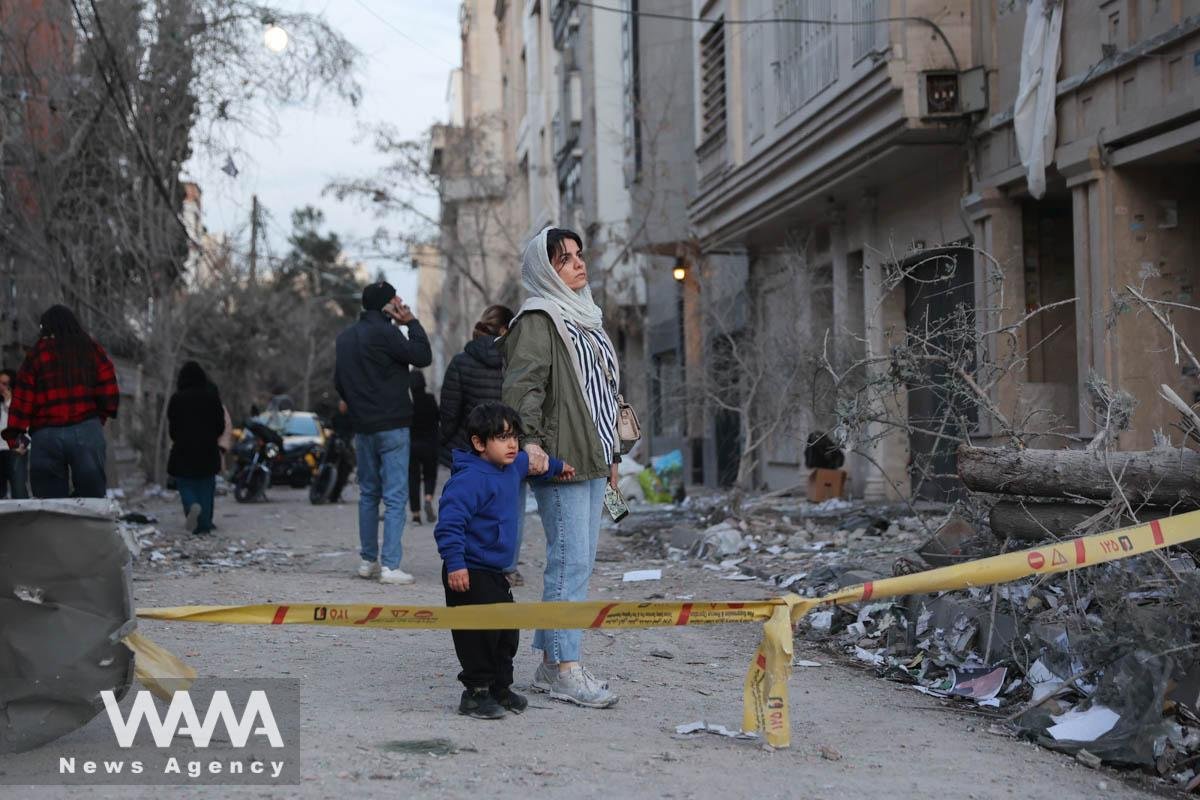
Across Iran’s capital, explosions rang out throughout the night into Tuesday, with aircraft heard overhead. Strikes hit Gandhi Hospital in Tehran and the heritage palace of Gulistan. Iranian state TV too was attacked, but the broadcasts remained unaffected.
The United Nations’ nuclear watchdog, the IAEA, said Iran’s Natanz nuclear enrichment site had sustained “some recent damage”, though there was “no radiological consequence expected”.
The US hit Natanz during the 12-day war in June, when Israeli and American strikes greatly weakened Iran’s nuclear programme.
It’s not clear how long the war will last
The expansion of Iranian retaliation across the Gulf; the intensity of the Israeli and American attacks; the assassination of Iran’s top leader; and the lack of any apparent exit plan suggested the conflict could be prolonged.
US military assets hit
Bahrain said that a missile attack targeted the headquarters of the US Navy’s 5th Fleet, located in the capital, Manama.
Kuwait’s Defence Ministry said that Ali al-Salem airbase came under attack by a number of ballistic missiles, all of which were intercepted by Kuwaiti air defence systems.
In Qatar, the Defence Ministry said it “thwarted” attacks on the country in accordance with a “pre-approved security plan”, intercepting “all missiles” before they reached the country’s territory. On Saturday, Iran had targeted the Al Udeid airbase, which hosts the US forces, the government said.
Over the past four days of the conflict, attacks on Gulf countries have intensified, and governments in the region say they have intercepted large numbers of Iranian missiles and drones.
Bahrain said its air defence systems have destroyed 73 missiles and 91 drones launched by Iran since the start of the latest conflict.
Qatar’s state-run energy firm and the world’s largest producer of liquefied natural gas (LNG), QatarEnergy, announced on Monday that it had halted LNG production following Iranian attacks on its operational facilities in Ras Laffan and Mesaieed in Qatar.Iranian officials have publicly denied targeting energy facilities of Gulf countries..
Iran accused Israel of carrying out a drone attack on facilities belonging to Saudi oil giant Saudi Aramco, describing it as a “false flag” operation.
Iran’s Tasnim News Agency quoted a military source as saying, “The attack on Aramco was an Israeli false flag operation, adding that Israel’s goal is to distract the minds of regional countries from its crimes in attacking civilian sites in Iran.”
“Iran has announced frankly that it will target all American and Israeli interests, installations, and facilities in the region and has attacked many of them so far, but Aramco facilities have not been among the targets of Iranian attacks so far,” the source told the agency.
Tasnim quoted the source as saying: “According to data provided to us by intelligence sources, the port of Fujairah in the UAE is also one of the next targets of the Israelis in the false flag operation, and this regime intends to attack it.”
Israel sends troops into Lebanon
The conflict has spread to Lebanon, where Hezbollah fired missiles at Israel on Monday, prompting Israel to retaliate.
On Tuesday, the Israeli military said it had moved additional troops into southern Lebanon and taken new positions on several strategic points close to the border.
Israel also hit Beirut with more airstrikes, saying it was targeting “Hezbollah command centres and weapons storage facilities.” Explosions could be heard and smoke seen in a southern suburb of Beirut.
Lebanon’s state-run National News Agency said the Lebanese army was evacuating some of its border positions. A senior Hezbollah official, Mohamoud Komati, said the group now had no option but to fight Israel.