By Raqif Makhdoomi
Jammu and Kashmir has seen many elections, but the one held in 2024 stood apart from all others.
That contest went beyond roads, power lines, or other public works. It carried the weight of memory, loss, and unfulfilled demands.
Every major party spoke in one voice on core political questions. They promised the return of Article 370, restoration of statehood, release of political detainees, and an end to the termination of employees.
For voters, this election was about regaining their voice, far beyond ordinary campaign talk.
People responded in large numbers. Many who had never stood in a polling line before came out to vote. The turnout turned the election into a national moment.
As the first election held after Jammu and Kashmir became a Union Territory, it carved a permanent place in the political record of India. When future generations speak of defining elections, 2024 in Jammu and Kashmir will stand among them.
The energy on the ground was unmistakable. Rallies drew crowds that had stayed away from politics for years. What surprised many observers was the choice voters made.
A large section backed the National Conference, a party that once symbolized public fatigue with elections.
This support majorly came from calculation, rather than from affection or nostalgia. Voters believed the party’s manifesto and its sharp political message.
The National Conference framed the election as a verdict on August 5, 2019. It linked rival parties to the Bharatiya Janata Party and placed full responsibility for the abrogation of Article 370 on the BJP.
On the surface, the argument held ground. The decision was taken under a BJP-led government. But history rarely fits into neat boxes.
The events of 2019 had roots in earlier decades.
The Sheikh-Indira Accord of 1975 marked the start of a slow erosion of autonomy. That agreement, also known as the Kashmir Accord, tied regional leadership to New Delhi in ways that weakened constitutional safeguards over time.
Congress governments at the Centre and National Conference governments in the state carried out changes through amendments and executive decisions. The difference lay in method than intent.
Earlier governments softened their actions with careful language. The BJP acted in full public view. As the saying goes, the axe forgets, but the tree remembers.
Farooq Abdullah once remarked that the Centre should have taken his party into confidence, suggesting cooperation was possible. History supports that view.
Sheikh Abdullah accepted similar compromises to regain power, and Farooq Abdullah himself signed the Rajiv-Farooq Accord to return as chief minister.
Power has often outweighed principle in Kashmir politics.
While history shaped the backdrop, the central issue of the 2024 election was reservation policy.
Students and job seekers followed every promise closely. After the new government took office, expectations rose. A subcommittee was announced, but progress stalled. The matter lost importance after a protest led by Aga Ruhullah Mehdi outside the chief minister’s residence.
That protest marked the beginning of a visible rift between Ruhullah and Chief Minister Omar Abdullah.
The divide soon became public.
Ruhullah, a member of the party’s working committee, was excluded from key meetings. Reports of a move to expel him surfaced before being blocked by internal opposition. Then came the Budgam bypolls.
The National Conference made repeated attempts to bring Ruhullah back to the campaign. He refused and remained in Germany. The absence cost the party dearly, leading to the loss of a traditional seat.
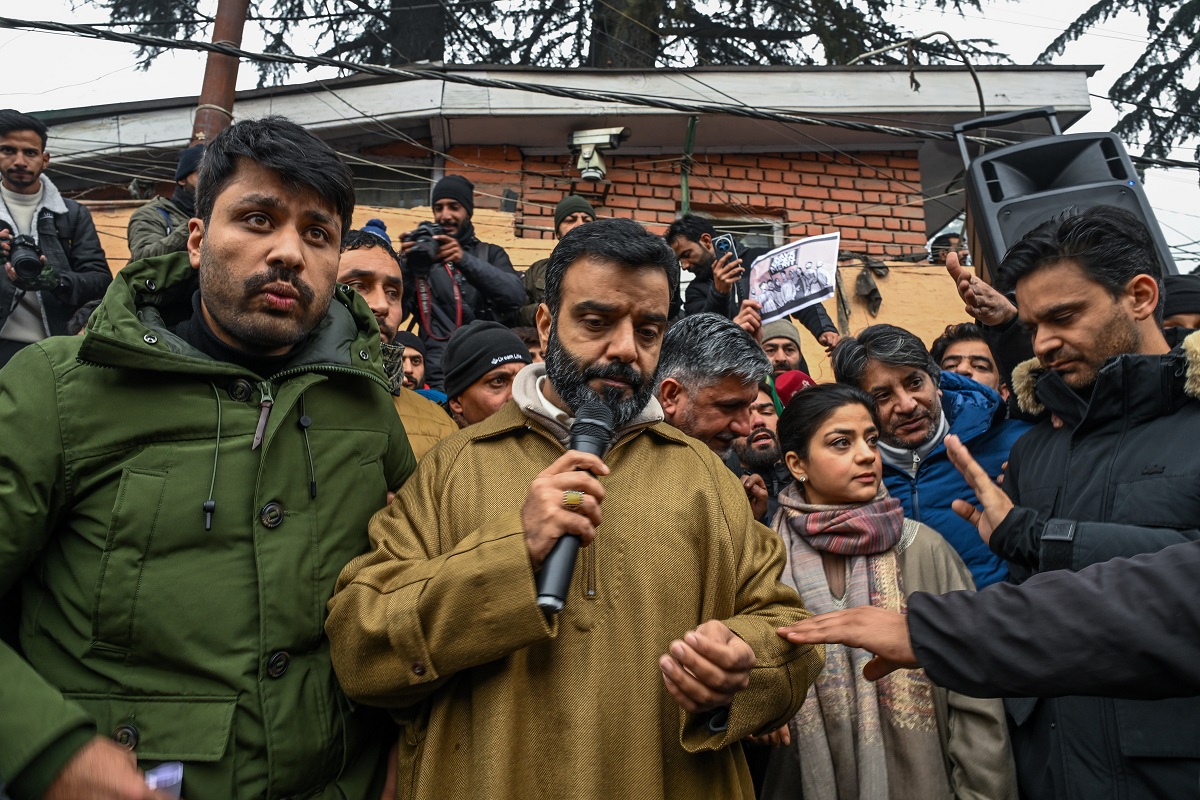
When Ruhullah returned, he addressed the public with force and clarity. He answered the charges against him and reminded party leaders how they once sought his support during campaigns. His words struck a chord with voters and unsettled the party leadership.
The speech made clear what many already believed.
In several constituencies, people voted for the National Conference because they trusted Ruhullah’s word beyond his party loyalty. He had assured voters their demands would be met, and that assurance brought mandate.
For the National Conference-led government, 2025 became a year of self-inflicted wounds.
Public faith weakened as promises stayed unfulfilled. Anger deepened when the government shifted its stand on smart meters.
Omar Abdullah, once opposed to them, now backed their expansion. Many saw this reversal as a breach of trust.
In politics, a spoken word carries weight, and broken words travel fast.
At the same time, a change unfolded across Kashmir.
People began to follow the Assembly closely. For years, legislative debates drew little, or no attention.
In 2025, citizens tracked every session, question, and walkout. Disappointment sharpened scrutiny.
When trust breaks, vigilance follows.
As the new year nears, the political future of Jammu and Kashmir remains unsettled. Public discontent might soften, or it might turn into steady determination.
Should the patterns of 2025 continue, the National Conference risks facing tangible consequences at the ballot.
The past teaches that the shape of coming events often emerges in advance, and in Kashmir, that outline is beginning to show.
- The author is a law student and a rights activist. He can be reached at [email protected]. Views expressed in this article are author’s own and don’t necessarily reflect KO’s editorial policy.