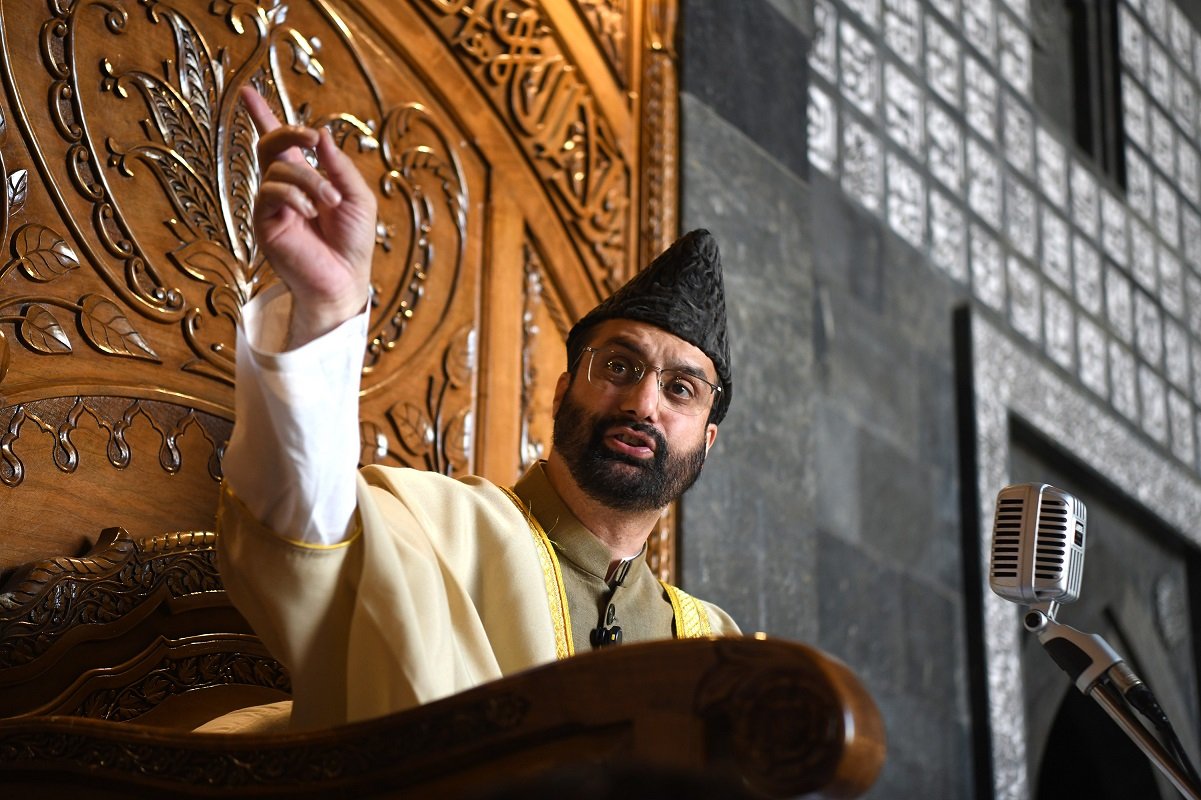
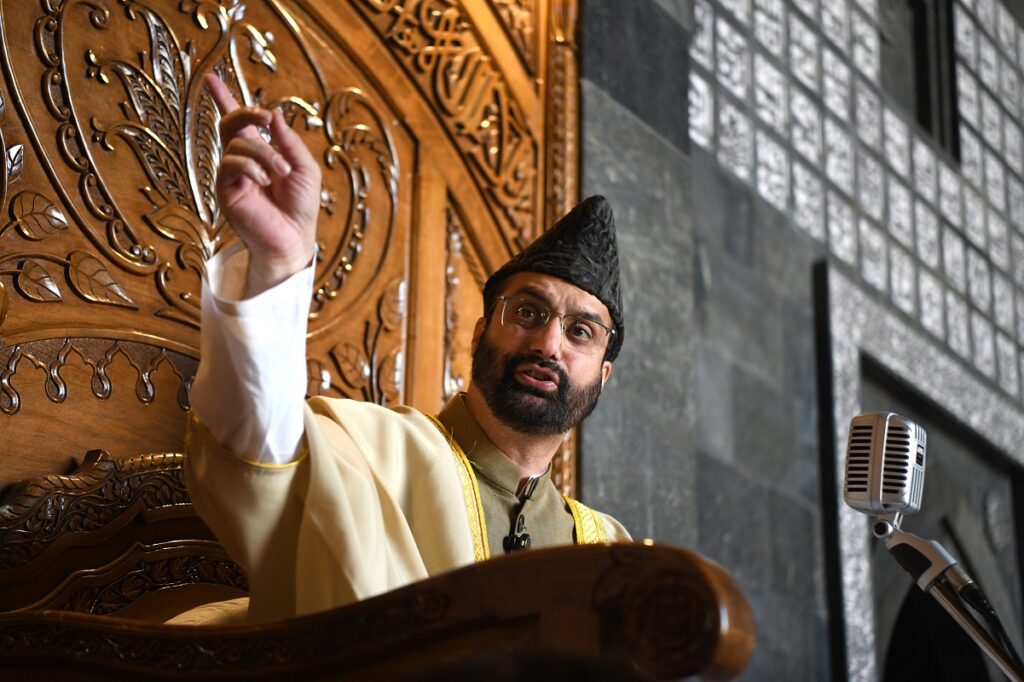
Mirwaiz Umar Farooq’s recent public statement creates space to think about how Jammu and Kashmir treats responsible religious and social leadership.
Public discussions in the valley shift often, which makes calm and thoughtful voices worth listening to.
The idea of reconciliation carries deep meaning for Kashmiri Pandits, whose link with Kashmir includes both roots and separation. The hope of return speaks to shared history and a way of life that once held communities together.
When a public leader repeatedly speaks about coexistence, restraint, and return, that voice deserves attention rather than distance.
The Mirwaiz holds a special place in Kashmir’s public life. His role goes beyond leading prayers. He represents an institution with a long history of work in education, charity, and social reform. This background shapes how he speaks in public.
Over the years, his words have shown consistency, care, and a clear preference for peaceful political expression.
A key part of his public thinking rests on the belief that peace in Jammu and Kashmir depends on political engagement and social reconciliation along with governance.
Earlier Indian governments recognised this view. Leaders under Atal Bihari Vajpayee and Manmohan Singh saw value in engaging the Mirwaiz through structured talks.
This approach reflected an understanding that public trust grows through conversation beyond administrative engagement.
Public appeals by the Mirwaiz calling for the return of Kashmiri Pandits carry strong meaning in this setting. His statement that Kashmir’s social and cultural life remains incomplete without Pandits speaks to a lived reality.
Official measures alone cannot rebuild social bonds. A meaningful return requires confidence, trust, and a sense of belonging for families who continue to hold the valley close in memory.
Security remains a central duty of the state, and vigilance remains necessary. At the same time, a shrinking space for public engagement weakens moderate social leadership.
Such leadership has repeatedly spoken against extremism and in favour of living together during difficult periods. Limiting these voices reduces chances for dialogue that can support communal harmony and shared understanding.
Progress in Jammu and Kashmir depends on engaging with responsible leaders who hold social respect. Such engagement strengthens public trust, supports harmony between communities, and reassures displaced families that their concerns still matter in the region’s future.
Listening to voices that speak of restraint, reconciliation, and inclusion reflects democratic confidence. Such listening strengthens institutions and public faith.
The Kashmiri Pandit community continues to look for signs that return and coexistence remain part of Kashmir’s public thinking.
When these ideas find space in public speech, they affirm that reconciliation remains possible through sustained effort and shared responsibility.
Sincerely,
B. N. Trishal