By Shahid Ahmed Hakla Poonchi
The argument over Raika Forest began as a planning file and grew into something far bigger.
What started in 2019 as a proposal to relocate the Jammu wing of the High Court from Janipur to the outskirts of the city has now become a test of how India thinks about development, ecology, and fairness in the same breath.
The land in question sits in Jammu district, but the questions it raises travel far beyond the region.
At first glance, the government’s case appears straightforward.
The existing High Court complex at Janipur, built more than two decades ago, struggles to meet the demands of a growing judicial system. Caseloads have expanded, the number of judges has increased, and court infrastructure across the country is under pressure to modernize.
Raika, officials say, offers space for a purpose-built complex with room to grow, without the constraints of an already crowded city center.
That reasoning has found supporters who believe strong institutions need physical room to function.
Courts shape public trust in the system, and better facilities, they argue, improve access to justice, efficiency, and working conditions for everyone involved.
Seen from this angle, the proposal feels like an administrative decision driven by future needs rather than present sentiment.
The opposition sees a very different picture.
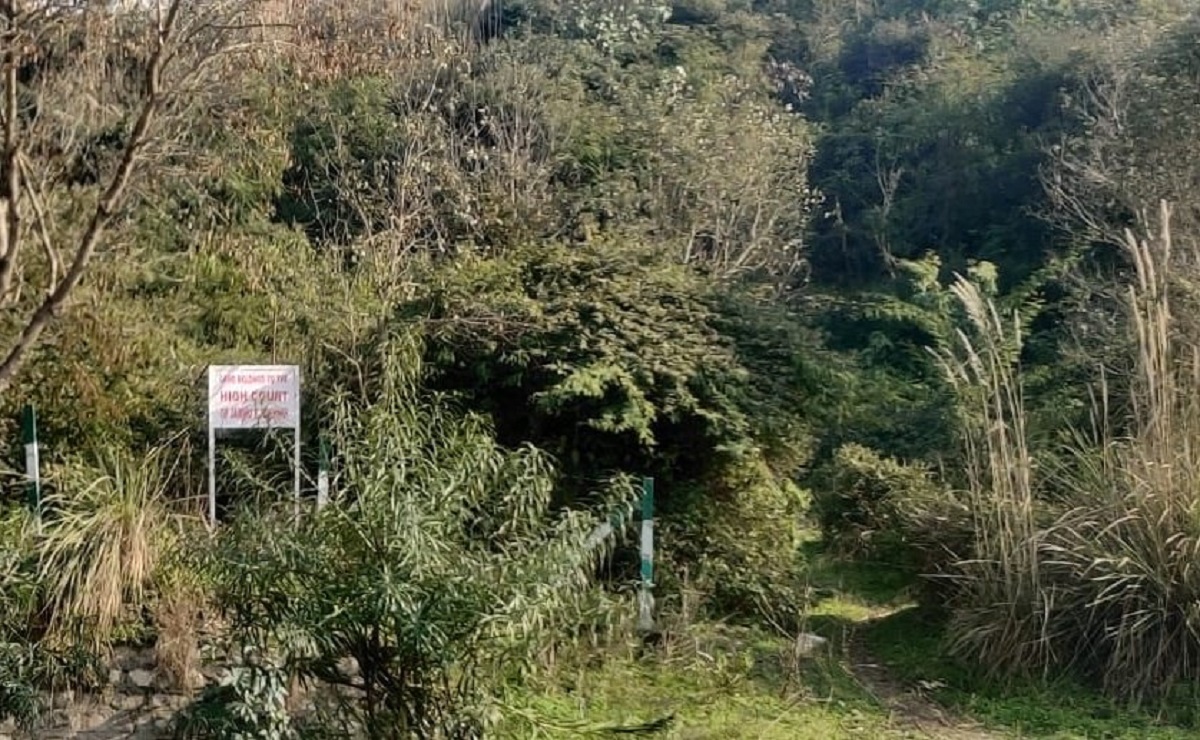
Raika Forest is one of Jammu’s last remaining urban green spaces, spread across 813 kanals and home to more than 38,000 trees. This is not scrubland waiting for concrete. The forest holds over 150 species of trees and shrubs, including Phullai, Shisham, Jamun, Khair, Babul, Dhaman, Siris, Chir Pine, Pansar, and Katari. These trees regulate temperature, hold soil in place, and support a web of life that has grown over decades.
Wildlife moves through this space as well. Peacocks, foxes, porcupines, rabbits, mongooses, wild pigs, snakes, and leopards have all been recorded here, along with the endangered musk deer.
Environmental specialists warn that clearing such a large area will change drainage patterns, increase soil loss, and raise flood risks in downstream zones.
As habitats shrink, animals stray into nearby settlements, deepening conflict at the city’s edges, a trend already visible around Jammu.
Raika also absorbs pollution and heat for a city that has expanded fast.
Critics point out that once forest land opens up for a major institution, secondary development tends to follow. Offices, markets, parking lots, and private construction often trail such projects, turning a green buffer into another stretch of urban sprawl.
What disappears first rarely comes back.
Beyond trees and animals lies the human story, and this is where the debate cuts deepest.
The Gujjar community has lived in and around Raika for generations. Government records list 22 houses as encroachments, though local estimates place the number of affected households closer to 59. These families depend on the forest for grazing, fuel, and daily life.
Official descriptions of encroachment have met sharp resistance from residents who point to land records, girdawaris from before Independence, and an ancestral qabristan within the forest boundary.
The extension of the Forest Rights Act of 2006 to Jammu and Kashmir strengthened the legal standing of indigenous communities such as Gujjars and Bakarwals. The law recognizes traditional forest dwellers as rights holders rather than obstacles.
Supporters of the community argue that these residents have long acted as caretakers of the land, with livelihoods tied closely to its health. Displacement, they say, risks both social harm and ecological loss.
So far, clear plans for rehabilitation, compensation, or alternative livelihoods remain absent, feeding anxiety and distrust.
Legal questions add another layer of complexity.
Bahu and Raika were declared a conservation reserve and part of the Ramnagar Wildlife Sanctuary in 1981, a status meant to safeguard the area’s ecology. Diverting land from such zones for non-forest use troubles many legal observers.
Over the five years since the proposal first surfaced, environmental standards, judicial thinking, and public awareness around climate issues have all changed. Decisions that appeared workable in 2019 face sharper scrutiny today.
Concerns have also emerged around compliance with forest conservation rules and the eco-sensitive character of the area.
Reports submitted to judicial bodies mention rare flora and fauna, raising questions about whether approvals followed the full spirit of the law. For a project linked to the justice system itself, perceived procedural gaps strike an uneasy note.
Members of the legal fraternity voice practical worries as well.
Many lawyers have invested in chambers near Janipur, while shopkeepers and service providers rely on the current court economy. Shifting the High Court affects livelihoods built over years. Managing cases across distant locations could complicate daily practice and impose new costs on litigants, particularly those traveling from rural areas.
This brings the discussion to a central point often pushed aside: relocation is not the only path forward.
The Janipur complex stands just 22 years old, hardly an outdated structure by public infrastructure standards. Urban planners suggest that expansion, vertical construction, and redevelopment could address space shortages without cutting into forest land.
Traffic congestion, another argument for the move, reflects broader planning challenges. Moving the court may shift traffic rather than solve it. Investments in roads and public transport around Janipur could ease pressure more sustainably.
The Raika debate has now run for more than half a decade. It speaks less about choosing between courts and trees, and more about how decisions take shape. Public consultation has felt limited, trust between authorities and communities has thinned, and alternatives have not received full airing.
Forests cleared for concrete rarely return through paperwork or pledges. The costs stay long after files close.
What happens at Raika will show how India weighs institutional growth against ecological care, and how it treats communities whose lives intertwine with the land.
Progress measured only in buildings risks overlooking what gives a city balance and meaning.
The question facing Jammu is simple in form and complex in consequence: can development honour law, land, and people at the same time.