
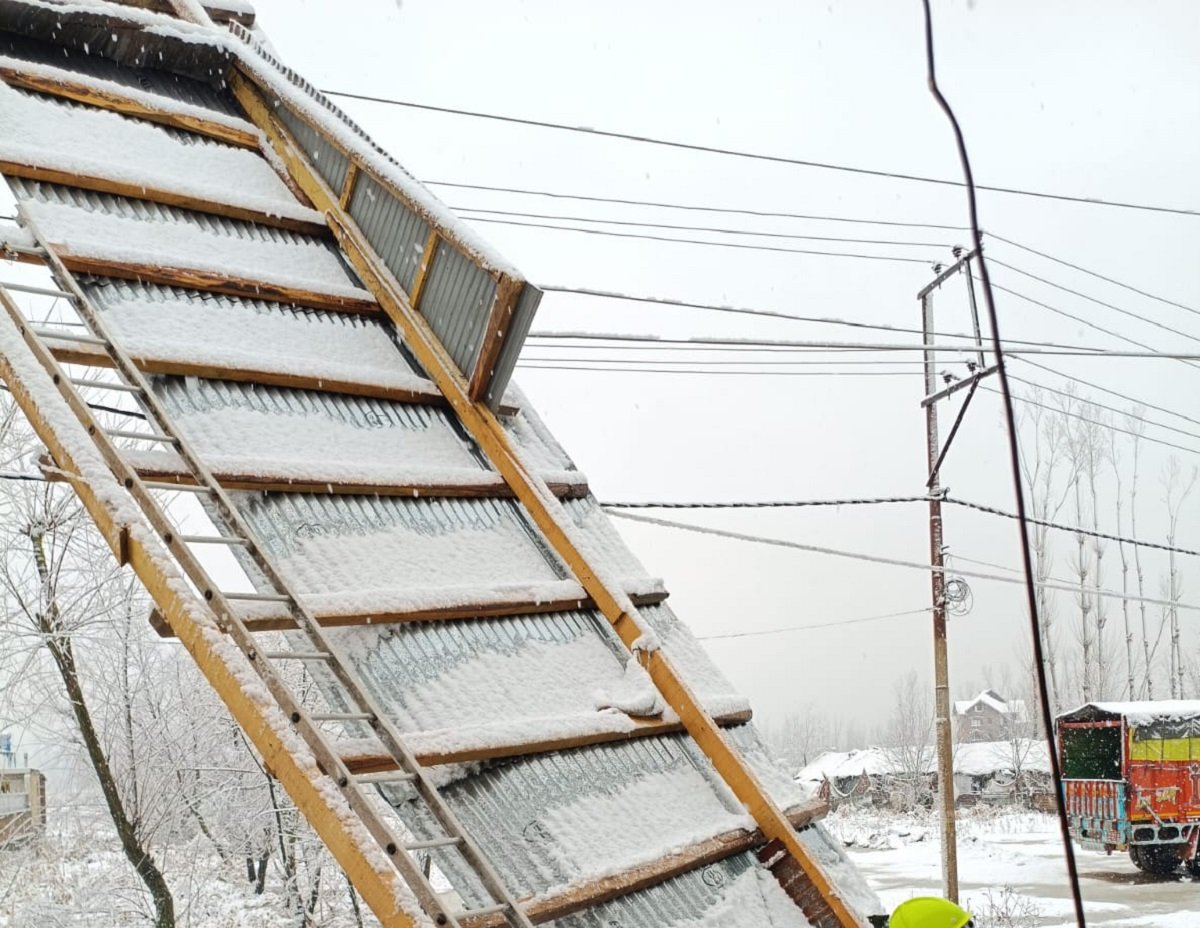

Srinagar- A powerful windstorm has crippled the electricity distribution network across the Kashmir Valley, pushing the active power load to below 100 megawatts against the usual demand of around 1700 megawatts, officials said on Friday, as outages hit almost all 33 KV feeders, including those supplying emergency services.
The Kashmir Power Distribution Corporation Limited (KPDCL) said strong winds and widespread tree fall have damaged overhead lines at multiple locations, triggering large-scale disruption in both transmission and distribution. With feeders tripped and faults reported across districts, vast parts of the Valley remain without electricity, affecting domestic supply as well as essential services.
Restoration teams have been deployed on an emergency footing, but officials said continuous windy conditions and heavy obstructions caused by fallen trees are slowing repair work. Field staff are also facing difficulties reaching several affected areas due to blocked roads and unstable weather.
A detailed assessment of damage to the infrastructure is underway, KPDCL said, but it is expected to take time given the prevailing conditions. Authorities have appealed for patience, assuring that all possible efforts are being made to restore supply at the earliest.
Chief Minister Omar Abdullah, citing KPDCL, said the Valley’s active load has fallen drastically due to the outage of nearly all 33 KV feeders, including those catering to emergency services. “Teams are on job for rectification but extensive tree fall on the lines and the windy conditions are major hurdles,” he said in a post on X.
The power crisis follows gusty winds on Thursday evening that disrupted supply in more than 80 percent of the Valley. Officials had earlier said the department was supplying nearly 300 MW against the usual demand of about 1900 MW, while feeders were tripped in many areas as a safety measure.
Officials said priority is being given to restoring electricity to hospitals and other critical installations, with full restoration to follow in phases once weather conditions improve and repair work can be carried out safely.