By Dr. Nowsheen Jan
Srinagar- Around 6:30 p.m. on a Srinagar highway, a motorcycle veered out of control and crashed, halting traffic and drawing a crowd.
People rushed forward, some lifted the rider, others removed his helmet to see if he was breathing, while arguments broke out over who had caused the crash.
Calls went out to the police. An ambulance arrived nearly fifty minutes later.
By the time the man reached the hospital, he had barely made it to what doctors call the Golden Hour, the first 60 minutes after a serious injury or sudden illness, when timely care can decide survival, death, or lasting disability.
Scenes like this unfold every day in Kashmir. Time, the most vital resource in a medical emergency, slips away even as people rush to help.
Confusion, well-meaning but untrained interventions, and delayed transport can turn an injury that might have been treated into one with permanent consequences.
The Golden Hour, however, is not limited to accidents.
A few weeks earlier, a 34-year-old man at home developed sudden, severe chest pain. He collapsed before his family could understand what was happening.
Neighbours were called, a private car arranged, and he was driven twenty kilometers to the nearest hospital.
He was declared dead on arrival.
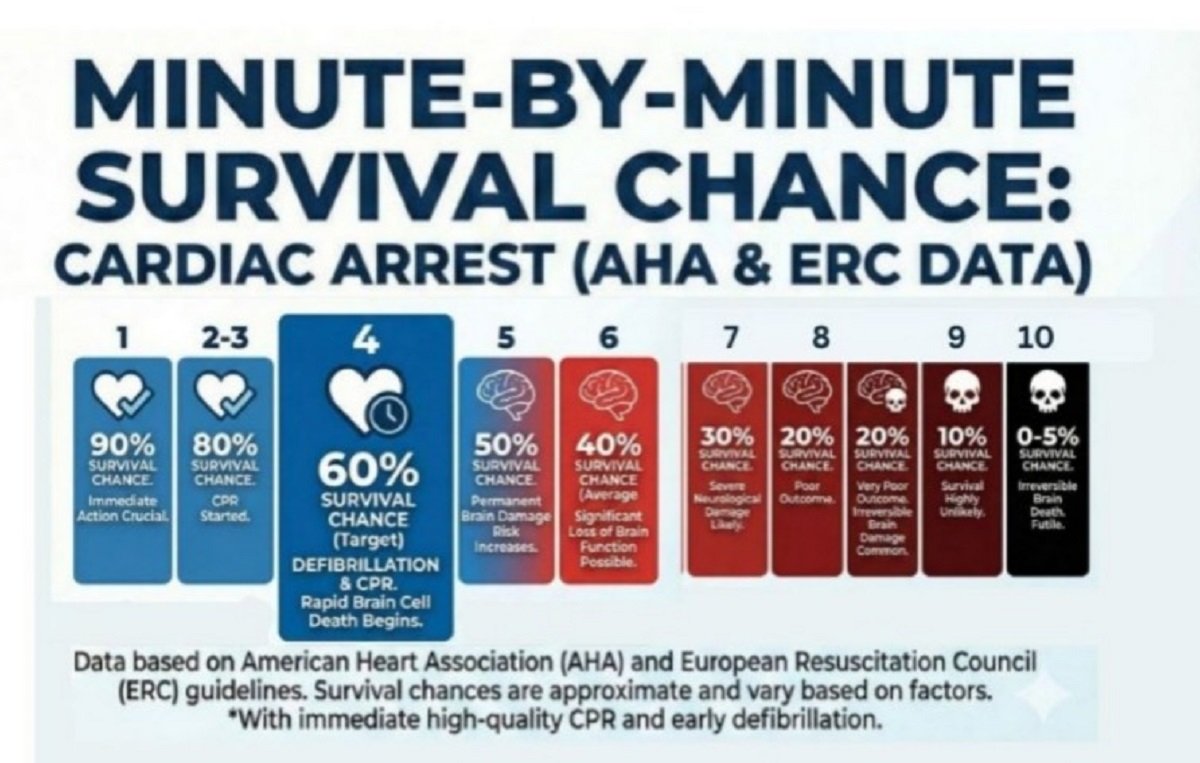
A trained paramedic on the way could have provided oxygen, monitoring, and CPR. Each minute without care had allowed the heart muscle to fail further.
In cardiac emergencies, every minute counts, and survival depends on a clear sequence of actions: recognition, calling emergency services, CPR, defibrillation if needed, advanced care during transport, and hospital stabilization.
When each step is followed, chances of survival rise sharply.
Not long after, a 62-year-old woman at home developed slurred speech, a drooping face, and weakness on one side of her body. Her family drove her fifteen kilometers to the hospital.
She arrived after the treatment window had passed and survived with severe, permanent disability.
Stroke kills brain cells within minutes when blood flow is blocked or a vessel ruptures.
Early recognition, calm handling, and transport to a hospital equipped to manage stroke can preserve function and lives.
Many families in Kashmir still rely on private vehicles instead of ambulances equipped for critical care.
These mobile intensive care units are staffed by trained paramedics and carry oxygen, emergency medications, defibrillators, monitors, and sometimes ventilators.
Teams on these ambulances can manage seizures, severe asthma, blood pressure, and begin stroke care on the way.
Without them, patients travel unmonitored, turning the road into lost time. Some reach hospitals too late simply because care never began.
Paramedics also play a decisive role in choosing the right hospital and alerting staff before arrival.
When these steps are missing, minutes are wasted on wrong turns, limited assessments, referrals, and repeat journeys.
In much of the world, trained paramedics decide the destination, stabilize patients en route, and bypass facilities that cannot provide definitive care.
This system is still developing in the valley, and each delay costs lives.
Hospitals, beds, and specialists are often the focus of public debate, but the most critical care happens before a patient arrives.
Advanced emergency systems prepare hospitals for incoming patients, but many arrive without notice, sometimes twice, first at the wrong place, then at the right one.
The Golden Hour cannot survive such inefficiency.
This gap is as much social as systemic. Governments must strengthen ambulance networks, train paramedics, and place AEDs in public spaces, but public awareness matters as much.
People need to understand when moving a patient can worsen injuries, how to recognize chest pain, breathlessness, stroke symptoms, or cardiac arrest, and whom to call immediately.
The first step in preserving life often begins with the bystander.
In India, timely care carries constitutional weight. The Supreme Court’s 1989 ruling in Parmanand Katara vs Union of India declared that preserving human life outweighs procedural or legal concerns.
Every doctor has a duty to provide emergency care. Linking emergency care to Article 21 affirms access to immediate medical assistance as a fundamental right and recognizes that delay itself can amount to denial of care.
Emergencies arrive without warning, and the Golden Hour starts the moment injury or illness strikes.
Every wrong decision, delayed call, or unnecessary movement steals time that cannot be regained.
Many lives are lost in Kashmir because reaching them in the right way, at the right moment, remains a lesson still being learned.
- The author is associated with Kashmiri-American Society for Healthcare, Medical Education and Research.