I have seen what determined leadership can do to a city.
Last year, Lucknow moved from rank 41 to rank three in India’s cleanest cities list, and that change did not happen by chance.
When Indrajeet Singh took charge as commissioner of the Lucknow Municipal Corporation, he faced a dumping site at Ghaila holding lakhs of tonnes of waste. At the time, many believed the task was too large to handle.
But Singh pushed ahead anyway, and today that landfill has turned into a real estate hotspot, with property prices rising sharply since 2020.
That transformation shows what happens when an officer gets authority, backing, and accountability.
I often return to this example when I look at Jammu and Kashmir, where cities and towns continue to drown in garbage. Officers who want to act rarely get the freedom to do so, and the consequences show up everywhere.
Waste gets dumped without planning, water sources face contamination, and urban local bodies end up facing heavy penalties from the National Green Tribunal.
When they fail to pay those penalties, public buildings and assets go under the hammer.
What is unfolding in Poonch captures this collapse in the clearest possible way.
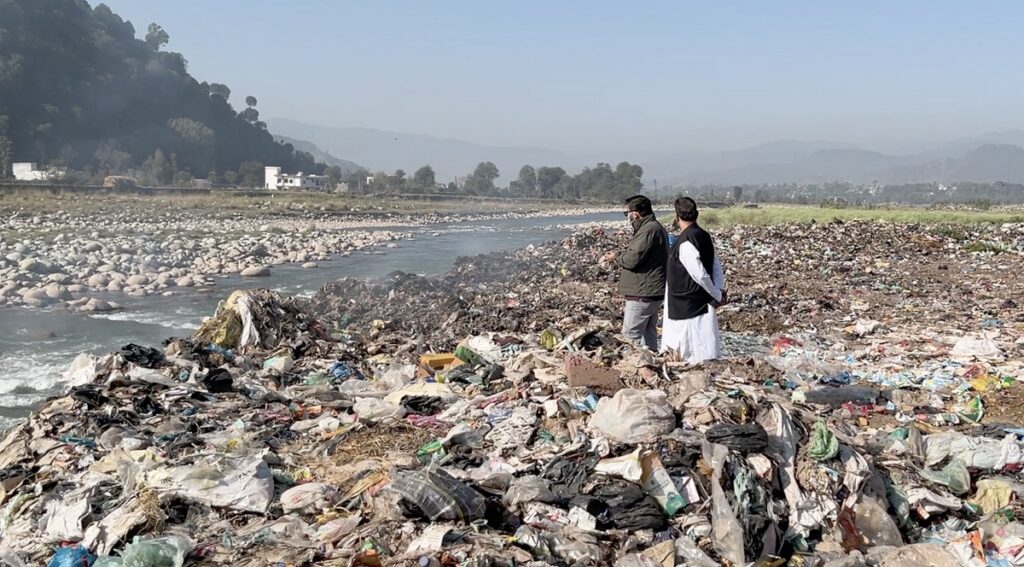
The Municipal Council of Poonch has dumped municipal solid waste near the Poonch river for more than 20 years. The dumping site lies close to the Sher-e-Kashmir bridge, and over the past five or six years the waste has entered the river itself.
This same river supplies drinking water to people living on both sides of the Line of Control. The danger here cannot be brushed aside as a technical lapse or paperwork delay.
My engagement with this issue began in 2017, when I started visiting Poonch regularly and raising concerns with the district administration.
Along with public spirited citizens such as Lokesh Sharma, a well known trade union leader, I approached successive deputy commissioners and municipal officials. Meetings took place and assurances followed, but action never came.
After years of waiting, I approached the National Green Tribunal with a formal petition.
Since then, the case has come up every two or three months. Each hearing follows a familiar pattern: the district administration and the municipal council submit written affidavits promising improvement.
The ground reality stays unchanged. Garbage continues to pile up, and the river continues to suffer.
Official records show nearly 19,000 metric tonnes of legacy waste lying unattended at the Shanthi Nagar dumping site within municipal limits. Inspection reports submitted to the tribunal and the Pollution Control Committee confirm that bio remediation remains incomplete.
These documents point to serious gaps in planning and execution rather than any shortage of technology or funding.
The National Green Tribunal imposed environmental compensation of Rs 162.9 lakh for violations recorded between October 2020 and September 2024.
A further penalty of Rs 108.9 lakh followed, taking the total amount to Rs 2.71 crore.
The Municipal Council of Poonch paid only Rs 25 lakh. The remaining Rs 2.46 crore remains unpaid even today.
To recover this amount, the deputy commissioner of Poonch constituted an auction committee under tribunal directions. An official communication dated December 23, 2025 from the district officer of the Pollution Control Committee confirms that the municipal CEO acknowledged the formation of this committee, while also admitting that the auction process and final amount had yet to be settled.
Environmental activists and political leaders have called this an administrative failure and demanded accountability from municipal CEOs who served in Poonch over the past 15 years.
The situation turned deeply troubling when the town’s community hall was identified as a possible asset for auction. This hall belongs to the people of Poonch. Taxpayers paid for it. Families use it for public gatherings and social events.
Selling it to pay environmental compensation feels like charging citizens twice, once through pollution and again through the loss of shared spaces.
Dumping waste near a river counts as a criminal offence under the Water Act of 1974. Responsibility for this damage rests with officials who allowed it to continue year after year.
Recovering compensation from the salaries or pensions of those officers would uphold accountability far more clearly than selling public property.
Three years ago, notably, the deputy commissioner told the tribunal that a waste management plant would soon become operational. But since I moved the tribunal in 2022, the amount of waste processed stands at zero.
The tribunal even imposed costs on the deputy commissioner for excessive leniency in this case. Progress on the ground remains invisible.
In November last year, I visited Poonch again with a delegation from the Jammu and Kashmir Climate Action Group. We made a detailed presentation to deputy commissioner Ashok Sharma, with the additional deputy commissioner, the municipal CEO, and other senior officers present. Local members of our group suggested shifting the waste processing site to the Salotari area near the Line of Control. Officials responded positively and spoke about stopping dumping near the river and starting segregated collection in select wards.
Months have passed since that meeting. The situation on the ground looks exactly the same.
I do not place the entire burden on the current deputy commissioner or the present municipal CEO. What we see today reflects a collective failure spanning 15 years.
Still, a basic question refuses to go away: why can the government not post a full time municipal chief in Poonch with clear authority and backing, similar to what Lucknow witnessed?
At present, a KAS officer who also serves as district panchayat officer manages municipal affairs with limited powers and resources. The Directorate of Urban Local Bodies in Jammu has shown little seriousness in addressing this crisis.
Clearing 19,000 metric tonnes of waste does not pose an impossible challenge, especially when cities like Lucknow have handled many millions of tonnes. But what makes Poonch different is the absence of accountability and political will.
Penalties drain public money, pollution keeps climbing, and public buildings are now up for sale. This should concern anyone who believes government exists to serve citizens rather than protect failure.
I continue to carry this case because the people of Poonch deserve rivers they can drink from, officials who are held accountable, and public spaces they can actually use.
A hall built to bring the community together should never be sold to cover up years of neglect.